

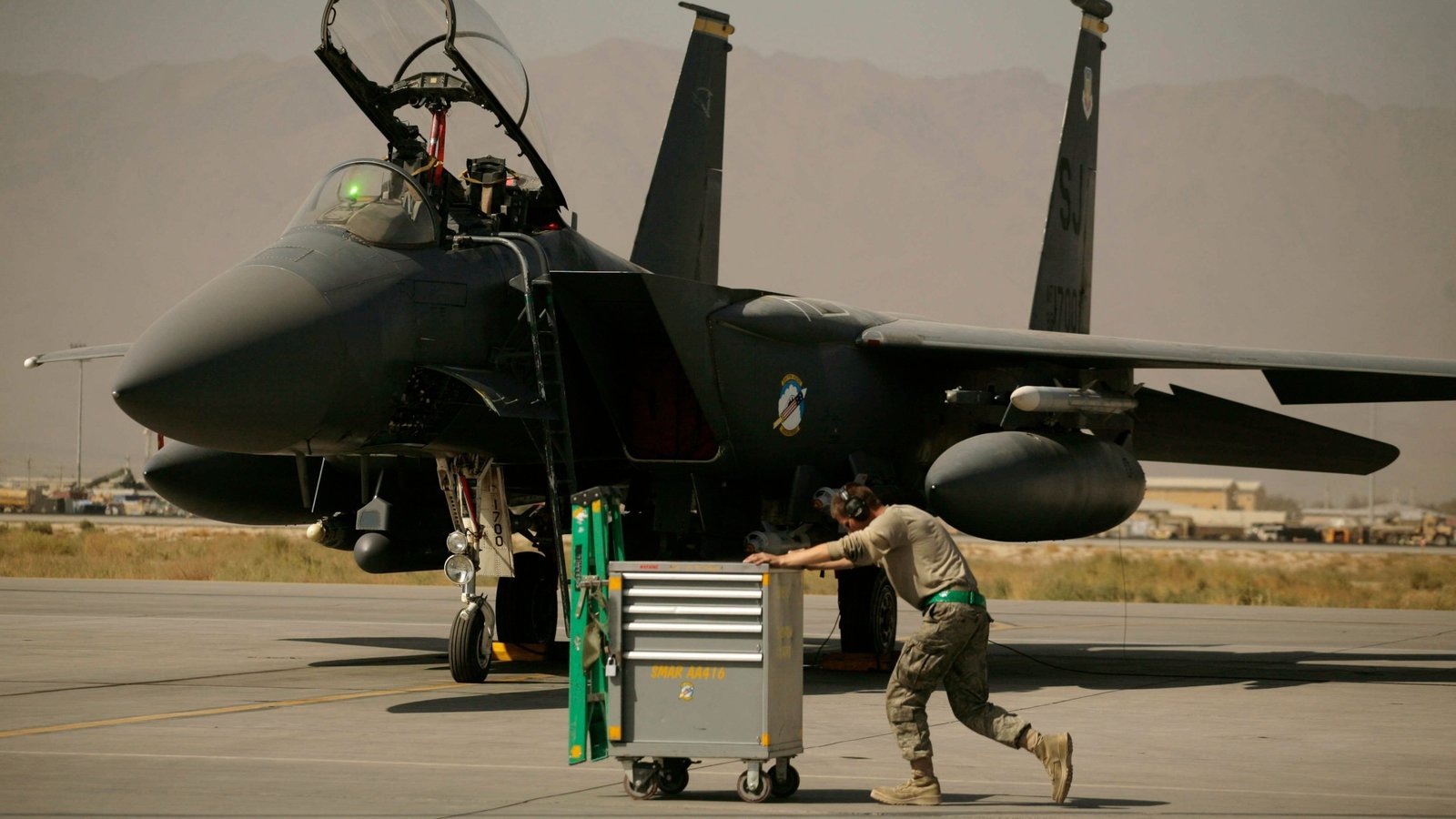
The downing of two US aircraft by Iranian forces on Friday marks a significant turning point in the six-week-old conflict, representing the first time in 23 years that American fighter jets have been lost to enemy fire. The incident has triggered a wave of comparisons to the 2003 Iraq invasion, raising questions about the sustainability of the “swift and decisive” campaign promised by the Trump administration.
The “Double Strike”: What Happened?
US officials and Iranian state media confirmed the loss of two distinct airframes during combat missions over the Gulf and Iranian territory:
-
F-15E Strike Eagle: Shot down Friday over Iran. One crew member has been rescued, while a search-and-rescue operation is underway for the second.
-
A-10 Thunderbolt II: Reported hit by Iranian defense forces. The pilot successfully ejected, and the aircraft crashed in Kuwaiti territory.
The Historical Context: The last time a US fighter was downed in a conflict was April 8, 2003, during the “Shock and Awe” phase of the Iraq War, when an A-10 was hit by an Iraqi surface-to-air missile over Baghdad.
How Iran Pierced the “Air Superiority” Shield
Experts suggest that while the US maintains a massive firepower advantage, the distinction between air superiority and air supremacy is becoming clear.
-
Low-Altitude Vulnerability: To hit specific targets accurately, US jets have been flying at lower altitudes, bringing them within range of man-portable air-defense systems (MANPADS).
-
Shoulder-Fired Missiles: Military analysts, including those from the Center for Strategic and International Studies (CSIS), believe it is highly likely that portable, shoulder-fired missiles—which are nearly impossible to detect before launch—were used to take down the F-15E.
-
Persistent Defenses: “A disabled air defense system is not a destroyed air defense system,” noted Behnam Ben Taleblu of the Foundation for Defense of Democracies. Despite thousands of US sorties, Iran’s mobile units remain functional.
The “Iraq Redux” Comparison
The current intervention is increasingly being viewed through the lens of the 2003 Iraq War:
| Feature | Iraq (2003) | Iran (2026) |
| Rhetoric | “Shock and Awe” | “Swift and Decisive” |
| Justification | “Imminent Nuclear Threat” (WMDs) | “Imminent Nuclear Threat” |
| Goal | Regime Change | Regional Decimation/Regime Change |
| Outcome | Long-term insurgency, 62% public disapproval | 6th week of conflict, first aircraft losses |
The Political Risk: While military analysts like Mark Cancian argue the air war has been a “tremendous success” (citing a much lower loss rate than WWII), the political fallout is different. The American public, accustomed to “bloodless” high-tech wars, may find even a 1% loss rate unacceptable, especially given the already polarized support for the intervention.
Shadows of Vietnam and Afghanistan
Iran has explicitly warned that this conflict could become “Vietnam 2.0” for the US.
-
The Vietnam Parallel: Like the 1968 Tet Offensive, Iran is proving it can launch simultaneous, high-impact strikes (including the closure of the Strait of Hormuz) despite claims that its military has been “decimated.”
-
The Afghanistan Lesson: The 20-year war in Afghanistan serves as a reminder of how “mission accomplished” moments can dissolve into decades of inconclusive fighting and eventual withdrawal.
As the US enters the seventh week of the war, the loss of these aircraft serves as a stark reminder that the Islamic Republic remains a “stubborn foe” with the capability to inflict high-profile damage on the world’s most advanced air force.
