

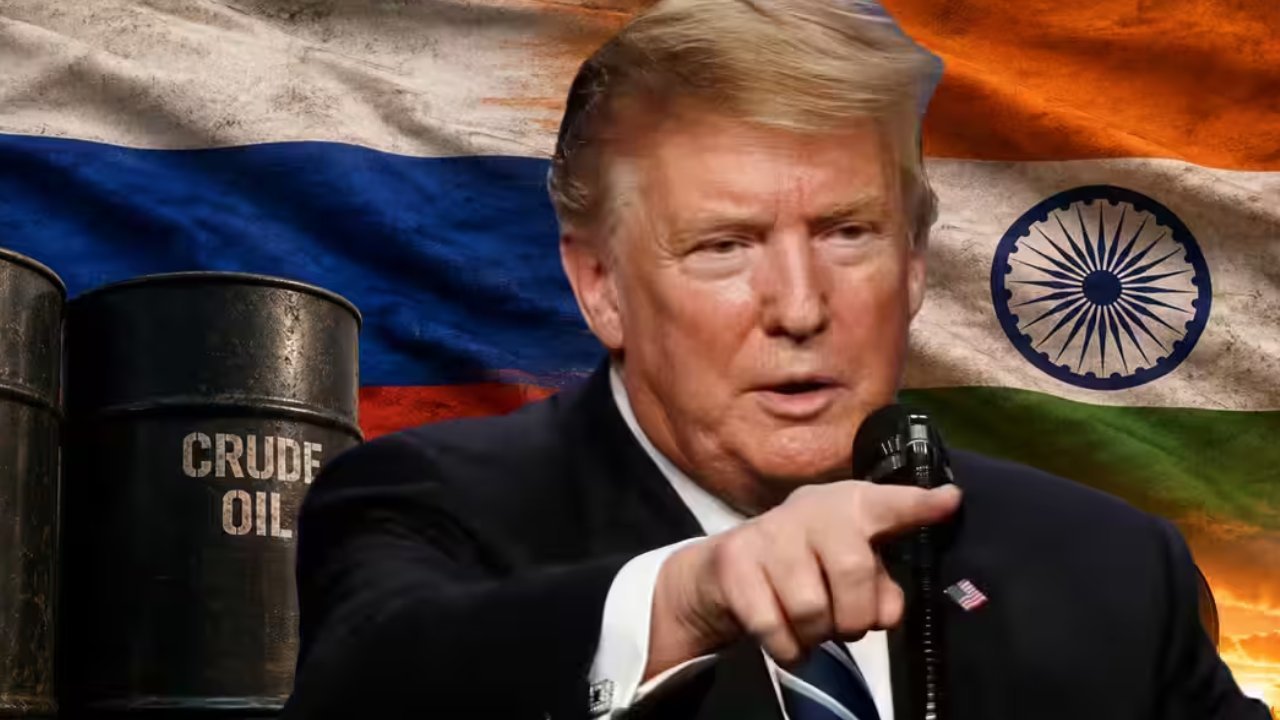
US President Donald Trump has officially signed into law the ‘Lindsey O. Graham Sanctioning Russia and Iran Act of 2026’. Named after the late Senator Lindsey Graham—a staunch Washington defender of Ukraine who passed away in July—the sweeping bipartisan legislation cleared the House of Representatives by a 262-159 vote following an 86-11 Senate approval in August.
The primary objective of the law is to heavily curtail the financial resources sustaining Russia’s military operations. It targets Russian leadership, financial institutions, defense networks, and the “shadow fleet” of tankers used to evade Western energy restrictions. Crucially, it grants the US administration statutory authority to impose secondary tariffs of up to 100 per cent on goods imported from countries that continue purchasing Russian oil and gas.
Implications for India and China
As two of the world’s leading buyers of Russian crude, India and China find themselves directly in the crosshairs of the law’s secondary tariff provisions.
-
Discretionary Power: The legislation mandates the targeting of the top five importers of Russian crude oil or natural gas, which currently places countries like India and China under scrutiny. However, the bill does not automatically slap a 100% tariff into effect; instead, it provides President Trump with wide discretionary authority regarding tariff rates, implementation timelines, and national interest waivers.
-
Pre-existing Trade Pressures: If enforced, these potential duties would stack on top of existing trade measures, adding a fresh layer of complexity to US-India economic dynamics.
-
Global Energy Realities: India currently imports a significant share of its crude oil needs from Russia, a trade vector that expanded heavily after Western nations turned away from Moscow’s energy supplies following the 2022 invasion of Ukraine.
India’s Official Stance
Responding to the legislative developments, the Ministry of External Affairs (MEA) firmly reiterated India’s sovereign right to manage its national energy security.
-
Protecting Economic Interests: New Delhi stressed its clear “determination to take all necessary measures to protect its trade and economic interests”.
-
Energy Diversification: The government emphasized that meeting the energy demands of its 1.4 billion citizens will continue to rely on diversified sourcing driven by evolving market realities.
-
Diplomatic Channels: The MEA noted that the broader implications of India’s energy trade with Russia—both for bilateral ties and the global energy market—have been explicitly communicated to high-level US interlocutors in recent months.
Domestic Pushback in the US
While the bill passed with broad congressional margins, it was not without domestic friction. Privately, several Republican lawmakers expressed concerns that granting expansive, unconstrained tariff powers could drive up consumer prices. Meanwhile, Democratic critics, including House Minority Leader Hakeem Jeffries, argued against giving the executive branch unchecked authority to levy global tariffs that could invite adverse economic blowback.
