

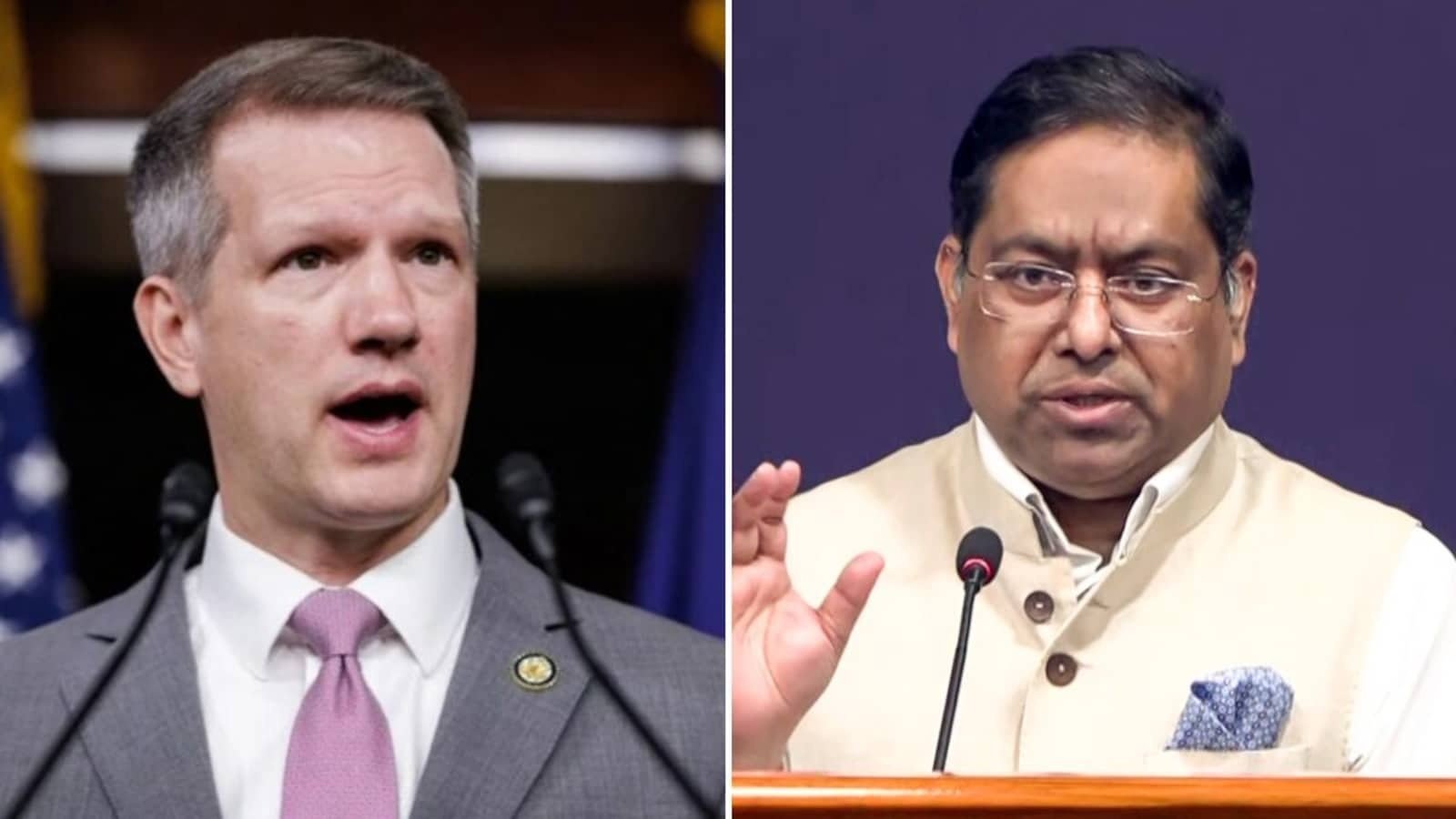
India’s Ministry of External Affairs (MEA) has firmly rejected comments made by a United States lawmaker regarding the proposed Foreign Contribution (Regulation) Amendment (FCRA) Bill, 2026, reiterating that legislative matters are strictly India’s internal affairs. The ministry noted that many democratic nations—including the United States—have robust legal frameworks to regulate the flow of foreign funds into their territories.
Key Highlights
-
MEA Statement: MEA Spokesperson Randhir Jaiswal stated that decisions on domestic legislative matters rest solely with India’s Parliament, noting that sovereign nations routinely regulate foreign contributions.
-
US Lawmaker’s Allegation: US Congressman Riley Moore (R-WV) claimed the proposed FCRA amendments represent a “clear attack against Christians” and could allow government takeovers of churches and religious charities.
-
Bilateral Warning: Moore warned that the passage of the bill in its current form could become a point of concern in India-US bilateral ties.
-
Core FCRA Provision: The controversial amendment empowers the central government to appoint a Designated Authority to manage assets and foreign contributions if an organization’s FCRA license is cancelled, surrendered, or expires.
India’s Official Response
Addressing media queries in New Delhi, MEA Official Spokesperson Randhir Jaiswal emphasized that framing domestic laws is part of India’s established democratic procedure.
“We have seen the comments on FCRA. Legislative matters concerning India are our internal affairs on which decisions are taken by the Parliament of the country. I would also like to point out that there are several nations, including the United States, which regulate the flow of foreign funds.”
— Randhir Jaiswal, MEA Spokesperson
Government sources further underscored that the proposed amendments apply uniformly across all sectors—including educational trusts, NGOs, and charitable associations—to ensure accountability and prevent the misuse or diversion of foreign funds.
What Prompted the Reaction?
The diplomatic exchange followed a post on social media platform X by Riley Moore, a freshman Republican Congressman representing West Virginia. Expressing concern over the Foreign Contribution (Regulation) Amendment Bill, 2026, Moore alleged that the proposed rules could enable government takeovers of Christian institutions and charities.
Moore highlighted the centuries-long history of Christianity in India dating back to St. Thomas the Apostle, claiming that the legislation would harm foreign-funded religious and humanitarian activities and adversely impact Washington’s relationship with New Delhi.
Key Provisions of the FCRA Amendment Bill, 2026
The Foreign Contribution (Regulation) Act governs how overseas donations are received and utilized by non-governmental entities in India.
| Feature | Pre-Amendment Framework | Proposed FCRA Amendment (2026) |
| Asset Oversight | Assets remained with the NGO post-cancellation, subject to statutory restrictions. | A Designated Authority can manage/oversee assets created via foreign funds if registration is cancelled or lapses. |
| Religious Character | General oversight on religious organizations. | Explicit mandate requiring the Designated Authority to maintain the religious character of places of worship. |
| Penalty Realignment | Maximum imprisonment up to 5 years for certain non-compliance offenses. | Maximum imprisonment reduced to 1 year, shifting minor defaults toward administrative penalties. |
Active vs. Cancelled FCRA Registrations (Data Snapshot)
According to data maintained by the Ministry of Home Affairs’ FCRA portal:
-
Active Registrations: 14,449 organizations hold active FCRA licenses (as of July 2026).
-
Cancelled Registrations: 22,498 registrations have been cancelled over time.
-
Lapsed/Expired Registrations: 15,212 registrations have expired.
-
Inflow Volume: 13,520 organizations received a total of ₹55,741 crore in foreign contributions between 2019 and 2022.
