

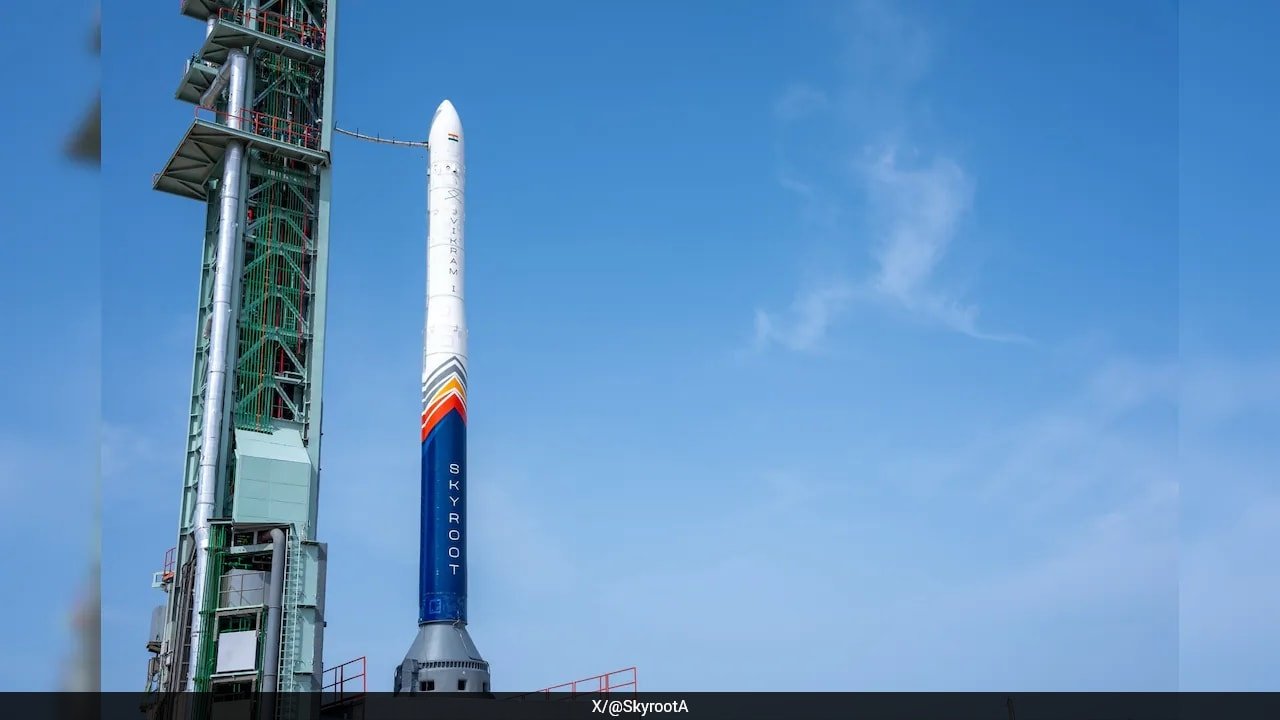
Skyroot Aerospace’s Vikram-1 rocket stands ready on the launchpad at Sriharikota, positioning India on the brink of a major milestone in private space exploration. Developed by a young team of Hyderabad-based engineers with an average age of 28, the 23-meter-tall rocket features an advanced carbon composite structure. It utilizes a three-stage solid configuration coupled with a liquid-fueled orbital adjustment module (OAM) and is designed to carry payloads up to 350 kilograms.
Skyroot Aerospace CEO and co-founder Pawan Chandana confirmed the vehicle’s readiness, noting that the team is targeting a liftoff as soon as possible. “The moment it takes off, I think it is going to be an unprecedented event in India’s space sector,” Chandana stated, emphasizing that Vikram-1 is “made in India, but made for the world.”
Breaking the norm for maiden test flights, which often carry dummy weights, this mission features a diverse array of experimental, functional, and symbolic payloads:
-
Scientific and Commercial Payloads: The rocket will deploy two satellites alongside an additional test satellite and various mechanism-testing instruments.
-
Debris Removal Technology: A dedicated technology demonstration payload equipped with robotic arms will test methods for clearing orbital debris.
-
Pioneer Tributes: Miniature sculptures of iconic Indian scientists—Dr. Vikram A. Sarabhai (the rocket’s namesake), Dr. APJ Abdul Kalam, and Dr. C.V. Raman—are onboard.
-
A “Diamond in the Sky”: A unique commercial concept payload will literally place a diamond into Earth’s orbit.
-
Prime Minister’s Message: The rocket carries a special card featuring a message written by Prime Minister Narendra Modi.
This launch highlights the rapid transformation of India’s space policy, which historically restricted orbital rocket development to the Indian Space Research Organisation (ISRO). Chandana credited the regulatory body IN-SPACe for streamlining the approval process and thanked Prime Minister Modi for opening the sector to private enterprise. The mission aims to validate the rocket’s flight systems, laying the groundwork for future high-frequency launches as India targets a national goal of 50 space launches by 2030.
