

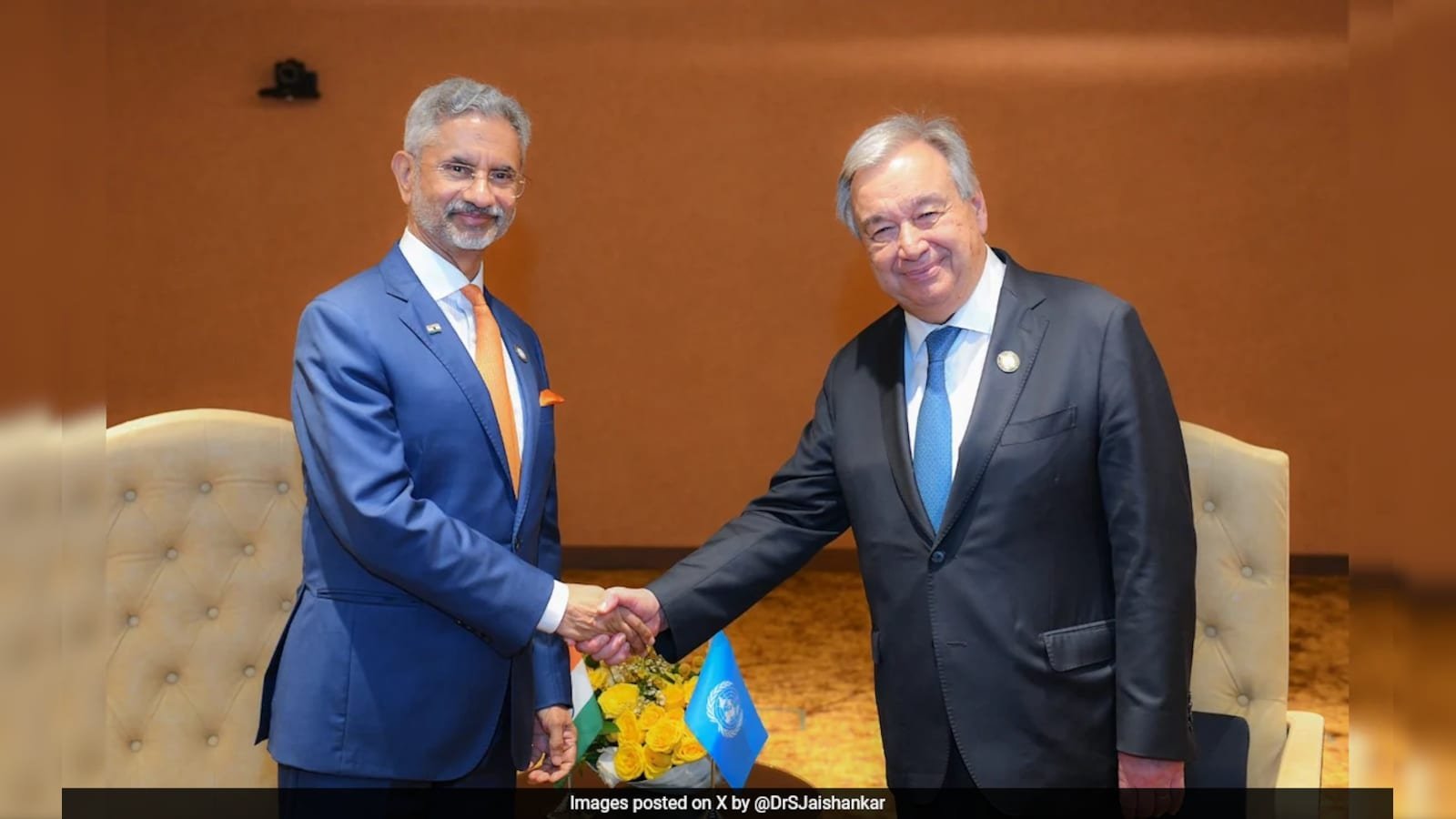
This high-level meeting in New York marks the official commencement of India’s diplomatic push for its ninth term as a non-permanent member of the United Nations Security Council (UNSC) for the 2028-2029 period.
Key Takeaways from the Meeting & Campaign Launch
-
Active Conflict Zones Discussed: S. Jaishankar and Antonio Guterres focused heavily on finding diplomatic pathways through major global flashpoints—specifically addressing the ongoing crises in West Asia (the Middle East), Ukraine, and Sudan.
-
The “SHANTI” Framework: The core of India’s 2028–2029 candidacy rests on a six-point programmatic vision called SHANTI (Securing Holistic Advancement through Norms, Trust and Integrity):
| SHANTI Priority Area | Core Focus & Objective |
| Global South Representation | Amplifying developing nations’ voices on peace and security issues. |
| Reformed Multilateralism | Pushing for a more democratic, representative, and effective UN system. |
| Future-Ready Peacekeeping | Integrating modern technology into peacekeeping architecture. |
| Human-Centric AI | Promoting global standards for ethical and equitable artificial intelligence. |
| Maritime Order | Supporting a free, open, and rules-based maritime commons under international law. |
| Counter-Terrorism | Intensifying international cooperation against terrorism and terror financing. |
-
Dual-Track Diplomacy: While actively campaigning for the non-permanent seat to ensure immediate influence, New Delhi continues to simultaneously lobby for a permanent seat on a structurally reformed UN Security Council to better reflect modern geopolitical realities.
