

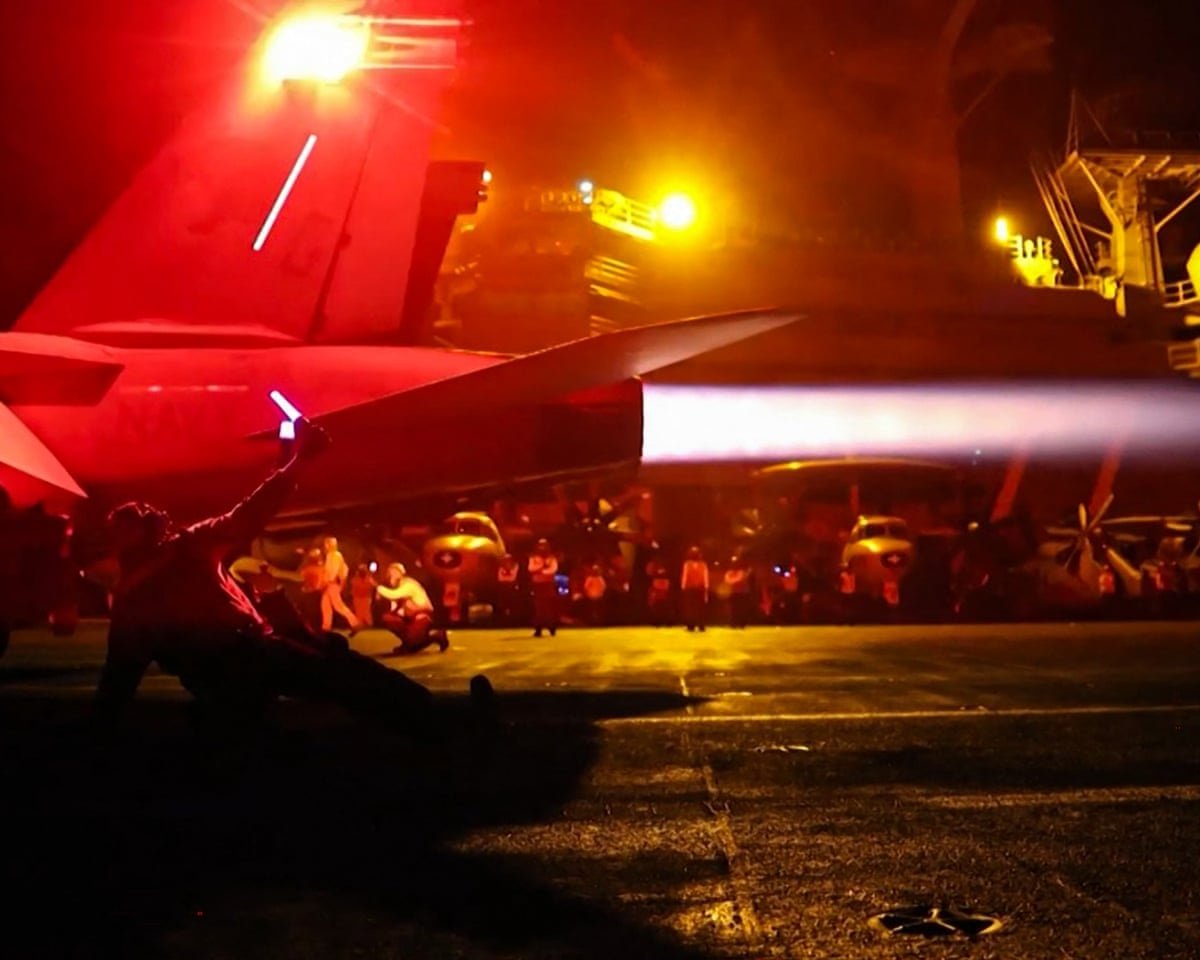
The United States military has executed its 10th straight night of retaliatory air strikes against Iran, aiming to neutralize Iranian military assets and reopen the crucial Strait of Hormuz.
The renewed offensive follows the recent deaths of American service members and a wave of Iranian attacks directed at regional US allies—including Jordan, Kuwait, and Bahrain.
Key Developments
-
Degrading Military Capabilities: US Central Command (CENTCOM) confirmed the latest strikes targeted Iranian command centers, air defenses, coastal surveillance installations, missile and drone launch sites, and communications infrastructure. Reports indicate strikes hit key regional hubs, including Tabriz, Khuzestan, Hormozgan, and Sistan and Baluchistan.
-
Maritime Disruptions & Houthi Threat: Tanker attacks persist in the Strait of Hormuz, forcing crews to abandon burning ships. Concurrently, Iran-backed Houthi rebels in Yemen announced a new maritime embargo against Saudi Arabia in the Red Sea, threatening the primary alternative route for Saudi oil exports.
-
Economic Shockwaves: The expanding regional conflict pushed benchmark Brent crude above $88 a barrel, driving average US gasoline prices to $4.00 per gallon and stoking economic pressures ahead of the upcoming midterm elections.
-
Rising Human Casualty Toll: Iranian officials report at least 50 deaths and over 500 injuries from recent US bombardments. Meanwhile, 17 US service members have been killed since the broader conflict broke out on February 28.
-
Diplomatic Channels Remain Open: Despite crumbling ceasefire agreements and escalating combat, diplomatic efforts are flickering. Iranian Interior Minister Eskandar Momeni traveled to Islamabad to engage in high-level talks with Pakistani mediators. US officials maintain that while open to genuine diplomacy, active military pressure will continue.
