

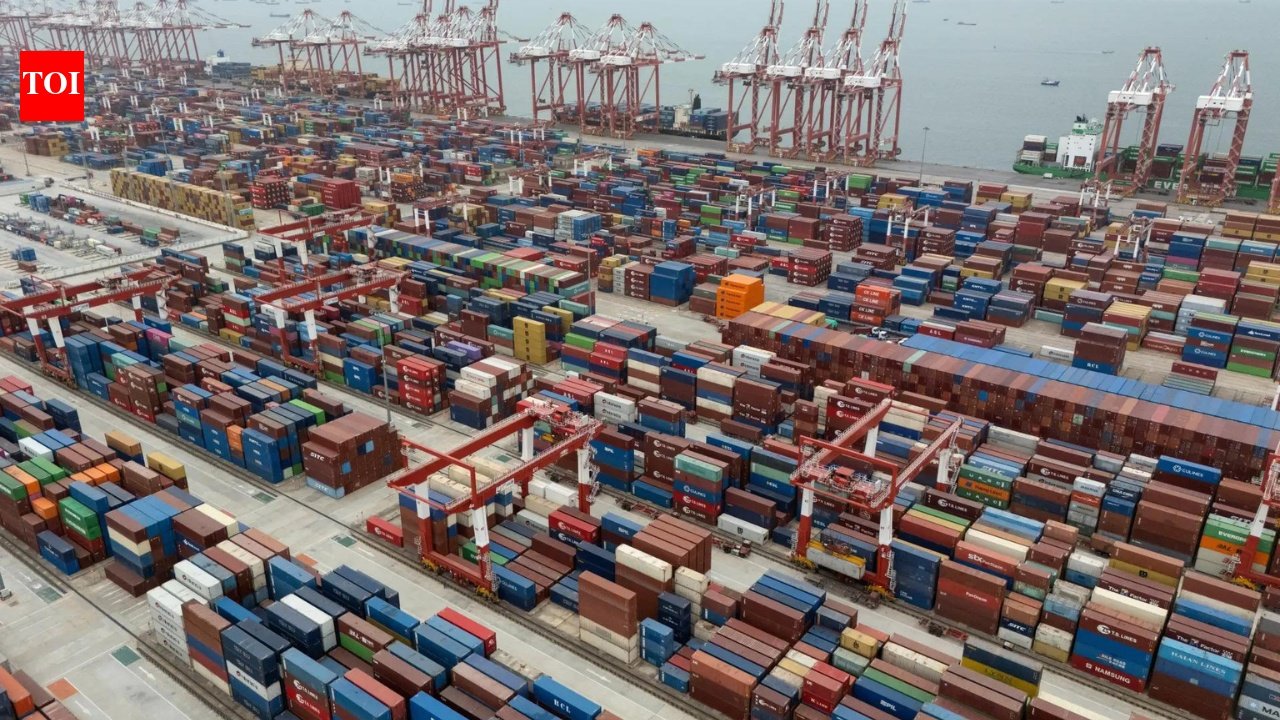
The United States has announced a new 10% tariff slab on goods imported from India and 16 other economies under Section 301 of the Trade Act of 1974. Directed by US President Donald Trump and implemented by US Trade Representative (USTR) Jamieson Greer, the measure targets 60 trading partners over their policy frameworks regarding the prohibition of goods produced using forced labor.
Key Highlights
-
Lower Tariff Bracket Secured: India was initially slated for a higher 12.5% tariff rate. However, following government-to-government discussions and proactive domestic measures, New Delhi secured the lower 10% category.
-
India’s Regulatory Action: India amended its Foreign Trade Policy on June 14, 2026, explicitly banning imports of items manufactured using forced labor.
-
Co-Slotted Economies: India shares the 10% tariff slab with 16 other trading partners, including the United Kingdom, Canada, Mexico, Bangladesh, Pakistan, Indonesia, and Sri Lanka.
-
Background & Context: The new Section 301 duties replace temporary 10% global tariffs (Section 122) that were instituted after a Supreme Court ruling invalidated emergency reciprocal tariffs earlier in the year.
Breakdown of the New USTR Tariff Structure
| Tariff Slab | Applied Rate | Criteria / Qualifying Economies |
| Lower Tier | 10% | Economies that prohibit forced labor imports, have committed to bans via trade agreements, or maintain partial regulatory regimes (e.g., India, UK, Canada, Bangladesh, Mexico, Pakistan). |
| MFN Net Tier | 10% – 12.5% (Net of MFN) | Applied to specific partners where the combination of MFN rates and Section 301 duties is capped (e.g., European Union, Japan, South Korea, Switzerland, Taiwan). |
| Standard Tier | 12.5% | All other investigated economies that failed to adopt or enforce a forced labor import prohibition. |
Implications for India–US Trade
-
Trade Volume at Stake: The US remains India’s largest export destination and second-largest overall trading partner. In 2025, bilateral goods trade stood at nearly $141 billion, with Indian exports to the US accounting for $87.3 billion.
-
Ongoing Bilateral Trade Talks: India has contested the USTR’s Section 301 investigations, asserting that labor regulations and related trade disputes should be negotiated under the ongoing bilateral trade agreement framework rather than via unilateral actions.
