

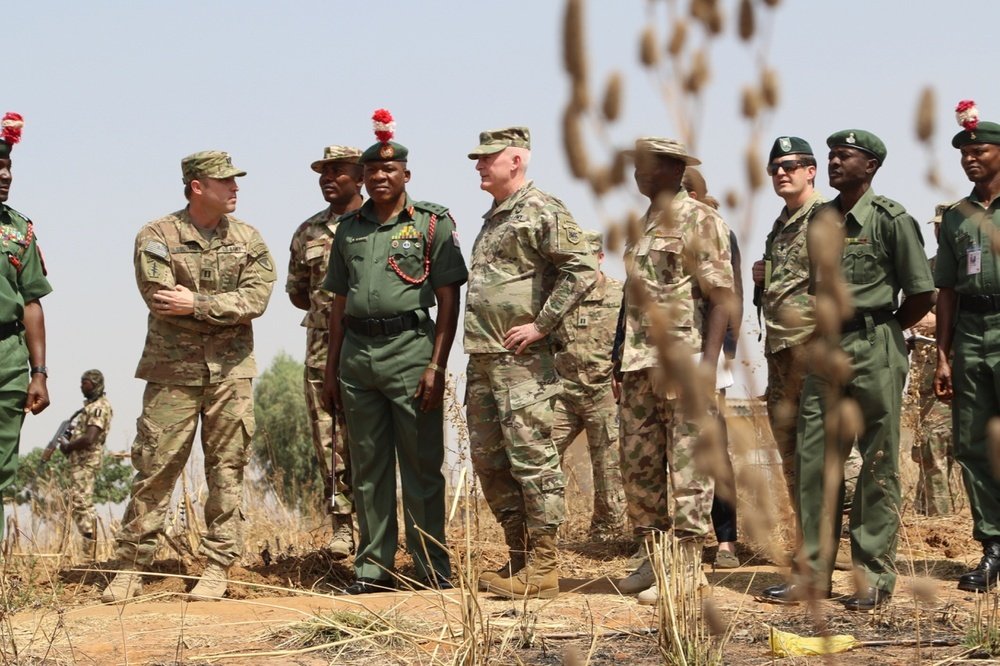
In a major counter-terrorism development, US President Donald Trump announced on Saturday, May 16, 2026, that a joint military operation between American and Nigerian forces has successfully eliminated Abu-Bilal al-Minuki, the global second-in-command of the Islamic State (ISIS).
Describing him as the “most active terrorist in the world,” Trump confirmed the high-stakes mission via his Truth Social platform.
The Intelligence Trap
According to the US administration, al-Minuki had been operating from Africa under the assumption that he had successfully evaded Western intelligence tracking. However, covert intelligence pipelines had been monitoring his coordinates.
“Tonight, at my direction, brave American forces and the Armed Forces of Nigeria flawlessly executed a meticulously planned and very complex mission to eliminate the most active terrorist in the world from the battlefield,” Trump wrote. “Abu-Bilal al-Minuki… thought he could hide in Africa, but little did he know we had sources who kept us informed on what he was doing.”
While the US President praised the flawless execution of the operation and thanked the Nigerian government for its active partnership, official channels have withheld specific tactical details regarding whether the hit was delivered via an airstrike or a ground raid.
Who Was Abu-Bilal al-Minuki?
A Nigerian-born senior commander, al-Minuki (also known as Abu Bakr ibn Muhammad ibn Ali al-Mainuki) rose to become a vital pillar in ISIS’s international structure.
-
Global Terrorist Designation: He was officially blacklisted and sanctioned by the US State Department in 2023.
-
The Funding Engine: Intelligence reports identified him as a core member of ISIS’s General Directorate of Provinces—the highly centralized administrative body responsible for providing operational guidance, logistical channels, and funding to terror affiliates worldwide.
-
Sahel Operations: He was instrumental in expanding the footprint of ISIS branches, including the Islamic State West Africa Province (ISWAP) and the Islamic State in the Sahel (ISSP), across the volatile Lake Chad and Sahel regions.
Washington’s Growing Footprint in Nigeria
The high-profile operation follows months of intense strategic maneuvering and coordination between Washington and Abuja:
-
Pressure to Act: Since late 2025, the Nigerian government faced heavy scrutiny from US officials who argued that more aggressive measures were needed to dismantle regional branches of ISIS and competing factions like Boko Haram.
-
The Christmas Day Precedent: Tensions broke on Christmas Day in late 2025 when the US military, with local permission, conducted massive airstrikes decimating militant bases in northwestern Sokoto State.
-
Troop Deployment: Following those strikes, Washington progressively deployed advanced surveillance drones and hundreds of specialized troops to northern Nigeria to handle tactical training, intelligence sharing, and active combat support.
With al-Minuki’s removal, the White House maintains that ISIS’s global network has been “greatly diminished,” breaking a vital operational link between the core leadership group and its rapidly expanding African fronts.
