

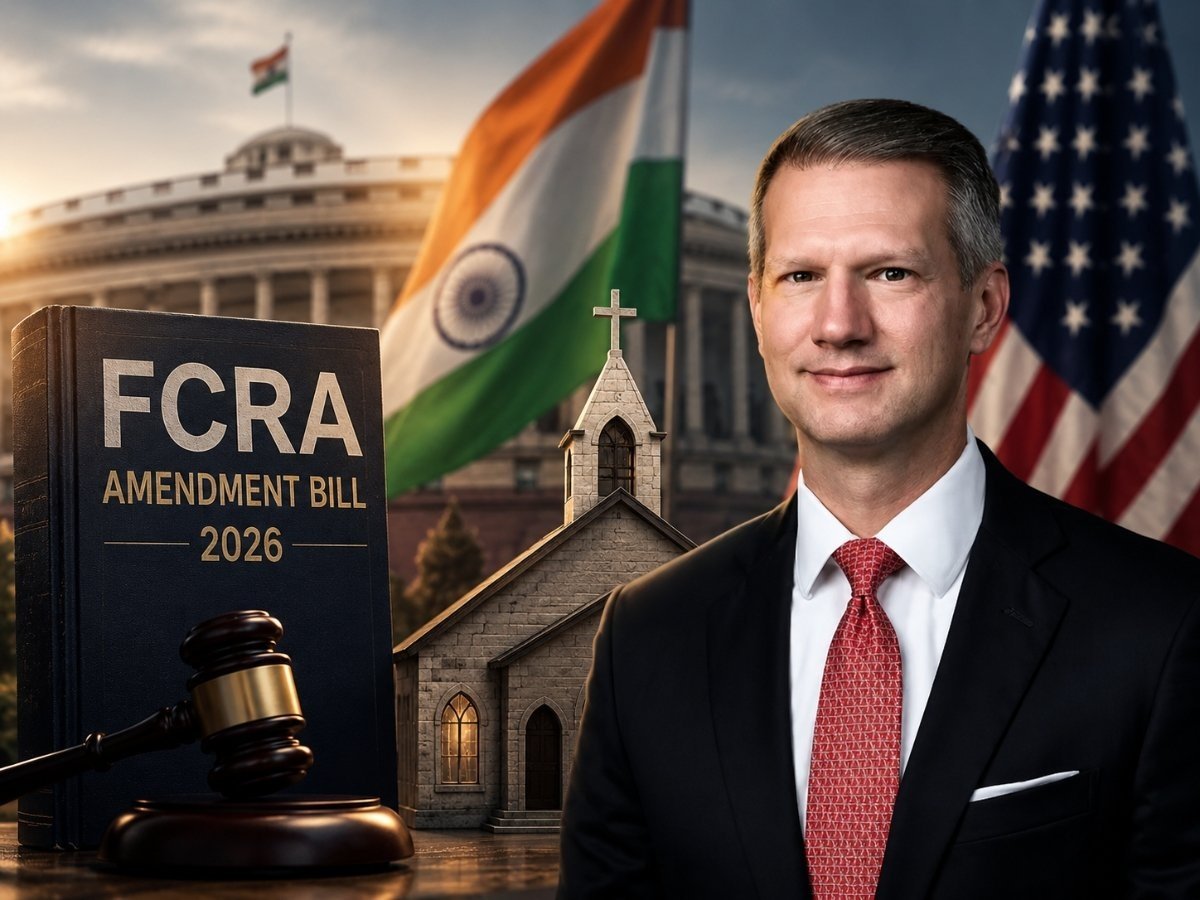
A proposed bill in India seeking to amend the Foreign Contribution (Regulation) Act (FCRA) has drawn criticism from US Republican Congressman Riley Moore, who warned that the legislation could strain bilateral relations between Washington and New Delhi.
The first-term representative from West Virginia claimed the bill represents a “clear attack against Christians” by granting the Indian government authority over churches and religious charities operating on foreign funds.
What Is the Foreign Contribution (Regulation) Amendment Bill, 2026?
The Indian government is expected to introduce the new bill in the Lok Sabha next week. Key provisions of the proposed legislation include:
-
Creation of a ‘Designated Authority’: Allows the government to appoint an authority to manage foreign contributions and assets acquired via foreign funds if an organization’s FCRA registration is cancelled, surrendered, or allowed to expire.
-
Protection of Worship Spaces: The bill specifies that if frozen or taken-over assets include places of worship, the authority must preserve their religious character.
-
Reduced Penalties: Decreases the maximum prison term for violations under the Act from five years to one year.
According to Ministry of Home Affairs data, 13,520 organizations received over ₹55,741 crore in foreign funding between 2019 and 2022. As of July 2026, active FCRA certificates stand at 14,449, while over 22,000 have been cancelled and more than 15,000 have expired.
Indian Lawmakers Reject US Interference
Despite opposing the bill internally, Indian opposition leaders strongly rejected the US lawmaker’s remarks, framing foreign commentary on national legislation as an infringement on Indian sovereignty.
-
NK Premachandran (RSP MP): Called the US lawmaker’s comments “unwarranted” and condemned foreign intervention, stating, “They are no one to lecture us.”
-
John Brittas (CPI-M MP): Reiterated that the legislation is a domestic issue, stating, “We do not base our position on what others say about it. This is an internal and domestic matter.”
