

We live in a world where artificial intelligence has stealthily infiltrated everything from our pockets and cars to, rather surprisingly, our bathrooms. When stripped to its core, the idea of a toothbrush equipped with a camera and machine learning—designed to spot the gaps between your teeth and fire a targeted jet of water—sounds wonderfully bizarre. It forces an inevitable question: At what point does everyday technology cross the line into excess?
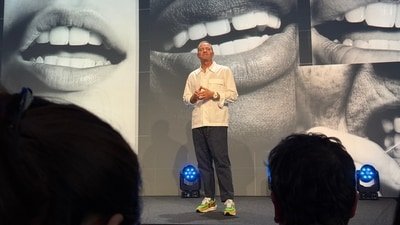
This was the exact premise put to Jake Dyson, Chief Engineer at Dyson, on the sidelines of the IFA 2026 event in Berlin. Rather than abandoning its roots, Dyson’s latest product lineup—spanning aircraft-inspired air purifiers and intelligent oral care—demonstrates a philosophy where unconventional designs are strictly functional first.
From Aircraft Engines to Quieter Homes
The newly introduced HushJet range serves as a prime example of this engineering-first mindset. Looking to solve the perennial problem of loud home appliances, Dyson’s engineers turned their gaze toward aviation—specifically the backend mechanics of aircraft engines—to see how air could be heavily streamlined while drastically reducing noise.
“It’s a silencing exercise,” Dyson explains. Because turbulence is the primary culprit behind appliance noise, smoothing out the airflow at its source drastically cuts down sound without sacrificing performance.
The flagship Dyson HushJet Big+Quiet can pump out a staggering 333 liters of air per second, projecting it over 20 meters while trapping 99.999% of airborne particles. According to Dyson, the distinct, curved architecture of these machines isn’t meant to mimic an aircraft hangar for show; it is an organic result of letting aerodynamics dictate the aesthetic.
Furthermore, the company is shifting away from the sterile, “white plastic” look of traditional white goods, opting instead for finishes designed to blend naturally into high-end interior spaces.
The CameraJet: Teaching a Toothbrush to See
If the HushJet applies aerospace principles to familiar home environments, the CameraJet represents an entirely different tier of ambition: combining brushing and flossing into a single, automated motion.
Building a camera system tiny enough to fit inside a vibrating toothbrush—while operating in a dark, wet environment—took six years of development. To make it work, Dyson trained the device’s machine learning model on 500,000 images of teeth, mouths, and gums. The system identifies gaps in real-time, locks onto them, and fires a precise conical water jet.
The innovation even required formulating a custom, non-foaming toothpaste, as traditional foam occludes the camera’s field of view. For Dyson, this is a prime example of AI serving a genuine, practical purpose rather than existing as a marketing buzzword.
A Pragmatic View on AI and the Future
Despite leveraging machine learning for everything from customer service diagnostics to dental hygiene, Jake Dyson remains measured about the tech industry’s current trajectory.
Expressing caution over AI’s potential societal impacts on employment, Dyson voiced a wish that the technology’s heavy data-processing capabilities were more aggressively channeled toward critical medical breakthroughs, such as curing cancer and analyzing genetic profiles for targeted chemotherapy.
Ultimately, whether it is taming indoor pollution ahead of heavy winter seasons in regions like India or reimagining routine personal care, Dyson’s underlying instinct remains unchanged: understand the core physics of a problem, and design relentlessly around the solution.
