

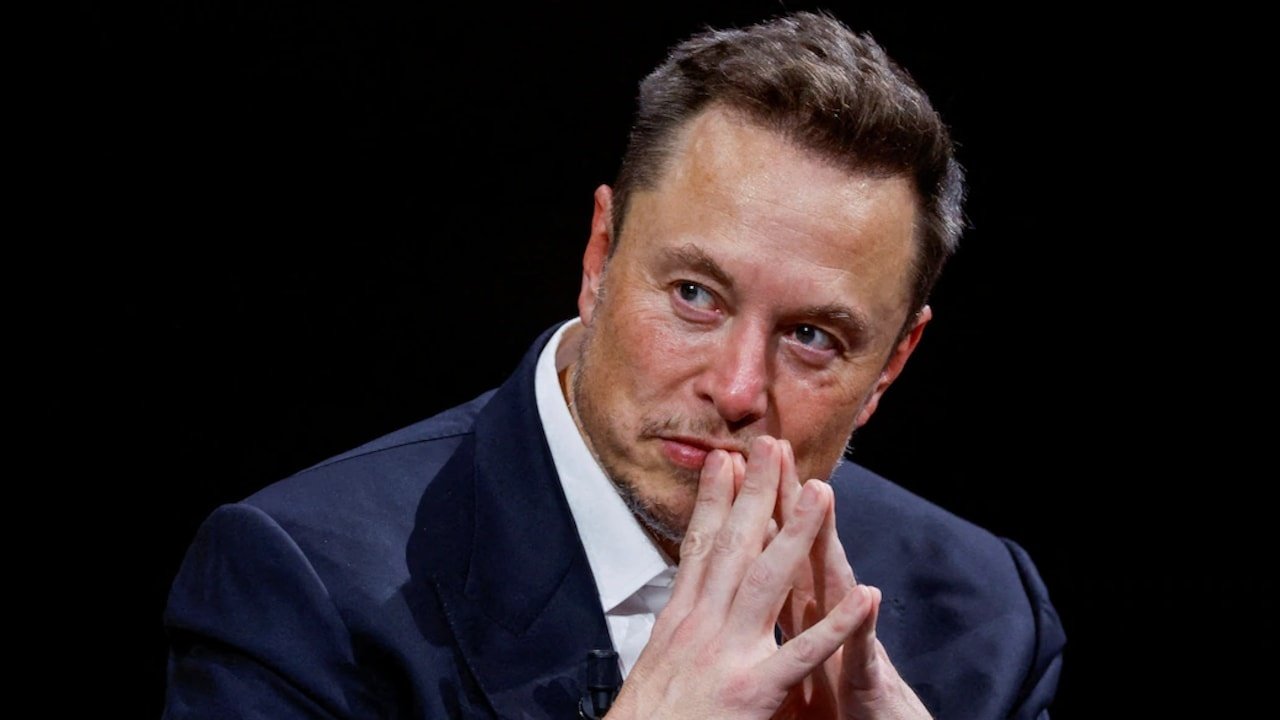
Elon Musk is on the verge of achieving a financial milestone never before reached in modern history: becoming the world’s very first trillionaire.
With SpaceX officially gearing up for the biggest Initial Public Offering (IPO) in stock market history on June 12, 2026—targeting a staggering $1.77 trillion valuation—the resulting surge in paper wealth is projected to comfortably push Musk’s net worth past the $1 trillion mark.
In Indian Rupees, at current exchange rates, $1,000,000,000,000 translates to roughly:
(Ninety-four lakh, ninety-five thousand, fifty crore rupees)
What Can a $1 Trillion Fortune Actually Buy?
To understand the sheer magnitude of a trillion dollars, it helps to look at what that amount of money represents when compared to global economies, corporate empires, and tangible assets:
-
Larger Than Major National Economies: A $1 trillion net worth is larger than the entire annual Gross Domestic Product (GDP) of highly developed nations. Musk’s projected wealth would solo-rank ahead of the economies of Taiwan ($977 billion), Ireland ($779 billion), Sweden ($760 billion), and Singapore ($660 billion).
-
The Ultimate Sports Monopoly: According to Forbes, the 50 most valuable sports franchises on Earth—spanning the NFL, NBA, Premier League, and Formula 1—are worth a combined $353 billion. A trillionaire could buy all 50 of them, replicate the entire roster two more times, and still have over $100 billion left over for pocket change.
-
Buying an Entire American Hub: Musk’s projected wealth exceeds the total value of every single piece of residential and commercial property in Houston, Texas—the fourth-largest city in the United States and a massive energy hub—which has a combined real estate valuation of $879 billion.
-
Equivalent to a Financial Capital: The figure matches the entire annual economic output of Manhattan, the dense New York borough that houses Wall Street, the New York Stock Exchange, and some of the world’s most powerful financial institutions.
The Paper Wealth Paradox
While the numbers are mind-boggling, economists point out a critical caveat: this wealth is almost entirely on paper.
Musk does not have a trillion dollars sitting in a liquid bank account. Instead, his net worth is tied up in volatile equity:
If Musk were to suddenly try and sell hundreds of billions of dollars in stock to buy physical assets, the sheer volume of the sale would flood the market, trigger panic selling, and cause the stock prices of Tesla and SpaceX to plummet—instantly shrinking the trillion-dollar fortune before it could ever be fully spent.
Titan vs. Titans
Perhaps the most telling metric of this wealth explosion is how Musk stacks up against his ultra-wealthy tech peers.
| Billionaire Entity | Estimated Individual Net Worth |
| Elon Musk (Projected) | $1.00 Trillion |
| Jeff Bezos (Amazon) | ~$210 Billion |
| Larry Ellison (Oracle) | ~$180 Billion |
| Larry Page (Google) | ~$150 Billion |
| Sergey Brin (Google) | ~$140 Billion |
| The Combined Total of All Four | $1.09 Trillion |
As SpaceX moves toward its historic June 2026 Nasdaq debut under the ticker SPCX, the financial world will be watching closely to see if the market appetite for private space exploration and AI integration officially crowns the world’s first twelve-zero billionaire.
