

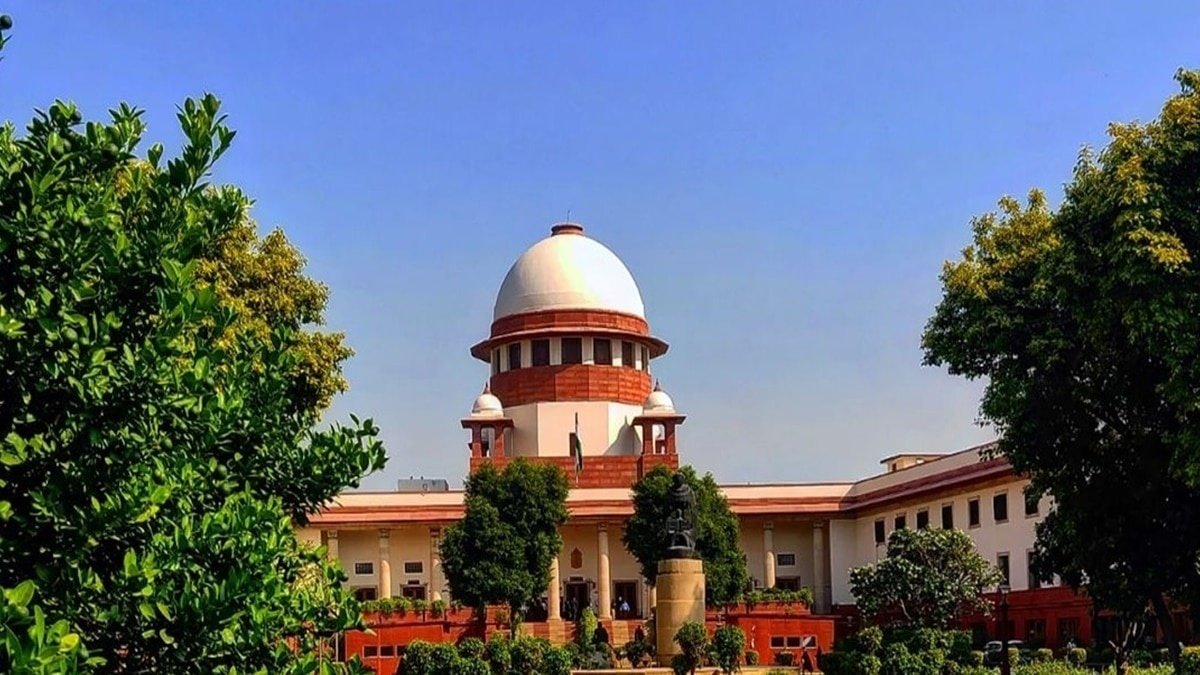
The Supreme Court of India has raised fundamental questions about the indefinite extension of affirmative action to economically and educationally advanced families. Hearing a case centered on the “creamy layer” exclusion for Other Backward Classes (OBC), the court observed that once a family achieves social mobility through reservation, continuing the benefit for the next generation prevents the country from ever moving past the system.
“If both parents are IAS officers, why should they have reservations? With education and economic empowerment, there is social mobility. So then again to seek reservation for the children, we will never get out of it,” observed Justice BV Nagarathna.
The Dispute: Salary vs. Status in the “Creamy Layer”
The observations were made by a bench comprising Justices BV Nagarathna and Ujjal Bhuyan during a petition challenging a Karnataka High Court judgment.
The case involves a candidate from the Kuruba community (classified under Category II(A) in Karnataka’s backward classes) who secured a position as an assistant engineer in the Karnataka Power Transmission Corporation Ltd. However, the District Caste and Income Verification Committee denied him a caste validity certificate after discovering his parents—both state government employees—earned a combined annual income of approximately ₹19.48 lakh, placing them well within the “creamy layer.”
The core legal debate hinges on how “creamy layer” status should actually be calculated:
The Legal Arguments
During the proceedings, the candidate’s counsel and the bench clashed over the boundaries of reservation intent:
-
The Candidate’s Defense: Lawyer Shashank Ratnoo argued that salary income should not be the determining factor for government servants. If raw salary is used as the sole metric, inflation could inadvertently exclude lower-ranking employees like clerks, drivers, or peons. He asserted that if all income streams are counted, the distinction between OBC reservation (based on social backwardness) and EWS reservation (based purely on financial need) would completely blur.
-
The Court’s Counterpoint: Justice Nagarathna highlighted the specific details of the case, noting that the candidate’s father drew a basic monthly pay of ₹53,900 and the mother drew ₹52,650. The bench emphasized that the primary goal of reservation is to uplift families to a level of security. Once that security unlocks education, high-paying jobs, and social mobility, demanding the safety net for the next generation defeats the purpose of equity.
Central vs. State Policy Friction
The legal knot stems from a structural split between federal and state reservation guidelines.
A single-judge bench had originally ruled in favor of the candidate, relying on a Karnataka government clarification stating that state employees’ salaries should be disregarded for creamy layer assessments. However, a division bench of the Karnataka High Court completely overturned that decision. The High Court clarified that while the Union government excludes salary income when assessing federal quotas, Karnataka’s state-specific policy does not extend that same exemption for state-level jobs. Because the family’s total income breached the state’s designated financial ceiling, the exclusion was deemed entirely valid.
