

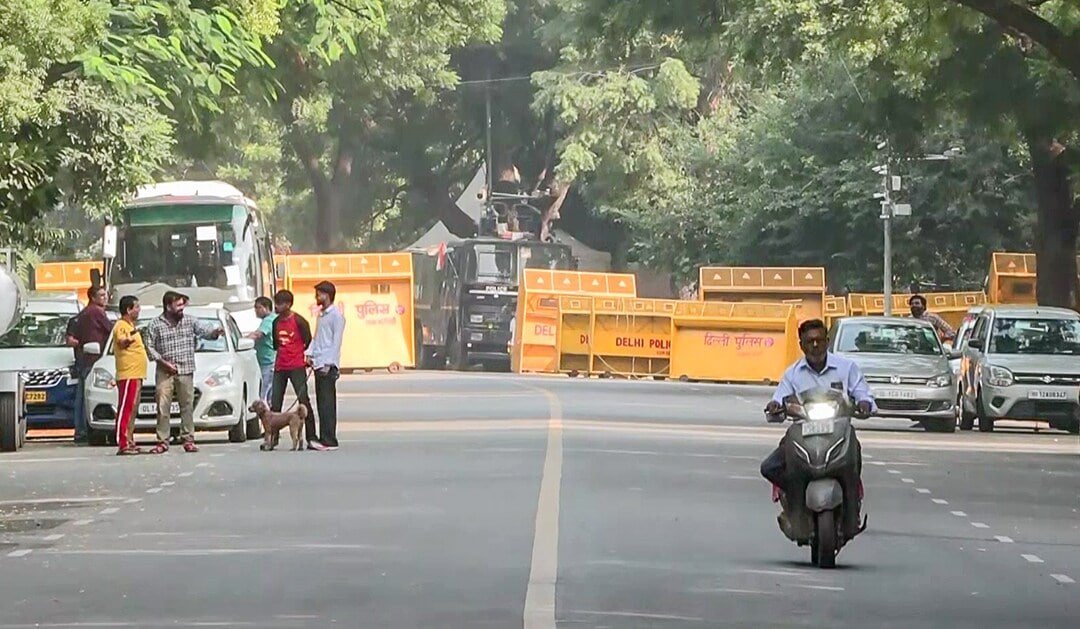
The Supreme Court strongly criticized sweeping public transport shutdowns, asserting that “you can’t use a sledgehammer to kill a fly.” Hearing a petition challenging the heavy restrictions ahead of the Cockroach Janta Party (CJP) protest, a bench led by Chief Justice Surya Kant emphasized that authorities cannot impose a complete prohibition on metro and train services.
Key Observations from the Supreme Court
-
Principle of Proportionality: While acknowledging the government’s right to implement security and regulatory measures, the court stressed that blanket shutdowns disproportionately punish ordinary citizens and commuters.
-
Reliance on Public Transport: Noting that hundreds of thousands of daily commuters rely on public transit for their livelihoods, the bench highlighted that “not everyone owns a car or has access to private transport”.
-
Distinction Between Restriction and Closure: The court underscored that authorities can regulate train frequencies or restrict specific sensitive areas, but a complete halt of 57 metro stations and major railway lines amounts to an unfeasible total ban.
Background on the Restrictions
The strict measures were enforced by law enforcement ahead of the CJP’s planned demonstration demanding the resignation of the Chief Election Commissioner. Authorities ordered the closure of entry and exit gates at 57 Delhi Metro stations alongside the cancellation of several incoming mail and express train services, triggering massive commuter disruptions across the capital region.
Following the court’s strict strictures, Solicitor General Tushar Mehta assured the bench that he would consult with the government and law enforcement agencies to implement more proportionate measures and allow public transit to resume in a regulated manner.
