

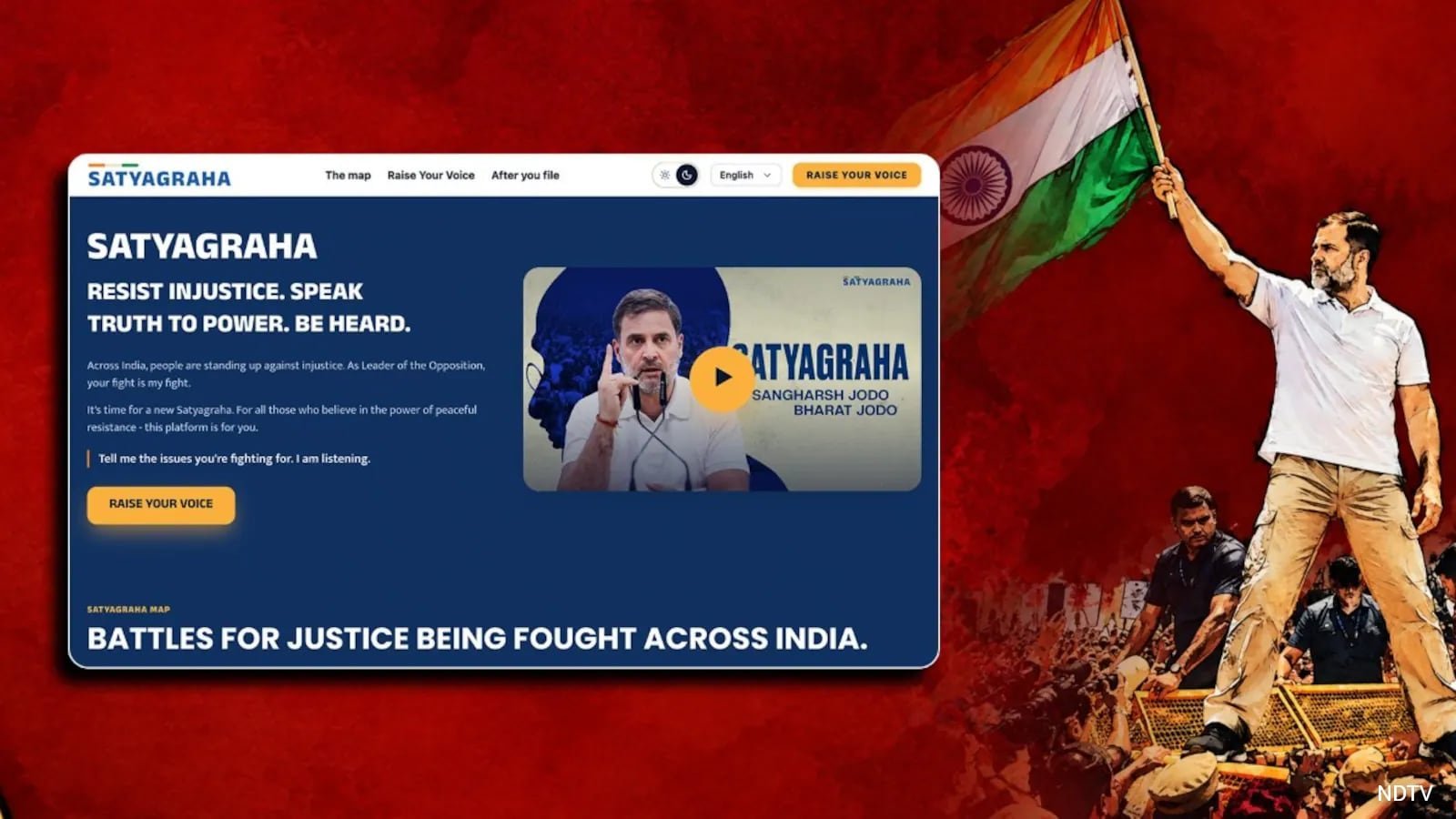
In an era defined by decentralized movements and localized public dissatisfaction, mapping public grievances has taken on a new digital dimension. Since its official launch on October 3, 2026, by Leader of the Opposition in the Lok Sabha, Rahul Gandhi, the Satyagraha Portal has compiled over 36,000 individual submissions from across India, creating a real-time digital heat map of public discontent.
Designed to aggregate local struggles, community protests, and individual grievances onto a single interactive platform, the initiative aims to bridge grassroots movements with parliamentary representation. Early data from the portal offers a compelling snapshot of regional participation and the socio-economic issues troubling citizens across the country.
Geographic Distribution: High Participation Across Demographics
Submissions on the portal span every state and Union Territory, with both northern and southern states exhibiting strong participation.
-
Uttar Pradesh leads nationwide engagement with 6,244 raised voices, establishing itself as the primary epicenter of reported grievances on the platform.
-
Karnataka and Maharashtra follow as the second and third highest contributors, logging 4,351 and 3,528 entries, respectively.
-
A central block comprising Bihar (2,970), Madhya Pradesh (2,643), and Rajasthan (2,638) accounts for a substantial share of total submissions, demonstrating strong engagement across the Hindi heartland and western regions.
-
Among metropolitan centers, Delhi reported 1,578 entries, complemented by notable counts from Telangana (1,352), Haryana (1,278), and Gujarat (1,139).
Core Issues: Education and Corruption Lead National Concerns
While grievances cover a broad spectrum of daily challenges, issues regarding public service delivery and governance dominate the platform.
| Issue Category | Submissions | Context & Key Drivers |
| Education | 6,210 | #1 Issue Nationally. Driven by student protests, paper-leak allegations, and fee structures. |
| Corruption | 5,822 | Close second; highlights widespread concerns regarding local public administration and governance. |
| Caste Discrimination | 2,627 | Significant concern in states like Uttar Pradesh and Uttarakhand. |
| Healthcare Access | 2,565 | Concerns surrounding medical affordability and public hospital infrastructure. |
| Labour Rights | 2,326 | Focus on worker protections, minimum wages, and informal sector conditions. |
| Farmers’ Issues | 1,834 | High priority in agricultural belts, including Punjab. |
| Women’s Safety | 1,450 | Issues covering law enforcement and public space security. |
| Electoral Irregularities | 1,249 | Focus on voter roll management and election transparency. |
| Land Rights | 1,209 | Prominent concern in border and hill states like Manipur. |
| Unemployment | 1,166 | Youth career opportunities, government recruitment delays, and job security. |
Regional Priorities and the Political Horizon
The dataset reveals distinct local priorities, particularly in states approaching upcoming assembly elections:
-
Uttar Pradesh: Education emerged as the single largest concern with 1,201 individual entries, followed closely by corruption and social/caste discrimination.
-
Punjab: Agricultural issues remain the leading focus, underscoring the ongoing political sensitivity of farm economies in the state.
-
Manipur & Uttarakhand: Land rights lead concerns in Manipur, whereas education, corruption, and social justice form the core focus in Uttarakhand.
