

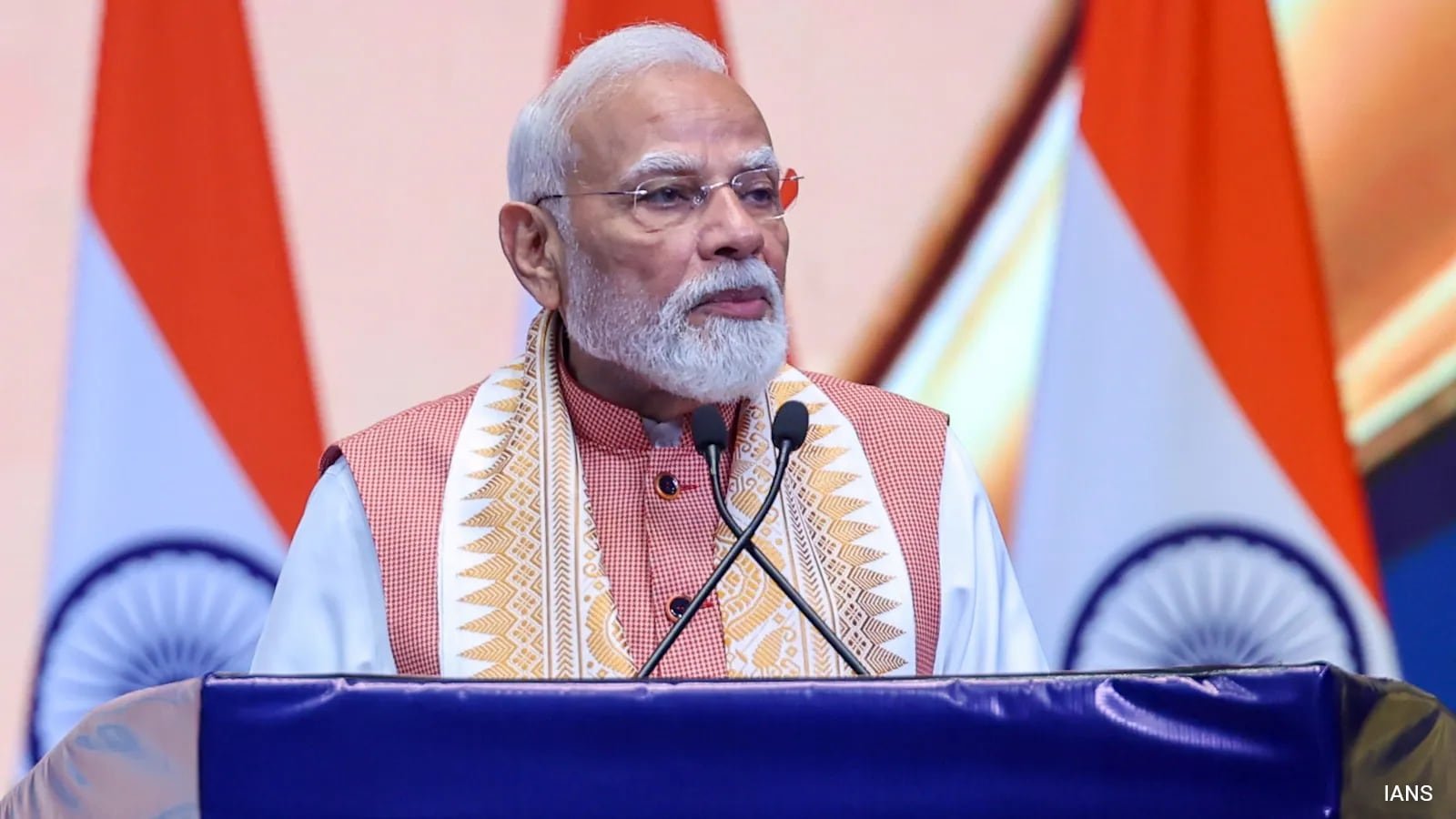
Prime Minister Narendra Modi’s address at the India-Australia CEO Forum in Melbourne maps out a major shift in bilateral relations, moving the partnership away from standard trade and toward deeply integrated technology and resource co-dependence.
By framing Australia as a primary pillar for India’s massive 500 GW renewable energy target by 2030 and its 100 GW nuclear milestone by 2047, the diplomatic strategy leverages a natural economic pairing: Australia’s vast resource reserves and capital combined with India’s massive industrial demand and domestic manufacturing scale.
1. The Critical Mineral Moat and Battery Ecosystems
India’s clean energy ambitions—including the production of solar PV modules, wind turbines, and advanced chemistry cell (ACC) batteries—face a fundamental bottleneck: secure access to critical minerals and rare earth elements.
-
Beyond Buyer-Seller Frameworks: As highlighted by Indian High Commissioner Nagesh Singh, the updated roadmap targets joint processing, local value addition, and supply chain insulation rather than a simple extraction-and-export cycle.
-
The EV & Grid Storage Connection: Securing long-term off-take agreements for Australian lithium, cobalt, and manganese is absolutely vital for Indian giga-factories trying to scale domestic production of commercial energy storage systems and electric vehicle powertrains.
2. Civil Nuclear Integration and Fuel Security
With India targeting an aggressive expansion to 100 gigawatts of nuclear power capacity by 2047, fuel stability is paramount. Australia possesses the world’s largest known resources of uranium, aligning directly with India’s multi-stage nuclear energy roadmap.
-
Baseload Decarbonization: While solar and wind handle peak daytime demand, nuclear power provides the essential low-carbon baseload electricity needed to support India’s heavy manufacturing sectors and localized AI data center expansions without relying on coal.
3. Channelling Long-Term Institutional Pension Capital
Beyond natural resources, the Melbourne reception focused heavily on tapping into Australia’s massive AU$3.9 trillion superannuation (pension) fund ecosystem.
-
Infrastructure Monopolies: Prime Minister Modi explicitly invited long-term Australian asset managers to deploy patient, yielding capital into India’s brownfield and greenfield infrastructure pipelines—specifically targeting airports, automated port logistics, national highway monetization bundles, and urban transport infrastructure.
The Geopolitical Takeaway: This engagement demonstrates a calculated effort to build resilient, alternative supply chains that are entirely decoupled from traditional geopolitical choke points. By anchoring the comprehensive strategic partnership to critical materials, sovereign capital, and civil nuclear technology, both nations are establishing an economic corridor built around technological and resource interdependence.
