

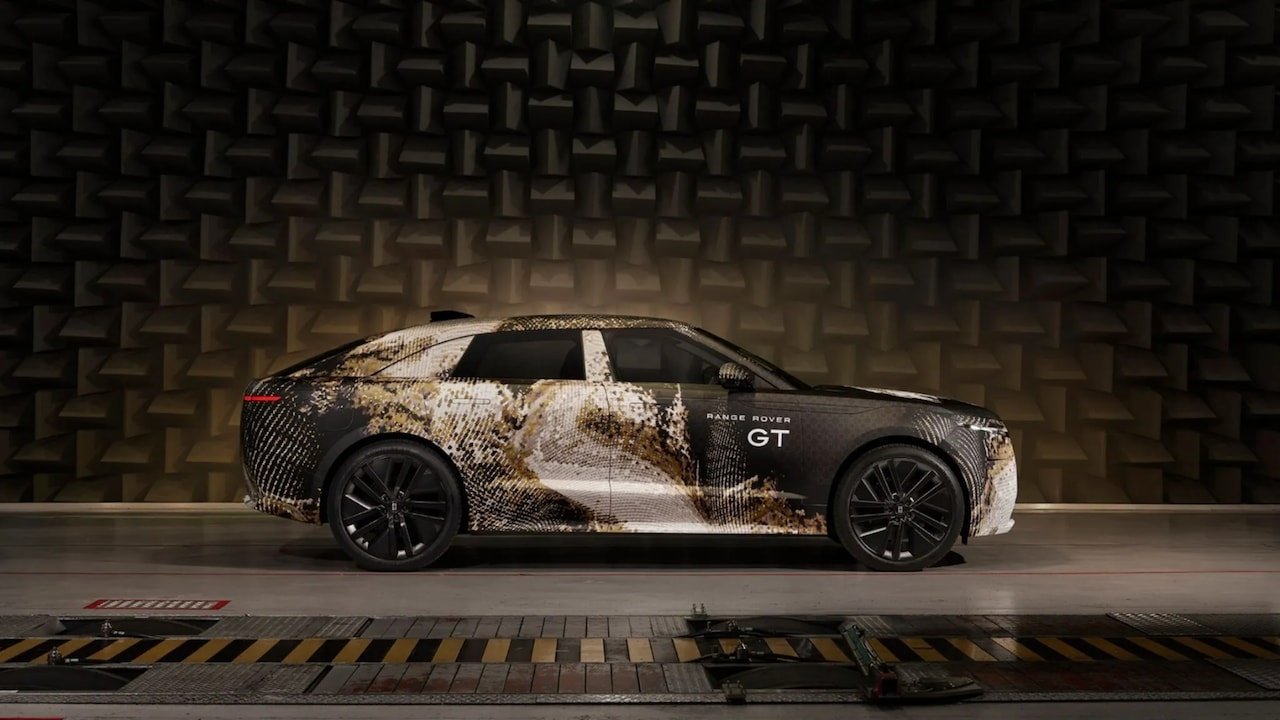
Range Rover has previewed its fifth global model line—and its first completely new nameplate since the Velar introduced in 2017—with the Range Rover GT. Breaking away from the luxury marque’s traditional upright SUV silhouette, the GT debuts as an all-electric, low-slung fastback grand tourer built for long-distance cruising.
Departure from Traditional SUV Proportions
The Range Rover GT blends coupe-like body lines with a road-oriented stance, marking a significant evolution in the brand’s design language:
-
Sleek Aerodynamics: A swept-back roofline and lower center of gravity prioritize grand touring efficiency without abandoning off-road capability.
-
EMA Platform Debut: It serves as the pioneer vehicle for Jaguar Land Rover’s (JLR) new Electric Modular Architecture (EMA).
-
UK Manufacturing: Production will take place at JLR’s Halewood facility in the United Kingdom alongside hybrid and ICE vehicles.
Minimalist, Tech-Driven Interior
Inside, the GT leans heavily into a uncluttered cabin design focused on driver ergonomics and rear-passenger luxury:
-
Dual-Display Setup: Features a streamlined central touchscreen paired with a dedicated driver display, doing away with complex traditional instrument clusters.
-
Concealed Features: Climate control air vents are integrated seamlessly across the dashboard layout, while woven textile trim covers discreetly embedded sound speakers.
-
Rear Comfort: Range Rover promises class-leading legroom in the second row to support long-haul journeys.
Powertrain Strategy
The Range Rover GT will launch initially as a pure battery electric vehicle (BEV), with a full hybrid (HEV) variant scheduled to follow later in its product lifecycle. Range Rover has not yet released specific battery capacities, range figures, or performance metrics.
