

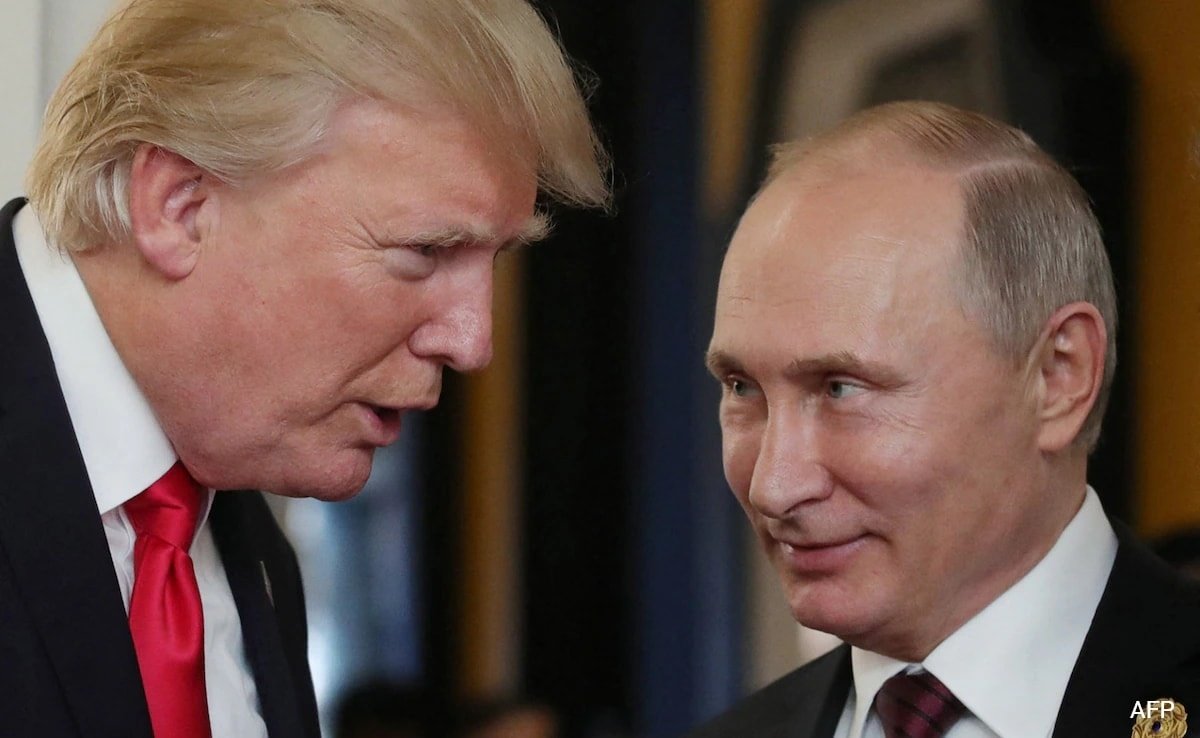
In a high-stakes 90-minute phone call on April 29, 2026, Russian President Vladimir Putin offered to assist U.S. President Donald Trump with the removal of Iran’s enriched uranium stockpile. The offer comes as the U.S. and Iran remain locked in an “indefinite” but fragile ceasefire following over 60 days of conflict.
The “Nuclear Dust” Dilemma
President Trump has frequently referred to Iran’s enriched uranium as “nuclear dust,” citing its existence as the primary justification for the current war.
-
The Stockpile: Iran has reportedly accumulated approximately 11 tonnes (22,000 pounds) of enriched uranium over the last eight years.
-
The Purity: Of most concern to international watchdogs is the 440.9 kg (972 pounds) of uranium enriched to 60% purity.
-
The Threat: Technical experts note that 60% enrichment is a short step away from the 90% “weapons-grade” level. At its current concentration, Iran possesses enough material to potentially fuel several nuclear devices if refined further.
Putin’s Proposal and Trump’s Rebuttal
According to White House reports, Putin suggested that Russia could act as a third party to take charge of and remove the 970 pounds of highly enriched material from Iranian soil.
President Trump reportedly declined the offer, choosing instead to pivot the conversation toward the conflict in Eastern Europe.
“I told him I’d much rather have you be involved with ending the war with Ukraine. To me, that would be more important,” Trump told reporters.
The Kremlin, meanwhile, issued a warning through presidential aide Yuri Ushakov, describing any potential ground offensive on Iranian soil as “unacceptable and dangerous” and warned of “dire consequences” if the current ceasefire is broken.
The Mystery of Isfahan
The International Atomic Energy Agency (IAEA) has expressed deep concern regarding the physical location of the stockpile.
-
Monitoring Gap: All international inspections were halted following U.S.-Israeli airstrikes in June 2025.
-
Best Estimate: IAEA Director General Rafael Grossi believes the majority of the highly enriched material remains buried at the Isfahan nuclear complex.
-
Satellite Evidence: Recent imagery shows Iran has built roofs over damaged buildings and blocked tunnel entrances with earthen mounds, maneuvers experts believe are designed to hide “salvaging and recovery operations” of surviving nuclear material.
Strategic Stalemate
While the ceasefire (mediated by Pakistan) is currently in effect, the U.S. naval blockade of the Strait of Hormuz remains active. Trump has stated he will only consider the conflict “resolved” once the nuclear material is recovered and removed, while Iranian officials maintain that they will not accept permanent limits on their nuclear technology.
