

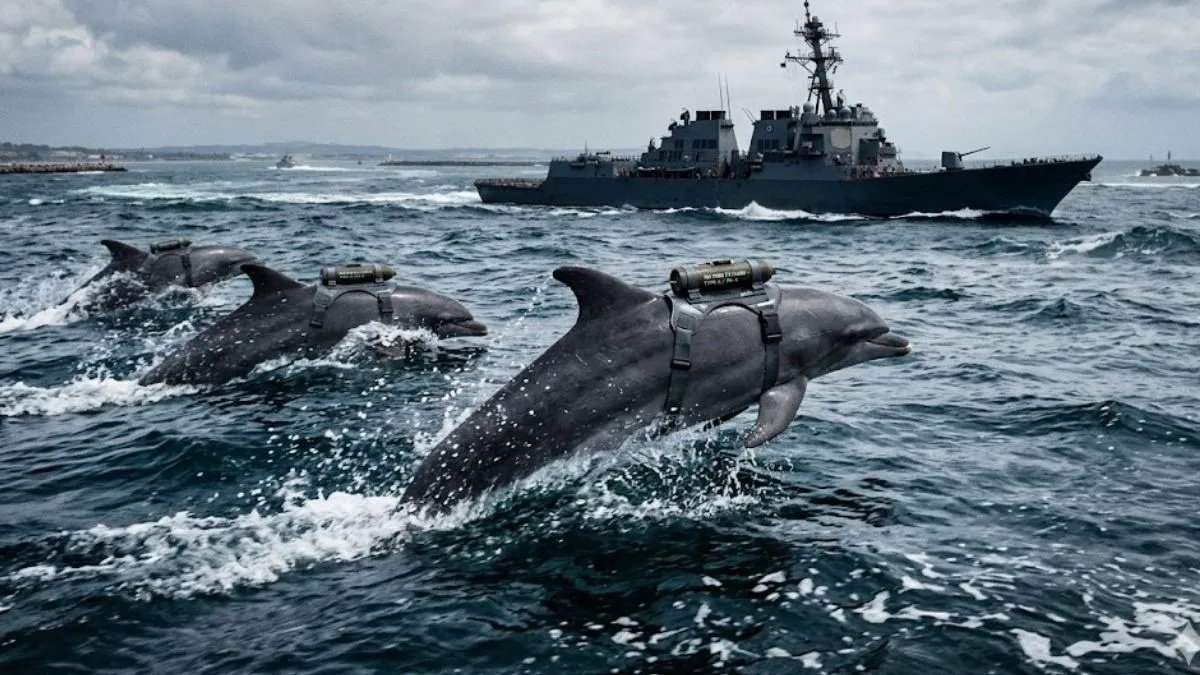
U.S. Secretary of Defense Pete Hegseth has downplayed reports suggesting that Iran might deploy “kamikaze dolphins” to target U.S. warships in the Strait of Hormuz. The unusual speculation follows a Wall Street Journal report claiming Iranian officials had weighed the use of mine-carrying marine mammals to disrupt naval operations.
During a press briefing, Hegseth offered a pointed response to the rumors:
“I cannot confirm or deny whether we have kamikaze dolphins, but I can confirm they [Iran] don’t,” Hegseth stated.
Marine Mammals: Fact vs. Fiction
While the idea of “dolphin warfare” sounds like science fiction, several nations have historically maintained marine mammal programs. However, the distinction between detection and weaponization is critical:
-
The U.S. Program: Since 1959, the Navy has used bottlenose dolphins and California sea lions. These animals are trained for detection and recovery, using their biological sonar to find underwater mines that drones might miss. They are not “kamikaze” assets and are not trained to sacrifice themselves.
-
The Iran Connection: Reports indicate Iran purchased dolphins from Russia in 2000. However, experts suggest these animals would likely be too old for active service today, and there is no evidence of a current, functional training program in Tehran.
-
The Russian Program: Russia has historically used dolphins to guard naval ports, most recently reported during the conflict in Ukraine to protect the Black Sea Fleet.
Current Operations in Hormuz
Despite the focus on unconventional threats, the U.S. military is currently prioritizing traditional mine-clearing and escort duties. While the Navy’s Marine Mammal Program remains a highly sophisticated asset for finding undersea targets in murky water, CNN reports that dolphins are not currently being utilized in the active efforts to reopen the Strait.
Secretary Hegseth’s comments come at a delicate time as the Trump administration pauses Project Freedom to facilitate diplomatic talks, even as the naval blockade of Iranian ports remains in effect. For now, the “dolphin threat” appears to be more a matter of psychological warfare than a tactical reality.
