

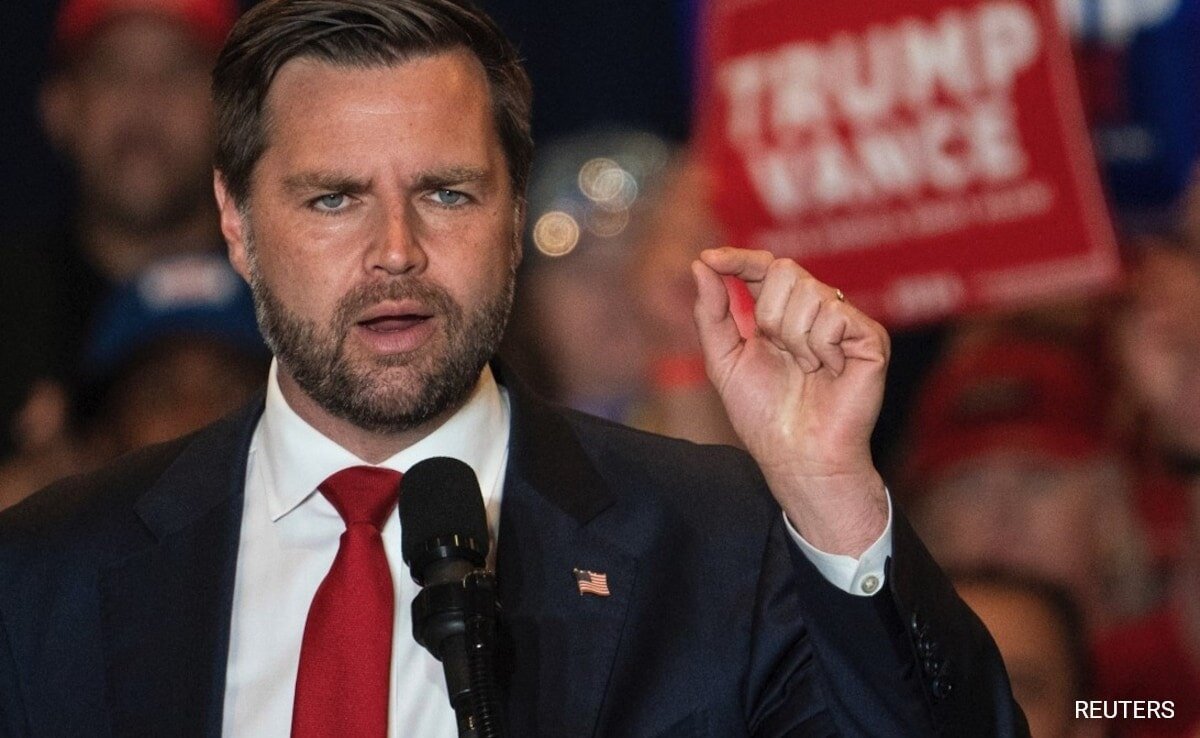
US Vice President JD Vance has attributed a two-day delay in releasing the full text of the newly signed US-Iran peace deal to systemic differences in press freedom, specifically pointing to Pakistan and Qatar.
Speaking on the podcast ‘Interesting Times with Ross Douthat’, Vance explained that while Washington intended to publicize the text on June 15, the rollout was pushed back to June 17 due to a lack of shared constitutional alignment regarding public transparency.
The Transparency Misalignment
The Trump administration faced immediate, sharp criticism from Democrats for withholding the text of the Memorandum of Understanding (MoU) for 48 hours following President Donald Trump’s official announcement of the interim agreement on June 15.
Defending the timeline, Vice President Vance pointed to the lack of First Amendment equivalent protections in the partner nations involved in mediating or navigating the diplomatic framework:
“We actually wanted to get it out. I think part of the misalignment here is that in the Pakistani and Qatari systems, they don’t quite have the First Amendment and freedom of the press… there isn’t this expectation that the text is going to be out there for the American people to actually interrogate and look at and analyse and understand for themselves. But it will be out.”
Vance’s remarks coincide with international benchmarks on media independence; in the 2026 Reporters Without Borders World Press Freedom Index, Pakistan ranked 153rd out of 180 countries.
Key Terms of the US-Iran Interim Agreement
Despite the initial domestic friction over public access to the document, the signed interim deal marks a major shift in global geopolitics and energy markets.
1. Immediate Economic & Maritime Relief
-
Strait of Hormuz Reopened: Iran has reopened the critical maritime chokepoint, reversing a wartime closure that severely bottlenecked global supplies of oil and natural gas.
-
Lifting of Port Blockades: The US has dismantled its blockade on Iranian ports, allowing the country to resume international oil sales.
-
Asset Unfreezing: The framework outlines the unfreezing of Iranian assets, though a definitive timeline for the release of funds remains unspecified.
2. The Path Forward on Nuclear Talks
-
60-Day Negotiating Window: Diplomatic teams meeting in Switzerland have been given an initial 60 days (with room for extensions) to draft a comprehensive, permanent nuclear agreement.
-
Financial Incentives: If a final nuclear deal is reached, it will trigger the ultimate lifting of all remaining international sanctions alongside a projected $300 billion postwar reconstruction fund for Iran.
