

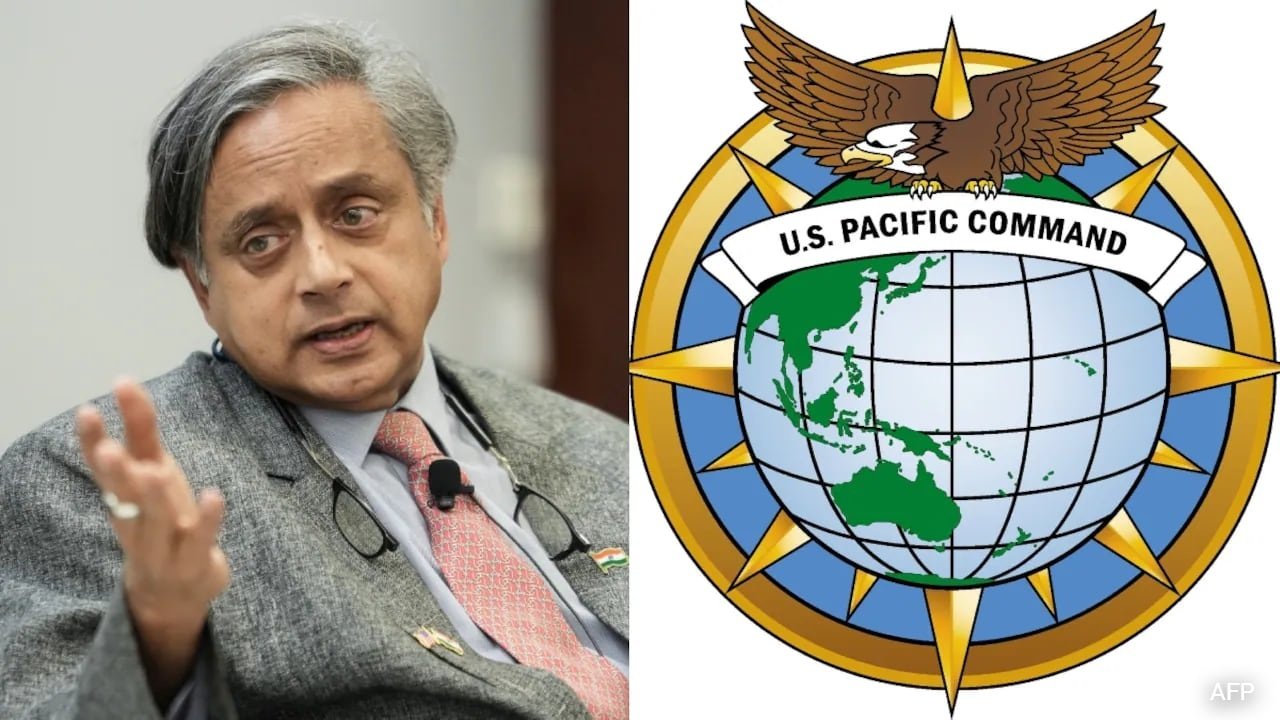
The United States has announced it is reverting the name of the US Indo-Pacific Command (USINDOPACOM) back to the US Pacific Command (USPACOM). The decision reverses an eight-year-old symbolic change and has triggered intense geopolitical debate regarding Washington’s long-term strategy in Asia.
Reacting to the development, Indian Member of Parliament Shashi Tharoor expressed deep skepticism over what this means for regional alliances, posting a screenshot of the official order on X (formerly Twitter) with the caption:
“One more nail in the coffin of the Quad?”
Why the Name Change Matters
The removal of “Indo” from the title has sparked immediate concern among strategic analysts in New Delhi. The Quad—a strategic security dialogue consisting of Australia, India, Japan, and the United States—has heavily relied on the “Indo-Pacific” framework to counter rising geopolitical challenges in the region.
| Era | Command Name | Strategic Meaning |
| 1947–2018 | US Pacific Command (USPACOM) | Legacy post-WWII security architecture focused strictly on Pacific theaters. |
| 2018–2026 | US Indo-Pacific Command (USINDOPACOM) | Changed by the first Trump administration to acknowledge the interconnected security of the Indian and Pacific Oceans. |
| 2026–Present | US Pacific Command (USPACOM) | Reverted by the Department of Defense to honor historical roots and military heritage. |
Washington Downplays Policy Shift
Despite anxieties that the move signals a diplomatic downgrade of India’s role in American defense strategy, U.S. officials have pushed back against the narrative. The Department of Defense insisted that the modification is purely a nomenclature change and does not alter the command’s actual responsibilities.
According to the official statement, the reversion to USPACOM is meant to honor the legacy of the oldest and largest unified combatant command in the U.S. military:
“From its critical role in establishing the post-WWII regional security architecture to its coordination of joint forces during the Korean War, the Vietnam War, and countless humanitarian operations, the USPACOM namesake carries decades of military heritage and enduring regional partnerships.”
Background: The 2018 Rebranding
Originally established by President Harry Truman in 1947, the command’s jurisdiction has always been massive, stretching from the U.S. West Coast all the way to India’s western border.
In 2018, then-Defense Secretary James Mattis famously rebranded it to the “Indo-Pacific Command” to recognize the growing strategic weight of the Indian Ocean, noting at the time that the theater spanned “from Bollywood to Hollywood, and from penguins to polar bears.”
For India, the command has served as a vital institutional channel for expanding defense cooperation with the U.S., paving the way for advanced joint military exercises, intelligence sharing, and maritime coordination. Whether this nominal rollback translates to a softer stance on broader India-U.S. defense ties remains to be seen.
