

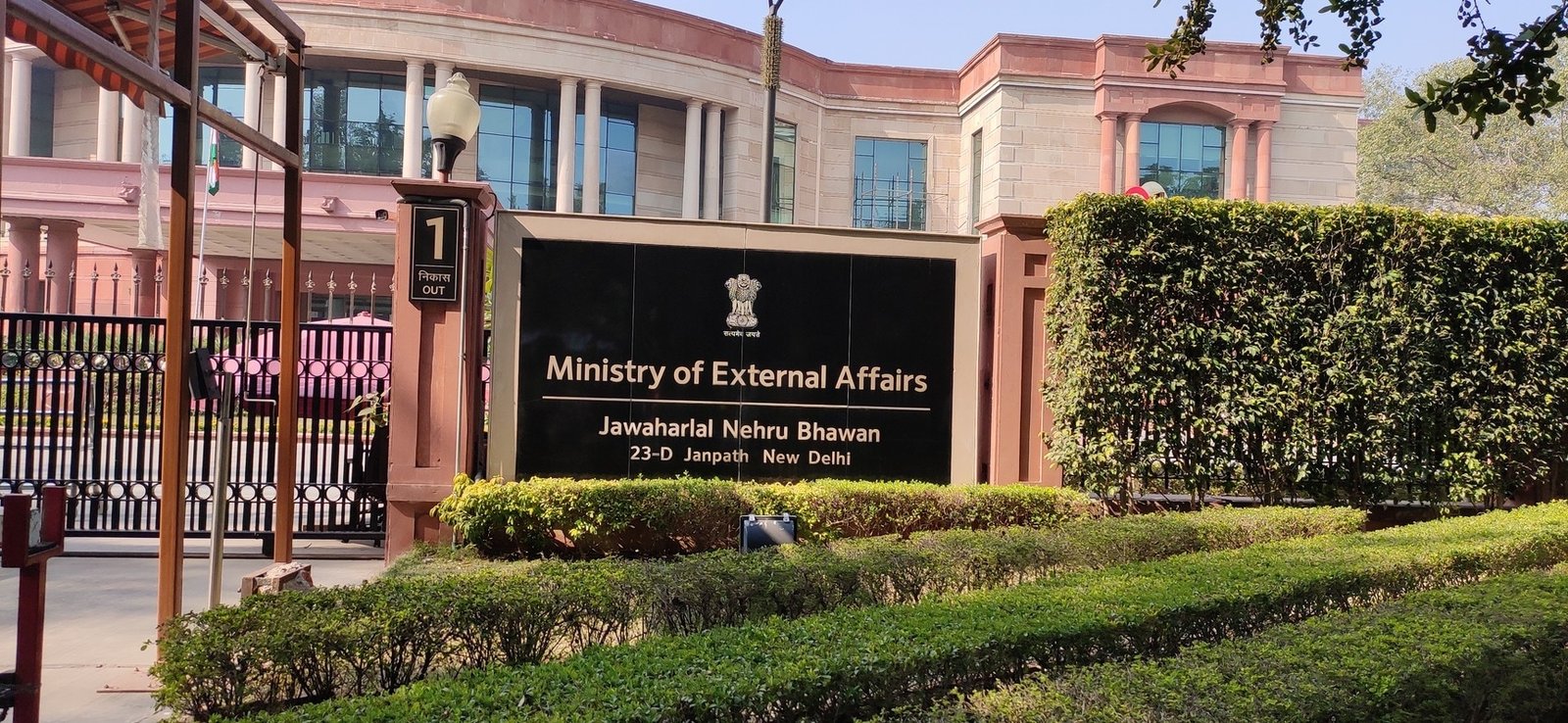
New Delhi has flatly rejected allegations regarding declining media freedoms and the erosion of minority rights, reaffirming that India remains a “vibrant democracy” with ironclad constitutional guarantees for free speech. The statement was issued by Sibi George, Secretary (West) in the Ministry of External Affairs (MEA), during a media briefing in Amsterdam marking the conclusion of Prime Minister Narendra Modi’s official two-day diplomatic visit to the Netherlands.
The sharp rebuttal followed questions from Dutch reporters referencing comments attributed to Netherlands Prime Minister Rob Jetten, who reportedly expressed concern over a perceived slide in India’s freedom of expression. While PM Jetten’s public social media statement took a softer, collaborative tone—stating that “both India and the Netherlands attach great importance to democracy, good governance and a world order based on rules and justice”—the MEA moved quickly to counter the underlying criticisms.
“A Lack of Understanding”: Sibi George’s Comprehensive Rebuttal
Characterizing Western apprehensions as a fundamental misconception of the subcontinent’s deep-rooted social fabric, George delivered a data-backed defense of India’s pluralism, spanning ancient history and modern demographics.
1. The Civilisational Blueprint of Coexistence
The diplomat underscored that India’s diversity is five millennia old, making it uniquely structured to protect varying communities:
-
Cradle of Faiths: India is the proud birthplace of four of the world’s major religions—Hinduism, Buddhism, Jainism, and Sikhism—all of which continue to actively thrive.
-
Safe Haven from Persecution: George highlighted that the Jewish population has coexisted peacefully in India for over 2,500 years without ever experiencing systemic persecution.
-
Ancient Global Ties: He reminded the European press corps that Christianity arrived in India immediately following the resurrection of Jesus Christ—long before it took root across Europe—and today boasts a vibrant community of over 30 million Christian citizens. Similarly, Islam reached Indian shores during the lifetime of the Prophet Muhammad.
2. Demographic Expansion of Minorities
Addressing targeted concerns about minority demographics, George offered a direct statistical comparison to global trends:
“When we became independent, the minority population in India was 11 per cent. Now it is more than 20 per cent. Name a country where the population of minorities has gone up? You won’t find it anywhere other than India.”
Democratic Governance and Poverty Alleviation
| Pillar of Democracy | Operational Metric | Developmental Impact |
| Electoral Participation | 🔼 90%+ Voter Turnout | Recent regional assembly elections witnessed historic public participation, reinforcing India’s commitment to the peaceful transition of power. |
| Socioeconomic Growth | ⚖️ Democratic Mandate | India successfully engineered historic poverty alleviation programs through constitutional, peaceful democratic processes rather than authoritarian force. |
“We are one-sixth of the total population of the world, but not one-sixth of the problems of the world. This is the beauty of India, which makes us proud. So, every minority thrives,” George stated, urging foreign observers to deeply study India’s unique developmental path.
Bilateral Friction: The Insiya Hemani Child Custody Dispute
Despite the broader diplomatic cooperation, a long-standing bilateral legal battle resurfaced during the high-level talks. Following his meeting with PM Modi, Prime Minister Jetten confirmed on social media that he had explicitly raised a high-profile international child custody case.
-
The Dispute: The case involves Insiya Hemani, a Dutch citizen who was allegedly abducted from Amsterdam nearly a decade ago as a toddler and brought to India by individuals acting on behalf of her father.
-
Legal Status: While Dutch tribunals previously handed down criminal convictions to multiple individuals involved in the physical extraction, parallel legal battles regarding legal guardianship and international custody arrangements have remained trapped in the Indian judicial machinery.
When pressed by international journalists for India’s official stance on the repatriation or resolution of the custody dispute, MEA Secretary Sibi George politely declined to elaborate, stating strictly that the sensitive matter remains sub-judice across active domestic courts.
