

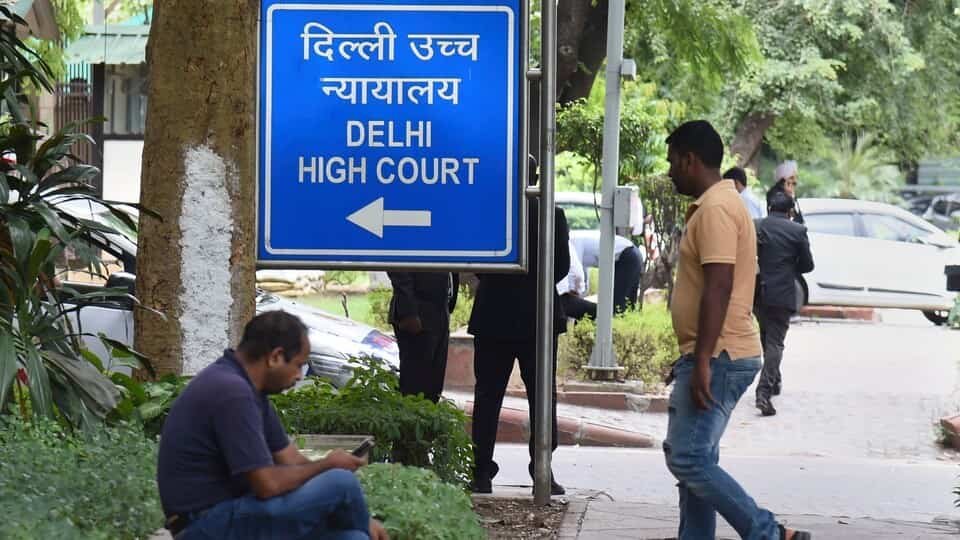
In a landmark ruling addressing the complex intersection of traditional practices and secular legislation, the Delhi High Court has held that the validity of a marriage under personal law does not grant immunity from criminal prosecution under penal statutes.
Justice Sanjeev Narula, delivering a comprehensive 23-page verdict, refused to quash an FIR registered against a 28-year-old man who had established sexual relations with his minor wife. The court firmly established that statutory protections afforded to children under secular laws override personal law provisions regarding marriage and consent.
The Background of the Case
The case came to light when the young woman, approximately eight months pregnant, visited a government hospital for medical treatment. Her age—16 years old at the time of her marriage—was subsequently discovered, triggering mandatory police intervention. An FIR was registered against the husband under Section 64 of the Bharatiya Nyaya Sanhita (BNS), 2023, and Section 6 of the Protection of Children from Sexual Offences (POCSO) Act.
Faced with criminal prosecution, the couple approached the High Court seeking to quash the proceedings. Their defense rested on the premise that:
-
Their marriage was fully voluntary and solemnized with the consent of their families.
-
The union and subsequent cohabitation were completely valid under Muslim personal law, as the bride had attained puberty prior to the marriage.
-
Because the relationship was consensual and rooted in a recognized personal law framework, it should not attract criminal liability.
The Court’s Ruling and Legal Reasoning
The High Court dismissed the petition, emphasizing that personal law and criminal law operate in distinct spheres. While personal law may govern civil consequences—such as marital status, maintenance, legitimacy, residence, and inheritance—it cannot supply an exception to criminal liability enacted by Parliament.
Key Principles Highlighted by the Court:
-
The Absolute Age of Consent: Both the POCSO Act and the BNS strictly establish 18 years as the non-negotiable threshold for sexual consent. Furthermore, the BNS explicitly withholds the traditional marital exception when the wife is under 18.
-
Non-Supremacy of Personal Law: The court noted that concepts like “puberty” under personal law cannot be substituted for the statutory age limit, nor can the law permit case-specific assessments of whether a 16-year-old child appeared mature enough to consent.
-
Defeating the Legislative Intent: Justice Narula observed that allowing personal law to grant immunity would “turn the legislation on its head,” making vital child protections dependent on whether a marriage ceremony took place before a sexual relationship was discovered.
“A marriage claimed to be valid under Muslim personal law cannot, by reason of that status alone, confer immunity from POCSO or the BNS for sexual intercourse with a wife who was below eighteen at the relevant time,” the court asserted.
Broader Implications
This verdict reinforces the supremacy of child protection laws over customary practices across different personal laws in India. By ruling that a marriage certificate cannot function as a shield against statutory offenses, the Delhi High Court has reiterated that the legal age of consent remains paramount under the framework of the POCSO Act and the Bharatiya Nyaya Sanhita.
