

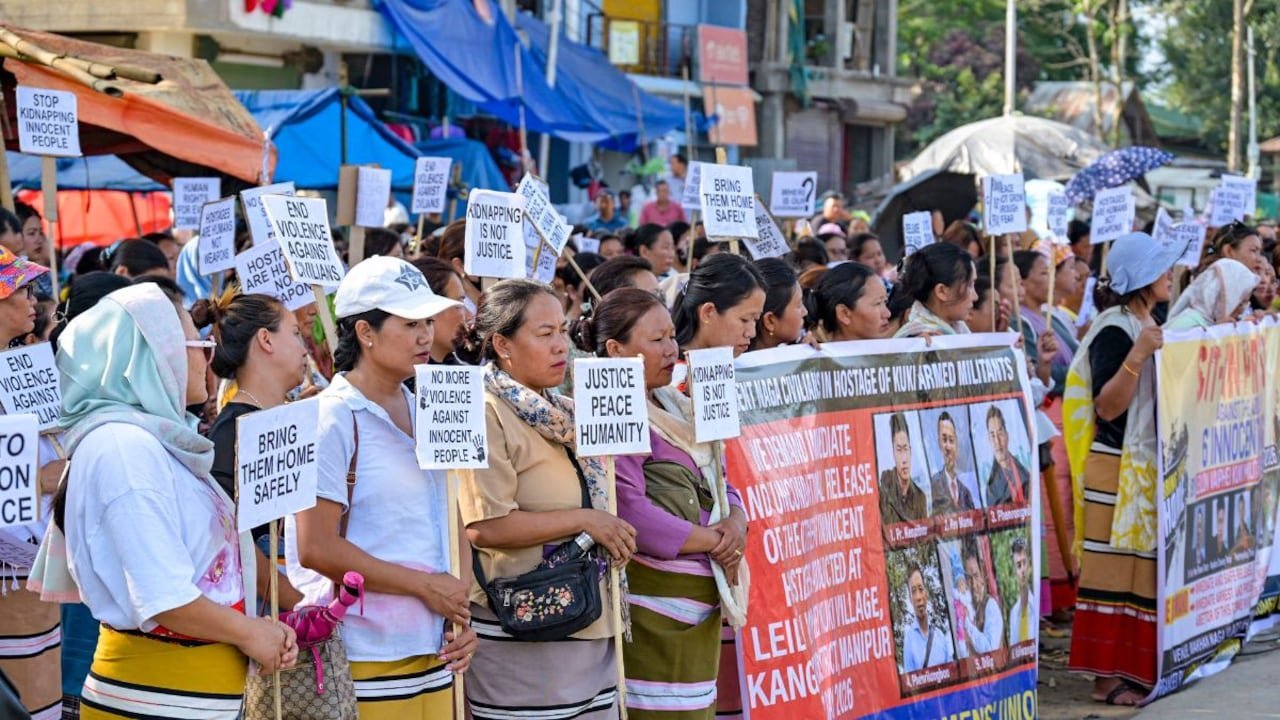
Three years after ethnic violence first broke out between the Meitei and Kuki-Zo communities, the conflict in Manipur has taken a dangerous new turn. The fault lines have shifted deep into the hill districts, sparking a deadly confrontation between the Kuki and Naga communities in regions that largely remained peaceful during the initial phases of the crisis.
According to data from the global conflict tracker ACLED, nearly 100 people have been killed across more than 300 incidents of violence between January 1 and October 10, 2026. While the Imphal Valley has seen relative calm, the violence has clustered heavily in the hill districts of Ukhrul, Kamjong, Kangpokpi, Noney, Tamenglong, and Senapati.
Key Highlights of the Escalating Conflict
-
The Spark: The latest round of clashes ignited on February 7, 2026, after a Tangkhul Naga man was assaulted by Kuki individuals at Litan Sareikhong in Ukhrul district. The incident rapidly spiraled into widespread riots, home burnings, curfews, and internet blackouts.
-
Deadliest Phase: The conflict has steadily intensified. September recorded at least 19 deaths, followed by 13 additional fatalities in the first half of October alone.
-
Tactics and Atrocities: The 2026 violence has been marked by brutal tactics, including targeted killings, village arson, highway ambushes, and hostage-taking resulting in beheadings. For instance:
-
On May 13, three Kuki church leaders were ambushed and killed in Kangpokpi, coinciding with the abduction of 18 Naga civilians (six of whom were later found murdered and mutilated on June 10).
-
Subsequent village torchings have hit Kamjong, Noney, and Kangpokpi districts.
-
On August 27, five Naga civilians lost their lives in an ambush along the Imphal-Tamenglong (IT) Road.
-
Highways and Border Areas as Battlegrounds
The state’s rugged terrain and crucial road networks have become primary flashpoints. Data indicates that at least 16 people have been killed in ambushes on major highways and transport routes this year, including stretches of NH-202, NH-2, NH-37, and NH-102A.
Security forces have also faced casualties, including a BSF constable and two Assam Rifles personnel killed in highway ambushes. Furthermore, economic pressure points have heightened tensions: the United Naga Council enforced crippling highway blockades for months over the summer before suspending them following tripartite talks in late September.
Controversies Surrounding the Suspension of Operations (SoO)
The escalation has brought the Suspension of Operations (SoO) pact back into the spotlight:
-
Accusations: Naga organizations have accused Kuki-Zo groups operating under the SoO pact (specifically factions like KNF-P and KRA) of orchestrating multiple deadly attacks. Conversely, Kuki bodies have blamed groups such as NSCN-IM and ZUF-K.
-
Political Fallout: Meitei and Naga groups are increasingly demanding the outright scrapping of the SoO agreement, alleging that armed cadres frequently leave designated government camps to participate in violence.
Meanwhile, political pressure is concurrently rising in the valley. On October 15, life across the state was disrupted by a 12-hour shutdown called by the proscribed outfit KCP-Apunba to observe “Black Day” over Manipur’s 1949 merger with India.
