

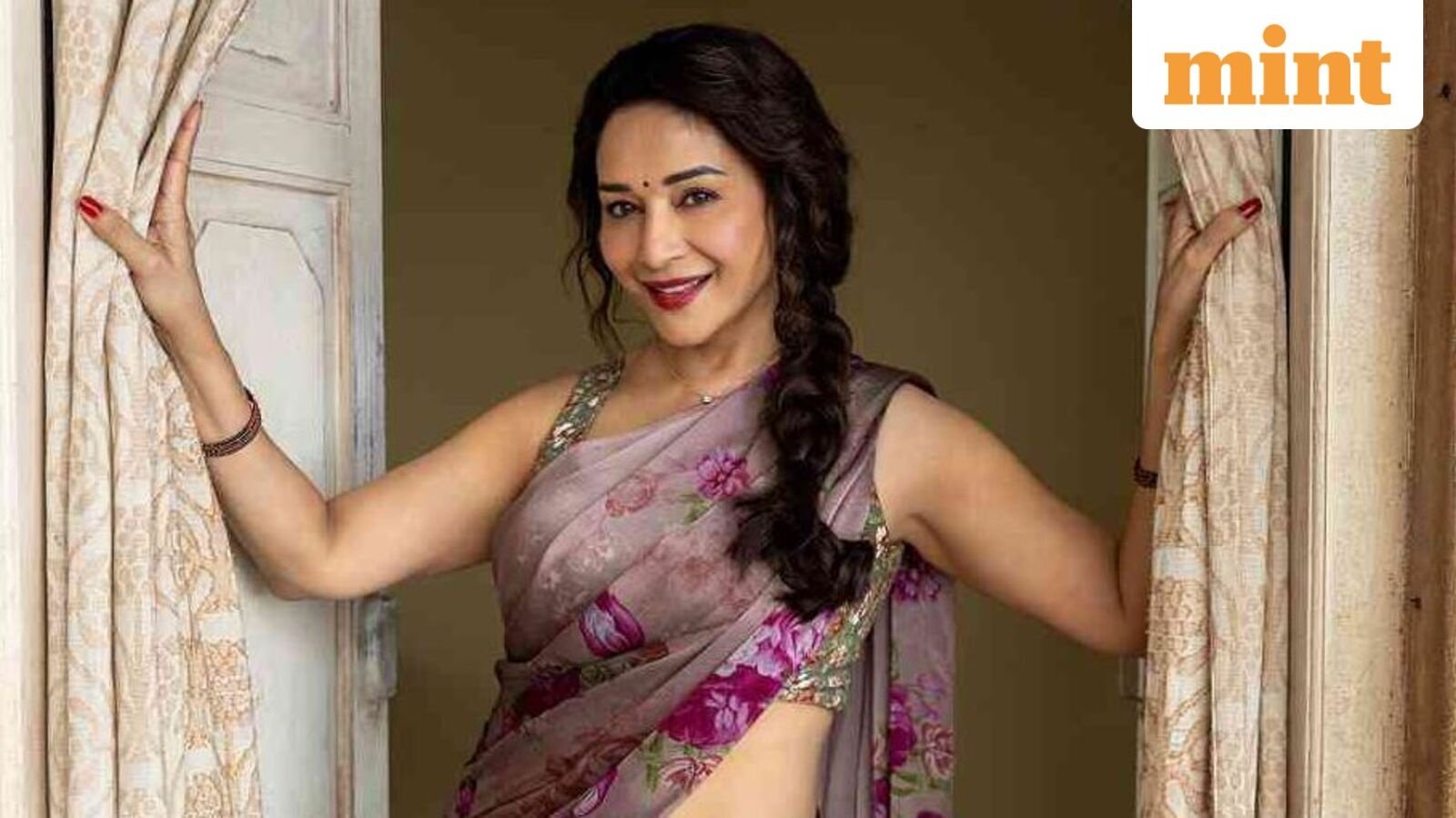
Suresh Triveni’s latest satirical comedy, Maa Behen, has struck a chord with audiences since its theatrical release on June 5. Far from a conventional comedy, the film delivers a razor-sharp critique of deeply ingrained societal double standards.
In an exclusive conversation with NDTV, Bollywood icon Madhuri Dixit opened up about what drew her to the role of Rekha, the film’s broader social message, and the fascinating thematic parallels to one of the most controversial moments of her early career.
The Anatomy of Maa Behen
The film follows three women across generations within a single household, each facing constant surveillance and judgment for their personal choices:
-
Rekha (Madhuri Dixit): The “Maa,” whose choice to wear a sleeveless blouse is twisted by local gossip into a weapon designed to lure men.
-
Jaya (Triptii Dimri): The elder daughter, stifled by a conservative domestic structure where she is reduced to servicing male egos.
-
Sushma (Dharna Durga): The youngest daughter, who is instantly ostracized by judgmental neighbors after a private video of a kiss goes viral online.
Despite the heavy subject matter, Madhuri emphasizes that the film handles the crisis with sharp wit and humor, intentionally avoiding a one-sided blame game.
“It’s not only a woman’s film; it’s a film for men. And it’s not saying that only men do this. Even women judge. It’s basically a statement on society in general, not on one gender. We need to change. Society needs to change as a whole, not just the men or the women.”
— Madhuri Dixit
Flipping the Script: The Choli Ke Peeche Parallel
One of the most talked-about elements of Maa Behen is a brilliant cinematic callback to Madhuri’s iconic 1993 film Khal Nayak.
Thirty-three years ago, the song “Choli Ke Peeche Kya Hai” faced severe backlash from conservative critics who accused it of promoting vulgarity. In Khal Nayak, the garment was used as a seductive ploy to distract criminals. In Maa Behen, the tables are completely turned. Rekha’s sleeveless blouse is used contextually to absurdly cover up the “supposed” death of a neighbor.
Instead of a tool for the male gaze, the outfit transforms into a symbol of a woman’s bodily autonomy and resistance against slut-shaming.
| Film | Song/Element | Context (1993) | Reimagined Context (2026) |
| Khal Nayak | Choli Ke Peeche | Used as a tantalizing distraction to deceive criminals. | Criticized heavily by society for “vulgarity.” |
| Maa Behen | The Sleeveless Blouse | Used as a satirical plot device to manage a neighborhood crisis. | Reclaimed as a symbol of defiance and personal freedom. |
Madhuri expressed immense joy that audiences are noticing these subtle layers: “Just the fact that they’re talking about even the littlest of things gives us joy because they’re watching the movie. They’re getting immersed in it and seeing every little detail.”
An Enduring Stardom
From her peak reign in the 1990s with blockbusters like Tezaab and Hum Aapke Hain Koun..!, to her sudden departure to the US post-marriage, and her eventual 2007 return in Aaja Nachle, Madhuri’s bond with Indian audiences has remained unbroken.
While she has successfully broken into the OTT streaming space with projects like The Fame Game and Mrs Deshpande, Maa Behen stands out as a unique project that perfectly marries her legendary screen presence with a sharp, contemporary comedic edge.
For Madhuri, her relationship with her fans transcends traditional celebrity: “I’m very fortunate… because I’m just not a mere star for them. They think that I’m a part of their family. And that’s the biggest advantage for me.”
