

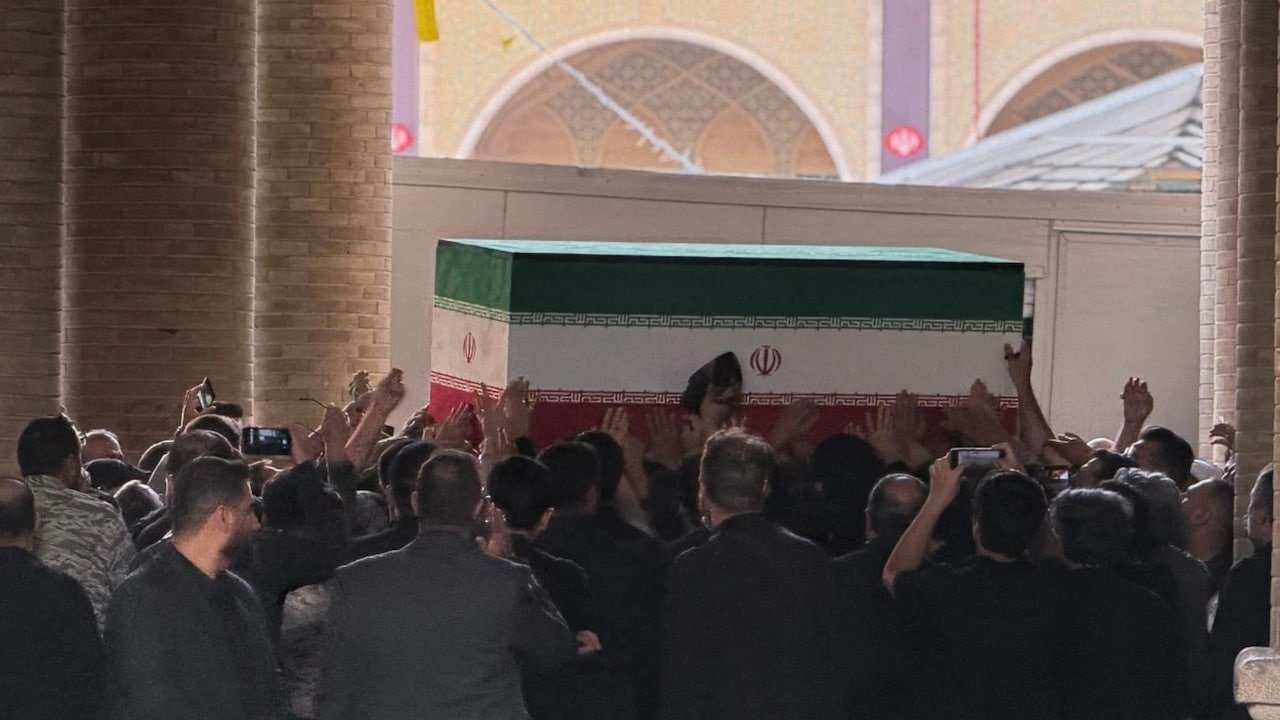
Even as Iran maintains a calm public facade during the funeral services for its late Supreme Leader Ali Khamenei, authorities are quietly prepping for potential mass-casualty disasters.
According to a report by the German newspaper Die Welt, Iranian officials have formulated extensive emergency protocols anticipating between 1,500 and 3,000 fatalities during the multi-day funeral processions, which are drawing millions of mourners into tightly packed urban centers.
Contingency Plans for “Acceptable” Losses
A Tehran municipality employee, speaking anonymously to Die Welt for security reasons, verified that a dedicated task force has been assembled to handle missing persons and sudden deaths. Furthermore, thousands of new graves have already been dug at Tehran’s primary cemetery, Behesht-e Zahra.
“The prepared graves really exist,” the source stated. “Those responsible were told that up to 3,000 dead would be okay. With such a large crowd and this extreme heat, no one knows what will happen.”
The funeral procession commenced in Tehran on Saturday, with schedules taking the cortege through the holy city of Qom before moving into Iraq’s major Shiite centers, Najaf and Karbala. The final burial is scheduled for Thursday in Mashhad.
Dual Threats: Extreme Heat and Historical Precedents
The sheer logistics of the funeral have forced one of the largest security mobilizations in Iran’s modern history. Authorities have placed severe movement restrictions across Tehran, deployed thousands of transit buses, set up temporary field kitchens, and converted schools and mosques into makeshift shelters.
The primary physical worry stems from severe crowd crushes aggravated by soaring summer temperatures. Iran has a tragic history with high-profile state funerals:
-
2020: A massive stampede killed at least 56 people and injured over 200 during the funeral of IRGC Commander Qasem Soleimani in Kerman.
-
1989: The chaotic funeral of the Islamic Republic’s founder, Ruhollah Khomeini, led to at least eight deaths and hundreds of severe injuries.
Guarding Against Airborne and Domestic Attacks
Beyond administrative and crowd-control challenges, the Islamic Revolutionary Guard Corps (IRGC) is operating on high alert against military and terrorist threats. The security blanket was tightened significantly after provocative statements from foreign adversaries, including reported remarks from Israel’s Defense Minister Israel Katz declaring that Iran’s supreme leader, Mojtaba Khamenei, was “marked for death.”
To secure the event, the Iranian government implemented the following extreme measures:
-
Airspace Lockdown: Tehran’s metropolitan airspace was completely shut down to prevent aerial incursions.
-
Heavy Street Patrols: Massive human chains of security personnel and armed patrols have flooded the streets around the Grand Mosalla mosque.
-
Internal Counter-Terrorism: Intelligence forces are monitoring for potential opportunism from regional separatist movements, Kurdish militants, and the exiled opposition group Mujahadin-e Khalq (MeK).
Despite the heightened threat environment, top Iranian officials and IRGC commanders are continuing to make planned public appearances, demonstrating confidence in their extensive counter-threat network.
