

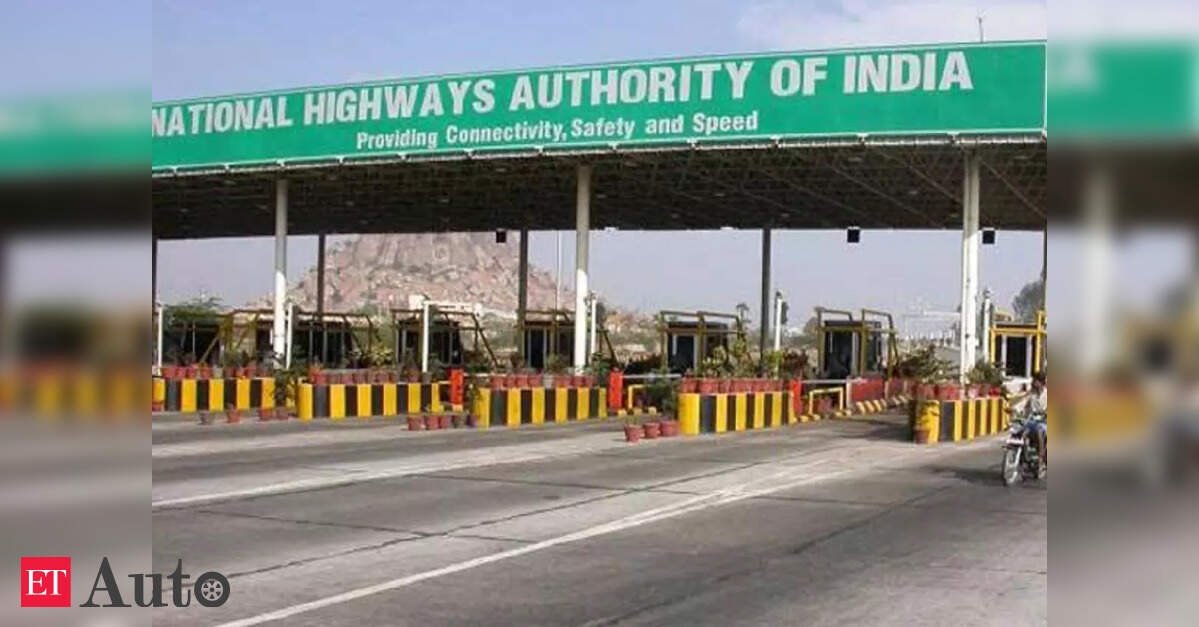
India has officially entered the era of “Multi-Lane Free Flow” (MLFF) tolling. The country’s first barrier-free toll plaza is now operational on the Mumbai-Delhi National Highway (NH48), specifically at the Choryasi toll plaza near Surat.
This move signals the beginning of the end for physical toll booths and long highway queues. Here is everything you need to know about this technological milestone:
How the Barrier-Free System Works
The new system eliminates the traditional “stop-and-pay” model. Instead of a physical boom barrier, vehicles pass under overhead gantries equipped with high-tech sensors.
-
ANPR Technology: High-resolution cameras use Automatic Number Plate Recognition to identify the vehicle.
-
RFID Integration: Sensors read existing FASTag details simultaneously.
-
Automatic Deduction: Toll charges are instantly debited from the linked bank account or wallet while the vehicle is in motion.
Key Highlights of the Choryasi Pilot
-
No Speed Reduction: Vehicles can maintain speeds of up to 80 kmph while passing through the toll point.
-
Tested & Proven: The launch follows a rigorous testing phase that began on February 2, 2024.
-
Default Recovery: For vehicles without a functional FASTag, the system flags the number plate, and an electronic payment notice is sent directly to the registered owner.
Economic and Environmental Impact
The National Highways Authority of India (NHAI) projects massive benefits as this system scales:
-
Fuel Savings: Estimated ₹1,500 crore saved annually due to reduced idling.
-
Revenue Boost: An additional ₹6,000 crore in revenue expected through improved collection efficiency.
-
Congestion Relief: A significant drop in travel time and CO2 emissions on the busy Surat-Bharuch stretch.
The Road Ahead: 2026 Vision
Union Minister Nitin Gadkari has set an ambitious timeline for the nation. The Surat installation serves as the pilot for a nationwide rollout.
The Goal: To convert more than 1,050 toll plazas across India into AI-based, barrier-free systems by the end of 2026.
This transition is expected to make Indian highways some of the most digitally advanced in the world, ensuring a seamless “gate-to-gate” driving experience across the country.
