

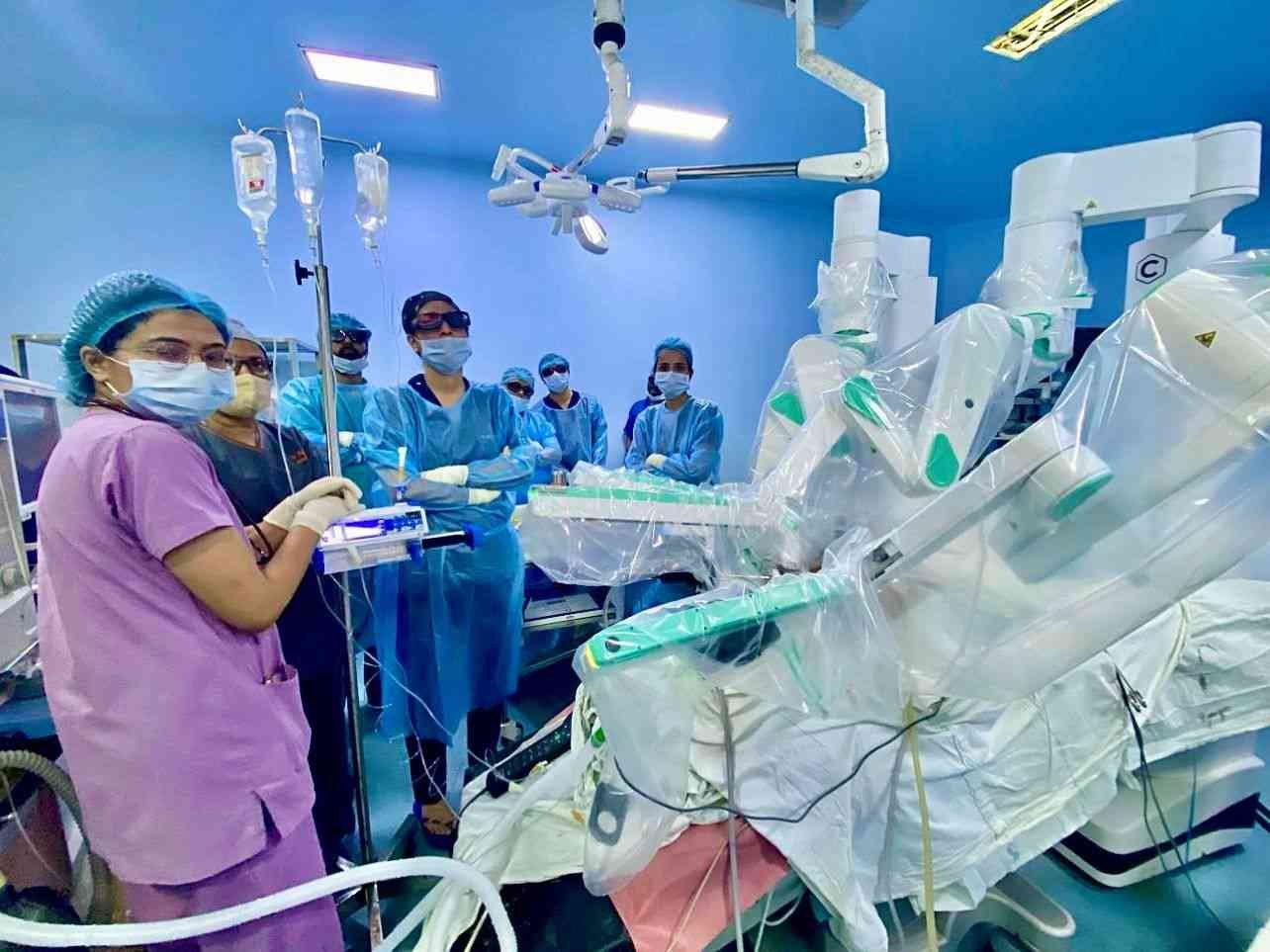
In a significant leap for medical technology in India, a 52-year-old patient in Nagpur underwent a hernia operation controlled by a surgeon nearly 800 kilometers away in Mumbai. The procedure, which took place on the morning of March 27, 2026, was witnessed by several high-profile onlookers at a Mumbai convention center, including Maharashtra Chief Minister Devendra Fadnavis.
How the Surgery Worked
The operation showcased the potential of telesurgery, where a doctor operates on a patient from a remote location via the internet.
-
The Setup: A surgeon in Mumbai, wearing polarized 3D glasses, used a robotic console to send commands over a secure internet connection.
-
The Execution: In Nagpur’s Government Medical College, a second robotic system docked on the patient, Suryabhan Sambharkar, received these signals and moved its multiple mechanical arms accordingly.
-
Duration: The robotic portion of the surgery lasted approximately 40 minutes before a local medical team in Nagpur took over to finalize the procedure.
The robots used for this demonstration were provided by Meril and SS Innovations (SSI), two leading Indian multinational companies in the surgical robotics field.
The Rise of Robotic Surgery in India
While the first robotic surgery in India was performed at AIIMS Delhi in 2006, the technology has seen an explosion in recent years.
-
Rapid Growth: In 2020, there were fewer than 100 robotic machines in India. By 2025, that number surged to over 500.
-
High Volume: Nearly 50,000 robotic procedures were conducted across the country in 2025 alone.
Precision vs. Cost: Is it Always Necessary?
Despite the technological marvel, medical experts are raising questions about the “indiscriminate” use of robots for simple procedures.
-
The Benefits: Proponents like Dr. Imran Hamzawala note that robots provide 10x magnification and 3D high-definition visuals, reducing the risk of damaging tiny blood vessels and allowing for quicker recovery.
-
The Concerns: Surgeons like Dr. Rahul Mahadar caution that for simple hernias, traditional laparoscopy is often better. Laparoscopic incisions are smaller (5mm vs. 8mm) and the procedure is significantly cheaper.
-
Financial Pressure: Robotic systems can cost upwards of ₹20 crore, with annual maintenance reaching ₹1 crore. Some experts suggest that hospitals may push patients toward robotic surgery—even for minor operations—to recover these high investment costs.
The Training Gap
A major concern in the medical community is the lack of uniform training guidelines. Currently, robotic training is not part of the standard medical curriculum in India. Instead, surgeons often receive only a few days of training from the robot manufacturers.
Tragic cases, such as a patient in 2025 whose intestine was accidentally cut during a robotic hernia surgery, have underscored the urgent need for a standardized, government-affiliated certification process for robotic surgeons.
Insurance Hurdles
While the IRDAI has mandated that insurers cover robotic surgeries, many companies have added clauses that limit reimbursement. It is common for insurers to cap coverage at 50% of the sum insured or charge higher premiums for robotic procedures, leaving many patients to pay significantly out-of-pocket.
