

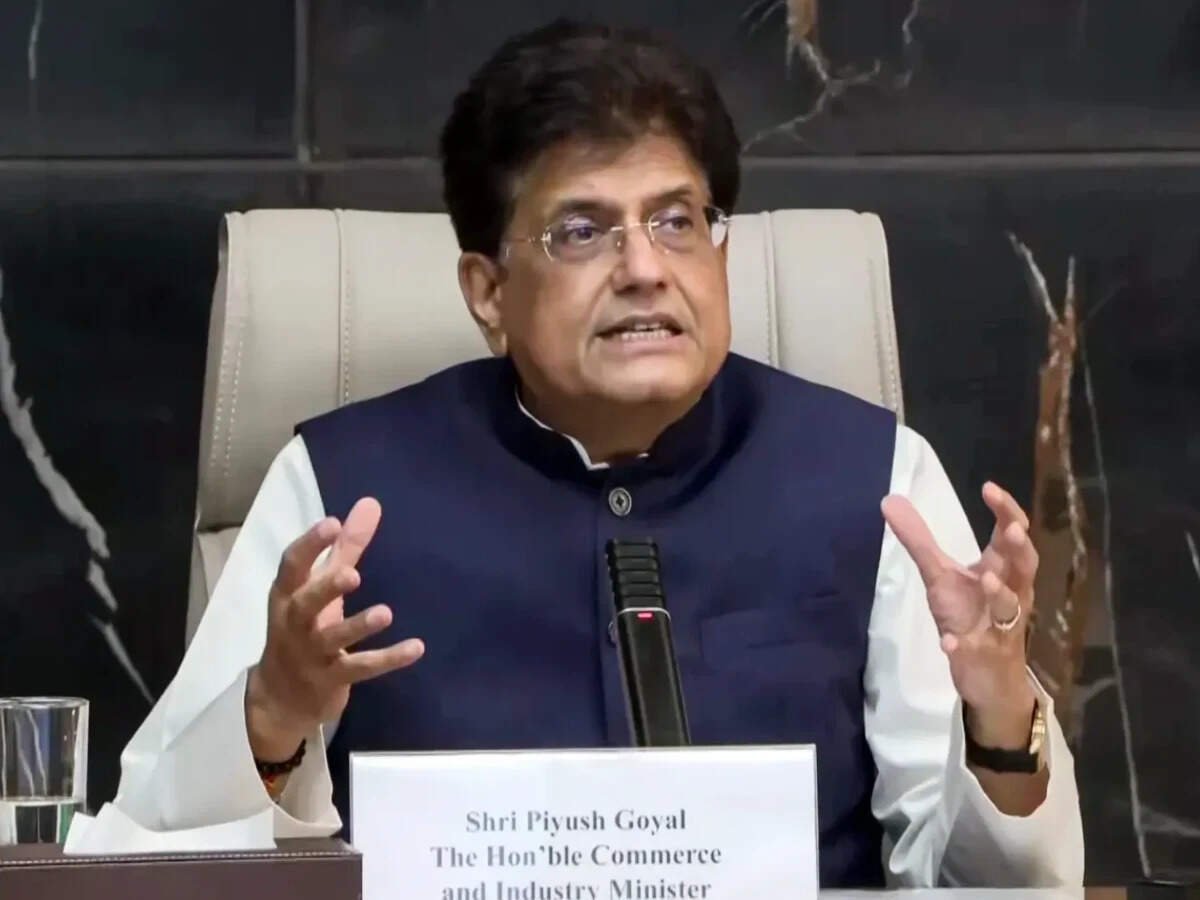
Addressing a roundtable at the Berlin Global Dialogue, Union Minister of Commerce and Industry Piyush Goyal sharply criticized developed nations and the European Union for failing to fulfill their climate finance commitments to the Global South. Goyal highlighted that despite historical responsibility for global emissions, wealthy nations have failed to deliver on the $100 billion annual climate funding pledged to developing countries under international agreements.
Key Highlights & Arguments
-
Unfulfilled Climate Finance Pledges: Goyal pointed out that while developed countries committed at COP15 (Copenhagen, 2009) and COP21 (Paris, 2015) to mobilize $100 billion annually by 2020 (later extended through 2025), developing and island nations have yet to see meaningful financial or technological support.
“Eleven years later, we haven’t seen a nickel or a dime of that. It’s all promises. The larger question that the European Union and CBAM (Carbon Border Adjustment Mechanism) have failed to answer.”
— Piyush Goyal, Union Minister of Commerce & Industry
-
Disproportionate Emissions vs. Population: Goyal contrasted the environmental footprint of developed regions with that of India:
-
India: Home to ~17% of the global population, but accounts for less than 3% of cumulative global carbon emissions. India’s per-capita emissions remain less than 10–15% of European levels.
-
Europe: Represents roughly 3–4% of the world’s population, yet accounts for a massive share of historical emissions, with per-capita emissions 7 to 8 times higher than India’s.
-
-
Critique of EU Policies (CBAM): He noted that initiatives like the EU’s Carbon Border Adjustment Mechanism (CBAM) fail to adequately address the decarbonization needs of less-developed nations or recognize historical responsibilities.
India’s Clean Energy Balance
While emphasizing the challenge of meeting the energy, food, and security needs of 1.4 billion people, Goyal underscored that India remains deeply committed to environmental responsibility:
-
India maintains a culture focused on circular economy principles and waste reduction.
-
Despite minimal financial support from developed nations, India is currently driving one of the world’s fastest-growing clean energy expansion programs.
