

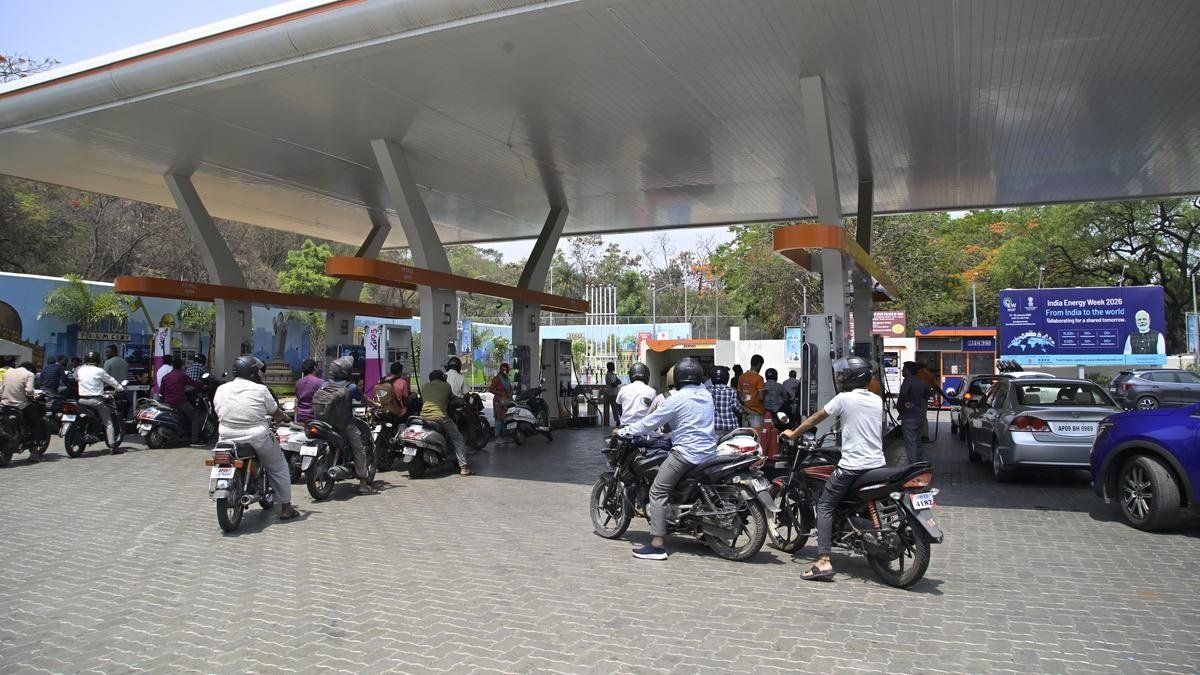
The recent surge in petrol and diesel prices has pushed fuel costs in Delhi past the ₹100-per-litre mark for the first time in four years. With a cumulative jump of over ₹7.30 per litre in less than two weeks, Indian consumers are feeling the pinch.
Unfortunately, energy analysts and sector experts warn that India may not be done with fuel price hikes just yet. To understand why your fuel bill might keep rising, we have to look at a combination of critical geopolitical disruptions and the financial realities of India’s state-run oil companies.
The Underlying Triggers Behind Rising Prices
| Factor | Impact on India |
| Crude Oil Dependency | India imports over 85% of its total crude oil requirements, making domestic pump prices entirely vulnerable to international market shocks. |
| The Strait of Hormuz Crisis | Since the eruption of the US-Iran war in late February 2026, the narrow Strait of Hormuz has been heavily disrupted. Because nearly 20% of global crude flows through this choke point, shipping has practically ground to a halt due to severe security threats and massive spikes in maritime insurance. |
| Brent Crude Volatility | The conflict drove Brent crude from around $73 per barrel up to nearly $120 in March. While backchannel peace talks have slightly cooled the market down to around $105 per barrel, prices remain heavily elevated. |
Why More Domestic Price Hikes May Follow
Despite recent price hikes, oil marketing companies (OMCs) like IOCL, BPCL, and HPCL are still under immense pressure due to three primary reasons:
1. Recovering Past “Under-Recoveries”
During the early phases of the US-Iran conflict—which coincided with an intensive domestic assembly election season—state-run fuel retailers held retail prices steady. Even though global crude prices were skyrocketing, OMCs absorbed the shock, accumulating significant losses. The daily losses, which once peaked at nearly ₹1,000 crore collectively, have shrunk but haven’t disappeared. The current price hikes are a slow-motion effort to patch that massive financial hole.
2. The Trap of the Fragile “Hormuz Blockade”
While Washington and Tehran are reportedly participating in Pakistan-mediated backchannel diplomacy, the U.S. and its allies are maintaining strict restrictions around the Strait of Hormuz until a formal treaty is signed. Experts warn that even if a “Quick Peace” scenario is reached soon, safely restarting commercial trade, clearing naval tensions, and lowering astronomical shipping insurance rates will take months.
3. The Threat of $200 Oil
According to a May 2026 energy report by Wood Mackenzie, if negotiations stall and the Strait of Hormuz remains effectively closed through the end of 2026, global markets face an “Extended Disruption.” In this worst-case scenario, global crude prices are projected to spike to as high as $200 per barrel—a reality that would force the Indian government into making much more severe retail price corrections.
The Government’s Stance: Petroleum Minister Hardeep Singh Puri recently stated that “at some stage the government has to take a view” on sustained pricing corrections. Concurrently, Prime Minister Narendra Modi has publicly urged citizens to practice energy conservation—via public transit and carpooling—signaling that the center is prepping the public for a prolonged period of energy uncertainty.
While OMCs did post strong combined profits of over ₹77,000 crore in the 2025–2026 fiscal year, those reserves were built on the stable, cheap crude environment of late last year. In the current high-conflict climate, those buffers are burning out fast. Unless Brent crude stabilizes comfortably and sustainably well below the $100 mark, a fifth consecutive domestic fuel price hike remains firmly on the table.
