

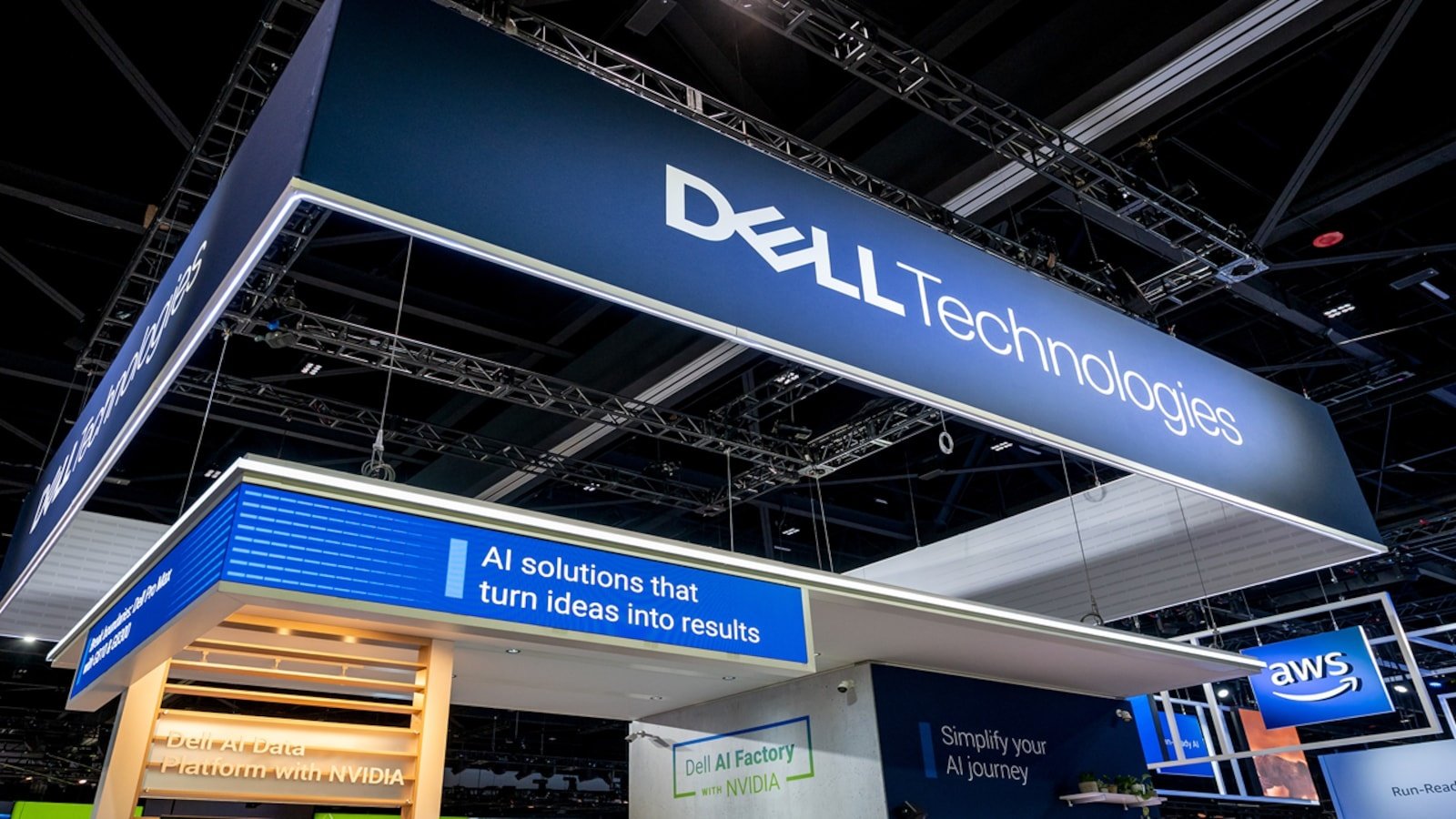
As Indian enterprises transition artificial intelligence from small-scale pilots to full production, Dell Technologies is making a major move to keep data workloads localized. Dell has launched its PowerStore Elite storage platform in India, aiming to give enterprises a highly secure, private cloud foundation that reduces dependency on expensive public cloud resources.
The launch centers around a crucial market reality: companies are increasingly prioritizing data sovereignty, predictable cost models, and ultra-low latency—factors that public cloud architectures can make difficult to manage at scale.
PowerStore Elite At a Glance: Architecture & Performance
| Feature | Technical Specification / Metric |
| Form Factor | 3U Storage Appliance |
| Media Type | Industry-standard E3 NVMe flash memory (TLC or QLC support) |
| Maximum Effective Capacity | Up to 5.8 Petabytes (PB) per single appliance |
| Data Reduction Program | Guaranteed 6:1 data reduction ratio |
| Performance Multiplier | Up to 3x performance, throughput, and storage density over prior generations |
| Compute Core | Next-gen Intel Xeon Scalable processors (50% more CPU cores) |
| Internal Architecture | DDR5 memory, PCIe Gen 5 connectivity, 200Gb RDMA node interconnect |
Strategic Shift: Moving Away from Cloud Lock-In
Dell’s deployment model focuses on cost predictability and architectural freedom.
-
Financial Advantage: Dell estimates that organizations running locally hosted AI models (ranging from 30 billion to 1 trillion parameters) on its Deskside Agentic AI system can slash cloud software expenses by up to 87% over a two-year period.
-
Zero Vendor Lock-In: By using industry-standard E3 NVMe flash instead of proprietary storage modules, enterprises gain supply-chain resilience and freedom from vendor-specific ecosystem constraints.
-
Continuous Modernization: The platform utilizes a completely modular architecture. Network cards, controllers, and underlying hardware can be field-upgraded dynamically without system downtime or complex data migrations. Mixed-generation clustering further allows older PowerStore systems to scale alongside new ones.
Expanding the Infrastructure: PowerRack & Cyber Detect
Beyond the individual 3U storage arrays, Dell introduced two critical additions to support massive corporate environments:
1. Dell PowerRack
Designed for heavy-duty AI inferencing, this integrated system combines compute, networking, and storage into a unified rack. Built on NVIDIA’s Vera Rubin architecture, it can be fully deployed in under six and a half hours, fundamentally optimizing the cost per token for large-scale AI operations.
2. Dell Cyber Detect
Launching in the third quarter of 2026, this built-in security tool provides AI-driven ransomware protection directly at the storage tier. By scanning files at the byte level, it promises a 99.99% detection accuracy. Upon spotting malicious corruption, it isolates the last known clean copy of data—cutting manual recovery efforts by up to 95%.
Real-World Deployment: Several Indian entities have already adopted Dell’s private cloud infrastructure. Notably, Omega Healthcare uses this unified ecosystem across its Indian delivery centers to maintain uninterrupted, 24/7 clinical and administrative workflows for major hospital networks in the United States.
