

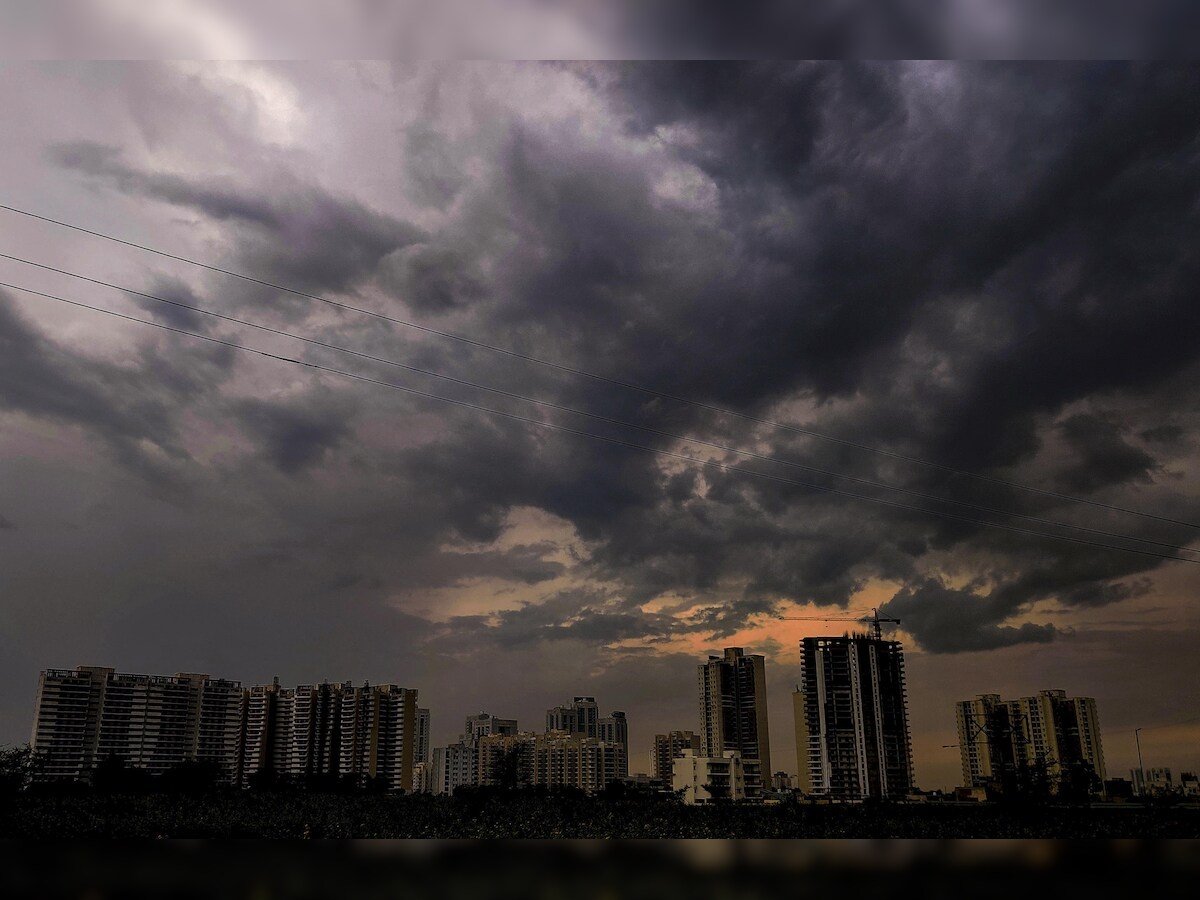
The India Meteorological Department (IMD) has officially announced the onset of the southwest monsoon over Kerala on Thursday, June 4, 2026. This marks the formal commencement of India’s vital four-month rainy season, arriving three days behind its traditional June 1 schedule, but aligned with recent revisions.
While widespread rain has triggered an orange alert for severe weather across Kerala, global forecasters warn that a strengthening El Niño climate pattern threatens to diminish overall rainfall totals across central and southern Asia as the season progresses.
1. Technical Indicators Satisfying the Landfall
The IMD declares the official onset of the monsoon only when a highly specific set of meteorological conditions are simultaneously met over the southeast Arabian Sea and Kerala:
-
Convective Cloudiness: A sharp increase in dense, rain-bearing cloud formations over the past 48 hours.
-
Westerlies Depth: Equatorial westerly winds have deepened significantly, stretching up to 4.5 km above mean sea level.
-
Wind Strength: Lower-level westerly wind speeds over the southeast Arabian Sea stabilized at a robust 20 to 25 knots.
-
Precipitation: Widespread, continuous rainfall across Kerala over a 48-hour window, with isolated pockets registering heavy downpours.
2. Current Advance and Next Steps
The system has already fully enveloped the Lakshadweep islands, Kerala, Mahe, and significant portions of interior Karnataka and Tamil Nadu. Atmospheric conditions remain highly favorable for it to push deeper into the central Arabian Sea and parts of the northeastern states over the weekend.
3. The Shadow of El Niño: A Below-Normal Season Ahead?
While the monsoon’s arrival brings immediate relief from intense summer heat, long-range forecasts from the World Meteorological Organization (WMO) urge caution for India’s agricultural sectors.
The Climate Threat: The WMO indicates an 80% likelihood of an El Niño event formalizing between June and August 2026, with a greater than 90% probability of it persisting through November.
Because El Niño warms the central and eastern Pacific Ocean, it typically weakens the Indian monsoon winds. Seasonal climate modeling suggests that total rainfall for the June–September season will likely remain below normal across much of South Asia, with the strongest deficit signals pointing directly at central India’s agricultural heartland.
