

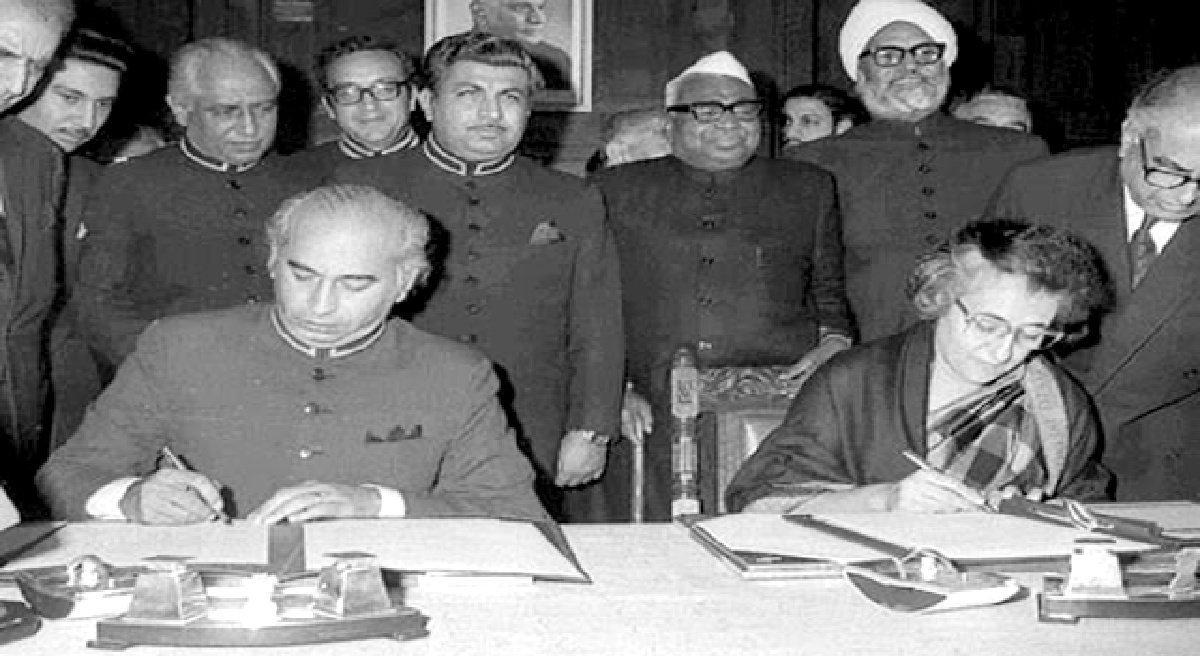
On July 2, 1972, Indian Prime Minister Indira Gandhi and Pakistani President Zulfikar Ali Bhutto signed an agreement in the hill station of Shimla that fundamentally altered how India and Pakistan communicate. Born out of the decisive 1971 war—which saw the creation of Bangladesh and the capture of 93,000 Pakistani military and civilian personnel—the Shimla Agreement set the rules of diplomatic engagement for decades to come.
The Shift to Bilateralism
The defining feature of the Shimla Accord was its mandate for direct, bilateral negotiation. Both nations agreed to settle their disputes, including Kashmir, exclusively through peaceful mutual discussions. This marked a clean break from the UN-driven framework that had governed the region since 1948, allowing India to consistently reject third-party mediation.
The treaty also restructured the border dynamic. It retired the 1949 Ceasefire Line established under the Karachi Agreement and replaced it with the Line of Control (LoC), mapping the precise positions of both armies at the end of the 1971 fighting. Both nations pledged to respect the LoC without altering it by force.
A Victor’s Compromise
Despite India’s overwhelming leverage at the negotiating table, Shimla was not drafted as a punitive victory deal. India returned over 13,000 square kilometers of captured Pakistani land, retaining only a small number of strategic positions.
However, one major ambiguity lingered: the status of the UN Military Observer Group in India and Pakistan (UNMOGIP). New Delhi argued that UNMOGIP’s mandate naturally lapsed when the old ceasefire line was replaced by the LoC. Islamabad rejected this view and continues to file violation complaints with the observers. The UN maintains that only the Security Council can formally terminate the mission.
Recent Strain and Legal Reality
The agreement faced unprecedented friction in 2025 following a terror attack in Pahalgam and India’s subsequent suspension of the Indus Waters Treaty. In April 2025, Pakistan’s National Security Committee announced it was holding bilateral treaties in abeyance. Shortly after, Pakistani Defence Minister Khawaja Asif publicly labeled the Shimla Agreement a “dead document.”
Pakistan’s Foreign Office quickly walked back the statement, clarifying that no official decision had been made to revoke existing treaties. Because the Shimla Agreement contains no exit clause and Pakistan has never served formal diplomatic notice of withdrawal, India maintains that the treaty remains legally active and binding on both sides.
