

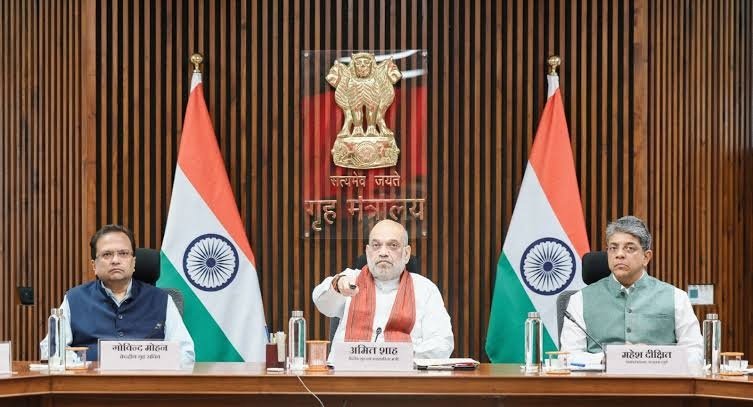
Home Minister Amit Shah officially launched the upgraded FCRA 2.0 portal alongside a fully digital Overseas Citizen of India (e-OCI) card system. The dual rollout aims to significantly enhance citizen and diaspora services while sharpening national security oversight on foreign funding.
Speaking to officials at the launch event, Shah emphasized that technology-driven frameworks simplify compliance for honest stakeholders while giving regulatory bodies a highly efficient, real-time mechanism to detect violations.
FCRA 2.0: Real-Time Tracking & Zero Paperwork
The revamped Foreign Contribution Regulation Act (FCRA) platform transitions the entire regulatory ecosystem online—covering everything from initial applications and renewals to annual compliance returns.
-
Database Integration: The upgraded platform is fully integrated with central networks, including PAN, OCI, and the NGO Darpan portal, alongside national identity databases. This cross-verification allows for instant data validation and real-time monitoring of incoming foreign funds.
-
Scale of Operations: Government data reveals that there are currently 14,500 active FCRA-registered organizations operating across India. The 2.0 portal is engineered to process thousands of complex annual compliance returns and fresh applications smoothly, eliminating the historical reliance on manual files and bureaucratic delays.
The e-OCI Card: Major Relief for 50 Lakh Global Indians
The transition to the electronic OCI (e-OCI) card is set to benefit over 5 million diaspora members globally by completely digitizing the application and immigration process.
| Feature | Legacy System | New e-OCI System |
| Document Delivery | Required physical booklet printing and postal delivery. | Documents are uploaded online; approved e-cards are downloaded digitally. |
| Passport Renewal Rule | OCI holders over the age of 20 had to re-issue physical booklets with every new passport. | Abolished. Passport updates can now be logged digitally onto the existing profile. |
| Immigration Security | Reliance on physical documents susceptible to loss or wear. | Streamlined digital verification for faster airport and customs processing. |
According to the Home Ministry, these upgrades are part of a broader digital governance push to match ease of service delivery with rigid national enforcement mechanisms.
