

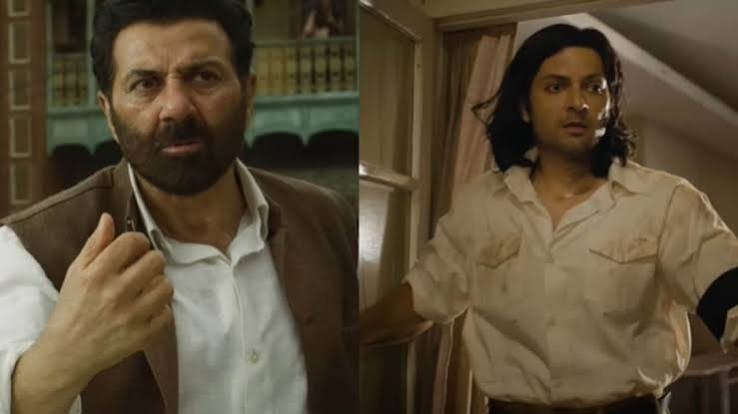
Following the highly anticipated release of the second teaser for Batwara 1947, actor Ali Fazal has opened up about his experience sharing the screen with Bollywood veteran Sunny Deol.
Directed by National Award-winning filmmaker Rajkumar Santoshi and produced under Aamir Khan Productions, the Partition-era epic is gearing up for a worldwide theatrical release on August 14, 2026.
A Legacy of Respect
In an exclusive conversation, Ali Fazal—who makes a special appearance in the historical drama—heaped praise on his senior co-star’s demeanor on and off the set.
“Oh, Sunny sir is all heart. I think people know that. The whole family is like that,” Fazal shared. “I think their family has been a big part of the history and the legacy of our film industry. There’s a lot of respect for him. He was very collaborative. It was a lovely journey.”
Fazal revealed that his casting came about unexpectedly during a conversation with producer Aamir Khan. Though his character’s arc remains distinct from the central crux of the narrative, a compelling script narration by Rajkumar Santoshi convinced him to jump on board. “I told him, ‘You make it and don’t change anything along this journey. It’s just beautiful the way it is,'” Fazal recalled.
Remaking History with an Ensemble Cast
Based on playwright Asghar Wajahat’s celebrated play, Jis Lahore Nai Vekhya, O Jamyai Nai, the film marks a monumental cinematic reunion. Batwara 1947 brings Sunny Deol and Rajkumar Santoshi back together nearly three decades after delivering some of Hindi cinema’s most legendary action-dramas, including Ghayal, Damini, and Ghatak.
The project stands out as a major creative powerhouse, uniting the talent of Aamir Khan with an iconic musical team consisting of composer A.R. Rahman and lyricist Javed Akhtar. Alongside Deol and Fazal, the movie boasts a stellar ensemble cast featuring Preity Zinta, Shabana Azmi, Abhimanyu Singh, and Karan Deol.
The Importance of Partition Narratives
When asked why Indian cinema continues to return to the painful events of 1947, Fazal emphasized the ongoing need for generational reflection.
“Time calls for introspection,” Fazal stated. “It calls for us not to forget the fights of common men, the trials and tribulations of common people that have gone into arriving at this stage where we are. It’s also important for new generations to understand there was a time like this.”
