

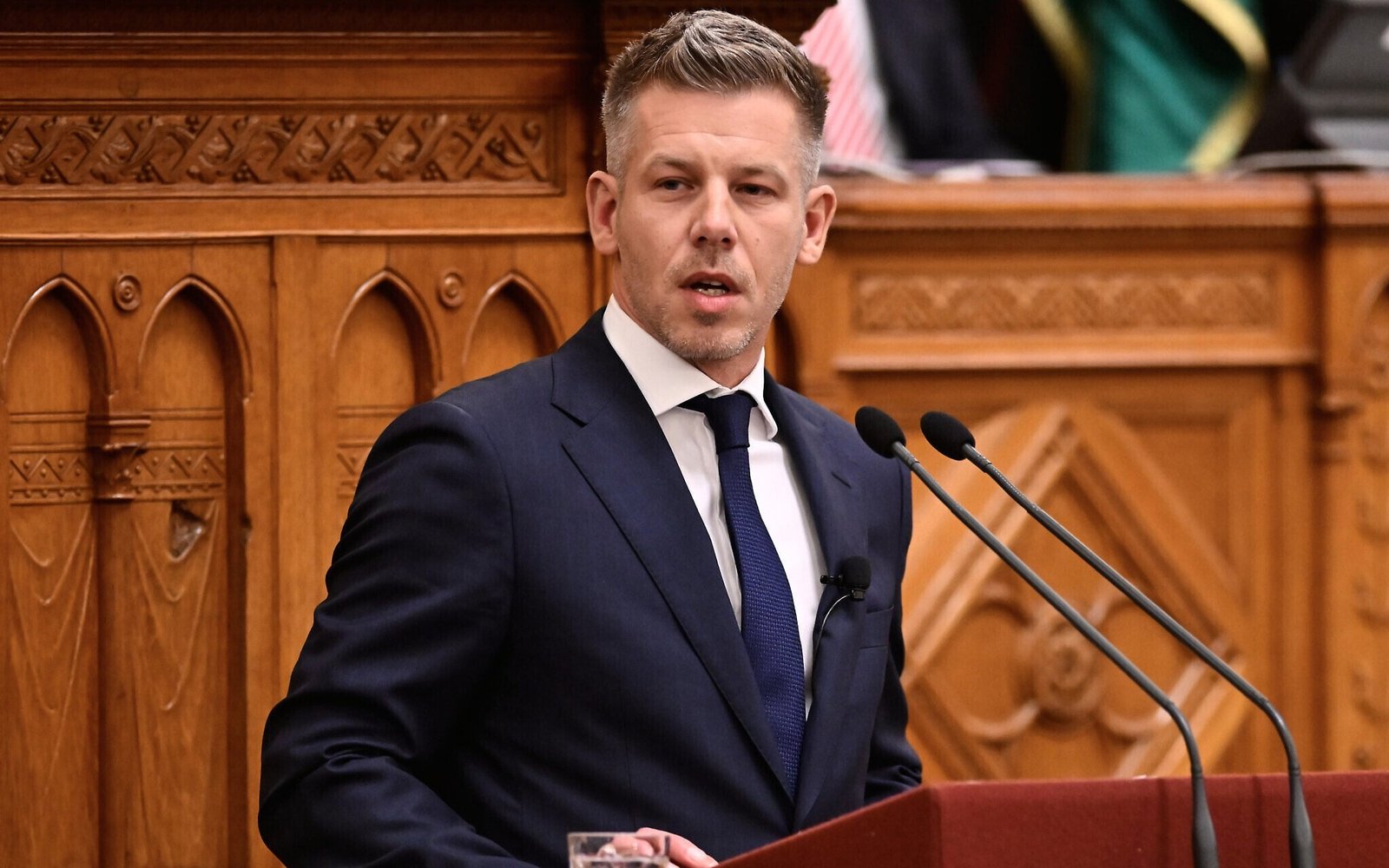
In a historic shift for Central European politics, Peter Magyar was officially sworn in as Hungary’s Prime Minister on May 9, 2026. The ceremony, held within the halls of Budapest’s neo-Gothic parliament, marks the definitive end of Viktor Orban’s 16-year tenure and signals a sharp pivot back toward the European mainstream.
Magyar’s Tisza party enters government with a commanding mandate, holding 141 of the 199 seats in parliament following a landslide victory in last month’s elections.
Symbolic Reconnection with Europe
The most immediate sign of Hungary’s new direction appeared inside the parliamentary chamber itself. For the first time in 12 years, the European Union flag was reinstated and displayed prominently.
The move was ordered by the newly appointed parliamentary speaker, Agnes Forsthoffer, who called it “the first symbolic step” on the country’s path back to European integration. This stands in stark contrast to the Orban administration, which had famously removed the flag during its decade-long drift toward “illiberal democracy.”
The Road Ahead: Top Priorities
While the swearing-in was celebratory, Prime Minister Magyar faces a daunting domestic and international to-do list:
-
Unlocking EU Funds: Magyar’s primary goal is to reach a deal with Brussels to release approximately $20 billion in frozen funding. These assets were withheld due to rule-of-law concerns under the previous regime.
-
Economic Stabilization: The new government must tackle a ballooning budget deficit and revitalize an economy characterized by years of stagnation.
-
Diplomatic Rebuilding: After years of Hungary using its veto power to block sanctions on Russia or aid to Ukraine, Magyar is expected to mend ties with NATO and EU allies.
Uprooting the “Orban System”
Experts suggest that Magyar’s greatest hurdle will be the administrative “deep state” left behind by nearly two decades of Fidesz rule.
“The challenges for the new PM are primarily related to the extensive presence of the previous regime,” says Theofanis Exadaktylos, Professor of European Politics. “Orban managed to change Hungary substantially from an administrative point of view. Uprooting that establishment will be a challenge.”
Who is Peter Magyar?
Magyar’s ascent is one of the most rapid in modern political history. A former member of the Fidesz inner circle, he was largely unknown to the general public until early 2024. Following a high-profile break with Orban’s party, he launched a grassroots movement that captured a disillusioned electorate, promising a “regime change” that combines center-right ideology with a pro-European stance.
Comparison: The Transition of Power
| Feature | The Orban Era (2010–2026) | The Magyar Era (2026–) |
| EU Relations | Confrontational; Veto-heavy | Collaborative; Pro-integration |
| Symbolism | National flags only | Reinstatement of the EU flag |
| Economic Focus | State-driven; Stagnant | Market revival; Deficit reduction |
| Foreign Policy | Deepening ties with Moscow | Reconnecting with Western allies |
As Peter Magyar invited Hungarians to “step through the gate of regime change” on Saturday, the world is watching to see if Budapest can successfully transition from a populist outlier back to a core pillar of the Euro
