

The U.S. military has launched fresh “self-defense” strikes near the strategic southern Iranian port city of Bandar Abbas, targeting missile launch sites and boats attempting to deploy mines. The operation, executed by U.S. Central Command (CENTCOM), comes at a highly volatile moment, threatening a fragile ceasefire that has been in place since April 8.
The military action coincided with high-level peace talks in Doha, Qatar, where senior Iranian negotiators—including chief negotiator Mohammad Bagher Ghalibaf and Foreign Minister Abbas Araghchi—are meeting with negotiators to finalize a deal to end the three-month-old war involving the U.S. and Israel. While Iranian officials noted “some progress” had been made, they cautioned that a final agreement is not imminent.
Key Developments
-
Strikes in the Strait of Hormuz: Three large explosions were reported near the Bandar Abbas airport and naval base, a vital chokepoint for global energy flows. Iranian air defense systems were activated, and the Islamic Revolutionary Guard Corps (IRGC) confirmed they were countering “hostile targets.”
-
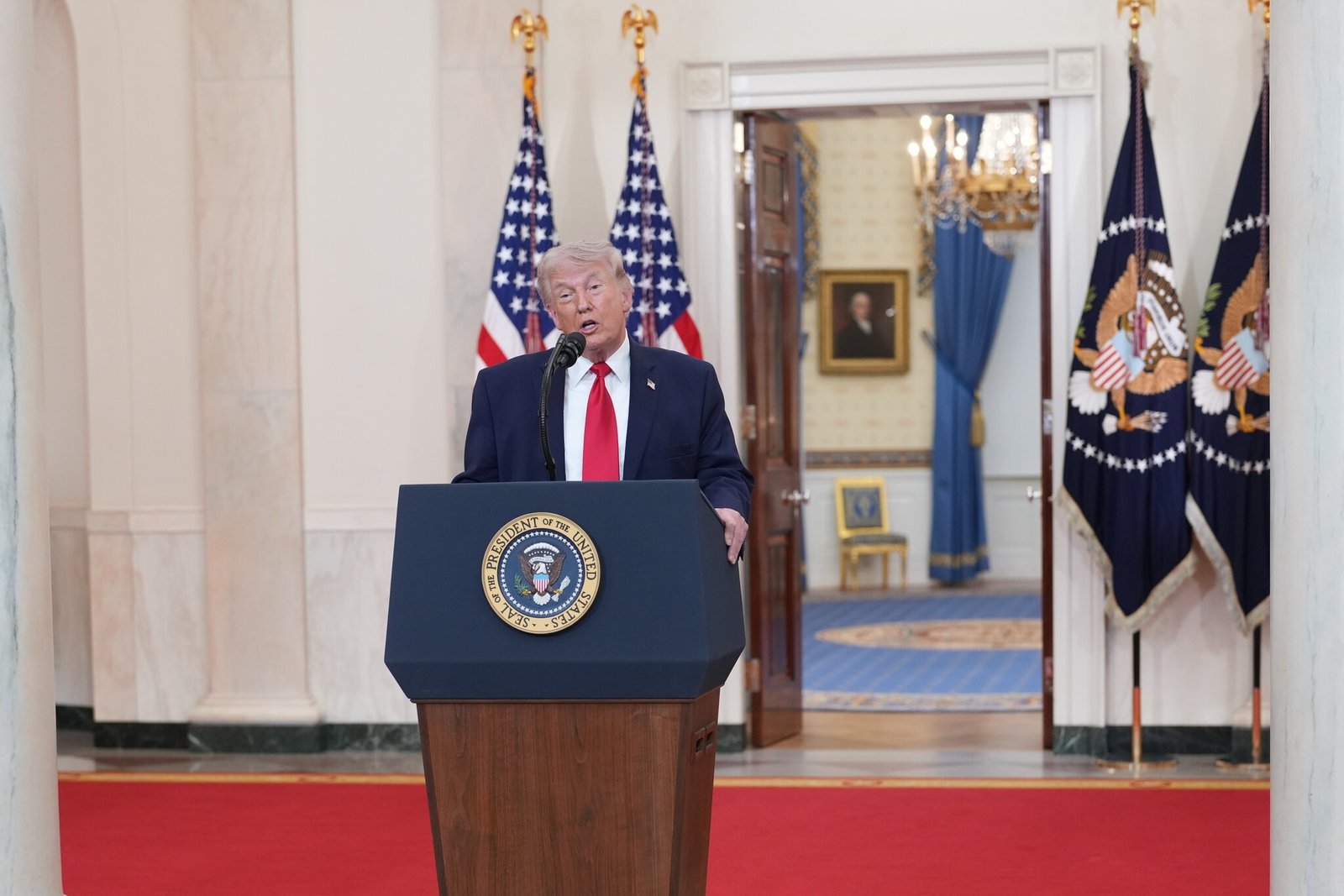
Trump’s Nuclear Ultimatum: Hours after the strikes, U.S. President Donald Trump issued a strict mandate via social media, declaring that Iran must hand over its highly enriched uranium. Trump insisted the material must either be shipped to the United States to be destroyed or dismantled within Iran under international supervision.
-
The Regional Accords Mandate: President Trump also asserted that any final peace deal must mandate that regional powers—including Saudi Arabia, Qatar, Pakistan, Turkiye, Egypt, and Jordan—sign on to the Abraham Accords to normalize ties with Israel.
Political Fallout and Friction
The twin pressures of military action and sweeping diplomatic demands have highlighted deep fractures. Domestically, Iran’s newly appointed hard-line leader of the Supreme National Security Council, Mohammad Bagher Zolghadr, promised “no retreat” in the fight against the U.S. and Israel.
Simultaneously, Trump’s insistence on expanding the Abraham Accords faces stiff geopolitical resistance. Heavyweights like Saudi Arabia and Qatar, alongside non-Arab nations like Pakistan, maintain strict diplomatic stances refusing to recognize Israel until an independent Palestinian state is established.
Negotiations in Doha remain active but deeply complicated, focusing heavily on maritime security in the Strait of Hormuz, the fate of Iran’s enriched uranium stockpile, and the potential unfreezing of Iranian financial assets.
