

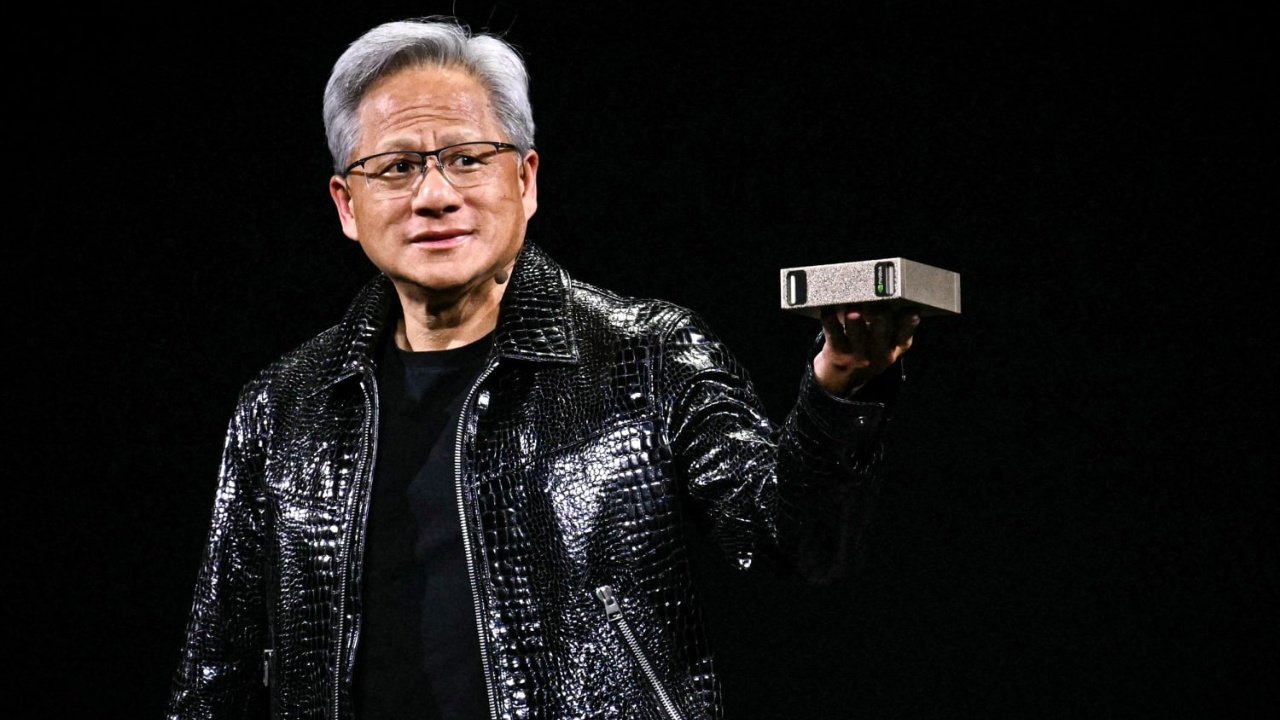
Arriving in Taipei ahead of the highly anticipated Computex trade show, Nvidia CEO Jensen Huang confirmed that the world’s most valuable chipmaker has no intention of abandoning China. Instead, Huang signaled that China remains an indispensable pillar for Nvidia to hit its ambitious $1 trillion total sales forecast.
When asked by reporters on Saturday whether Nvidia’s upcoming push into the Central Processing Unit (CPU) market would include China, Huang gave an affirmative response.
“I would think so,” Huang stated, via Reuters. “It would be terrific to be able to serve that market. The Chinese market is very important. It’s very large, of course.”
The Shift to Agentic AI and the $200 Billion “Vera” Opportunity
For years, Nvidia’s astronomical financial growth has been fueled by its Graphics Processing Units (GPUs), which serve as the gold standard for training massive generative AI models. However, the technology sector is undergoing a rapid evolution toward “agentic AI”—autonomous systems built to execute intricate workflows independently rather than simply outputting text or imagery.
Because agentic systems require immense computational logic, high-performance CPUs are stepping into the spotlight.
To capitalize on this, Nvidia is actively prepping its next-generation Vera Rubin platform, which fuses their brand-new “Vera” CPU with the upcoming Rubin GPU architecture. Huang previously assured Wall Street investors that the Vera CPU lineup opens doors to a brand-new, entirely untapped $200 billion market segment, acting as a primary engine behind the company’s $1 trillion revenue roadmap.
Navigating Geopolitical Crosswinds
While Huang envisions a massive CPU rollout in China, Nvidia remains entangled in a complex regulatory and geopolitical deadlock between Washington and Beijing.
While the U.S. government officially cleared Nvidia to sell its slightly pared-down, second-most-powerful AI chip—the H200—to roughly ten vetted Chinese firms, actual shipments have completely stalled. Reports indicate that Chinese regulators are intentionally withholding final approval for the deliveries, utilizing a regulatory slowdown to allow homegrown semiconductor rivals like Huawei time to narrow the technological gap.
Countering AMD’s $10 Billion Taiwan Expansion
Huang’s arrival in Taipei also follows a massive competitive move by arch-rival AMD, which recently announced a blockbuster $10 billion investment package in Taiwan’s AI sector to scale up its advanced manufacturing and packaging capabilities.
When questioned on whether Nvidia plans to announce a matching, public spending spree in Taiwan, Huang dismissed the need for a direct counter-announcement. He confidently hinted that Nvidia’s established infrastructure and manufacturing footprint on the island are already vastly larger.
While in Taipei, Huang is scheduled to hold high-level meetings with executives from TSMC (Taiwan Semiconductor Manufacturing Company), the foundry giant responsible for printing Nvidia’s highly complex, next-generation silicon architectures.
