

The notification arrived with a simple, coordinated directive: Work from home today. Across international corporate offices from Silicon Valley to London, desks sat empty, corridors remained silent, and traditional office chatter was completely absent.
Then, the emails began hitting inboxes.
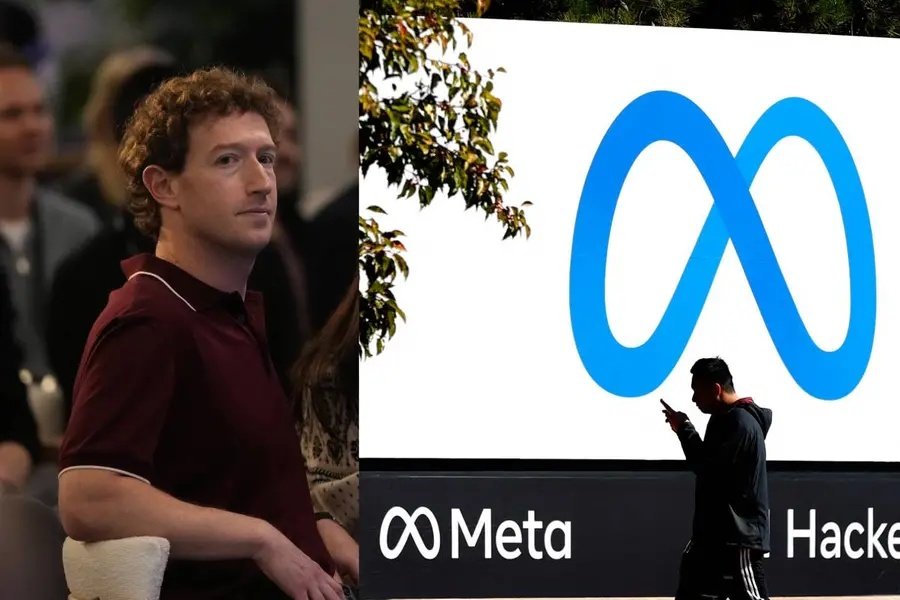
Meta Platforms formally initiated a fresh, massive wave of layoffs affecting approximately 8,000 employees worldwide—nearly 10 percent of its global workforce. The restructuring process began in the early morning hours at the company’s major Asian hub in Singapore, where affected staff received termination notices via email at 4:00 AM local time. The quiet, remote execution strategy was a deliberate corporate move to avoid visible workplace anxiety or organizational unrest.
The AI Reset: Restructuring the Corporate Blueprint
This latest workforce reduction is not a minor budget adjustment; it is a fundamental realignment of Meta’s long-term business goals. Chief Executive Officer Mark Zuckerberg has made artificial intelligence the absolute core of the company’s future, with Meta projecting an enormous US$125 billion to US$145 billion in capital expenditure this year alone to fund advanced AI infrastructure and data centers.
To finance these massive technological bets, legacy engineering and product development teams are taking the heaviest hits. In an internal memorandum, Meta’s Chief People Officer, Janelle Gale, outlined a permanent push toward a leaner, faster, and flatter management hierarchy.
-
Job Eliminations: 8,000 active positions cut globally.
-
Role Cancellations: Over 6,000 open, unfulfilled job listings permanently dissolved.
-
Internal AI Shift: 7,000 existing employees systematically reassigned out of traditional divisions and into newly formed, AI-native teams.
Internal Resistance and Employee Workplace Anxiety
The atmosphere leading up to Wednesday’s announcements was marked by deep internal friction and falling employee morale. After details of the impending layoffs leaked last month, some staff members reportedly began gathering extra office supplies and laptop accessories in anticipation of losing corporate campus access.
Compounding the tension was the introduction of a controversial new internal tracking tool. The software was designed to monitor employees’ mouse movements and keystroke cadences to gather data for training Meta’s internal AI models. This move sparked immediate internal pushback, culminating in more than 1,000 employees signing an internal petition opposing the tracking, viewing it as an invasive step toward automating their own roles.
An Industry-Wide Structural Realignment
Meta’s sudden downsizing is part of a broader trend sweeping through the global technology ecosystem. Silicon Valley giants are universally moving away from scaling human headcount to drive growth, opting instead to invest heavily in automated systems.
-
Cisco Systems: Eliminated 4,000 roles last week.
-
Oracle: Conducted an estimated 20,000 to 30,000 layoffs via localized early-morning emails in April.
-
Microsoft & Amazon: Actively implementing rolling layoffs and early retirement buyouts across multiple corporate divisions.
Expert View: The New Rules for Tech Careers
Industry experts point out that this wave of layoffs signals a permanent, structural shift in the tech job market, rather than a temporary economic downturn.
Dipal Dutta, Chief Executive Officer at digital consultancy RedoQ, explains that the widespread integration of generative intelligence and autonomous AI workflows has fundamentally changed the value of routine work:
“The workforce volatility sweeping the technology sector is a permanent structural decoupling of enterprise productivity from linear headcount. The integration of generative intelligence and autonomous agentic workflows has effectively commoditised routine software engineering, frontline customer operations, and deterministic data management. Consequently, the traditional tech playbook predicated on scaling human capital to drive organisational growth has collapsed.”
According to Dutta, professional survival in this new era requires moving away from simple task execution and focusing on managing complex systems.
“True professional resilience no longer resides in the capacity to write isolated code blocks, but in the capability to orchestrate complex, probabilistic systems,” Dutta added. “To achieve career immunity, the modern technologist must transform from a specialised executor into a systemic conductor. Organisations do not require fewer innovators; they require professionals capable of operating at the intersection of cognitive infrastructure and enterprise logic.”
