

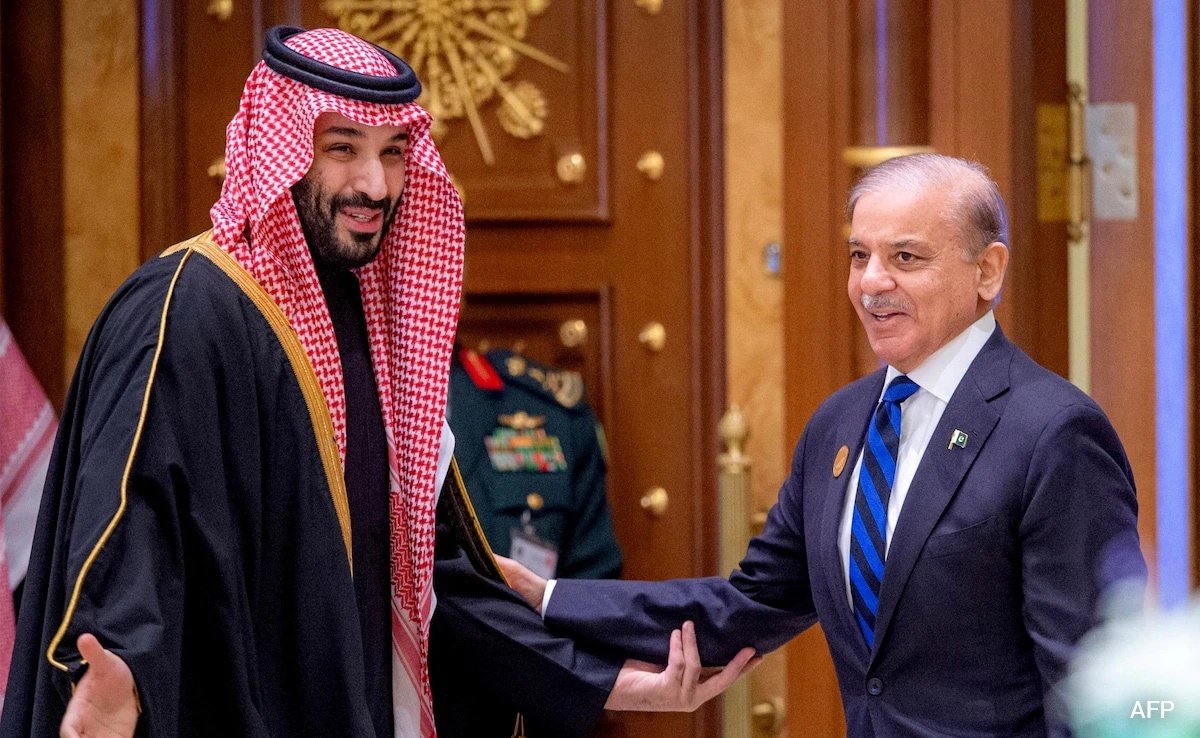
As the geopolitical landscape shifts in the wake of the U.S.-Israel-Iran conflict, a significant new military axis is forming in the Middle East and South Asia. Pakistan’s Defense Minister, Khawaja Asif recently revealed that Turkey and Qatar are in the process of joining a mutual defense cooperation pact with Saudi Arabia and Pakistan.
This expansion would formalize a quadrilateral alliance that some analysts are already labeling the “Islamic NATO.”
A New Strategic Quadrilateral
The alliance seeks to merge the unique strengths of four major regional powers to create a self-reliant security umbrella:
-
Pakistan: Provides nuclear deterrence and advanced ballistic missile technology.
-
Turkey: Offers a sophisticated defense manufacturing base and extensive military experience (leveraging its status as NATO’s second-largest military).
-
Saudi Arabia & Qatar: Supply the massive financial resources and “oil money” required to sustain high-tech military operations.
The “Article 5” Clause
The foundation of this alliance is the Strategic Mutual Defense Agreement, originally signed by Islamabad and Riyadh in 2025. Crucially, the pact reportedly includes a collective defense clause: an attack on one member is treated as an attack on all. This mirroring of NATO’s Article 5 represents a historic shift away from traditional reliance on U.S. security guarantees.
“The Iran war has proved that increased reliance on the US would not protect regional interests during conflict.” — Nihat Ali Ozcan, TEPAV strategist.
Regional Implications and Challenges
The emergence of this “axis” signals a reset in Middle Eastern diplomacy, notably bringing together former rivals Riyadh and Ankara. However, the move has raised alarms in other world capitals:
1. Impact on India
Military experts, including retired Indian Air Force Air Marshal Anil Chopra, suggest this nexus could significantly complicate India’s security environment. The Turkey-Pakistan military cooperation—already seen during Operation Sindoor in 2025—is a primary concern for New Delhi, potentially prompting closer coordination between India, Israel, Greece, and Cyprus.
2. Global Security Dynamics
Ankara’s participation is particularly striking given its long-standing membership in the Western NATO alliance. By joining this new pact, Turkey further cements its role as a bridge—and a power broker—between Western interests and the emerging “Islamic NATO.”
3. Defining “Friends and Foes”
With the U.S. prioritizing its own strategic goals and its alliance with Israel, regional powers are increasingly seeking “indigenous” security mechanisms. This new alliance aims to ensure that Middle Eastern and South Asian interests are protected by regional stakeholders rather than external superpowers.
