

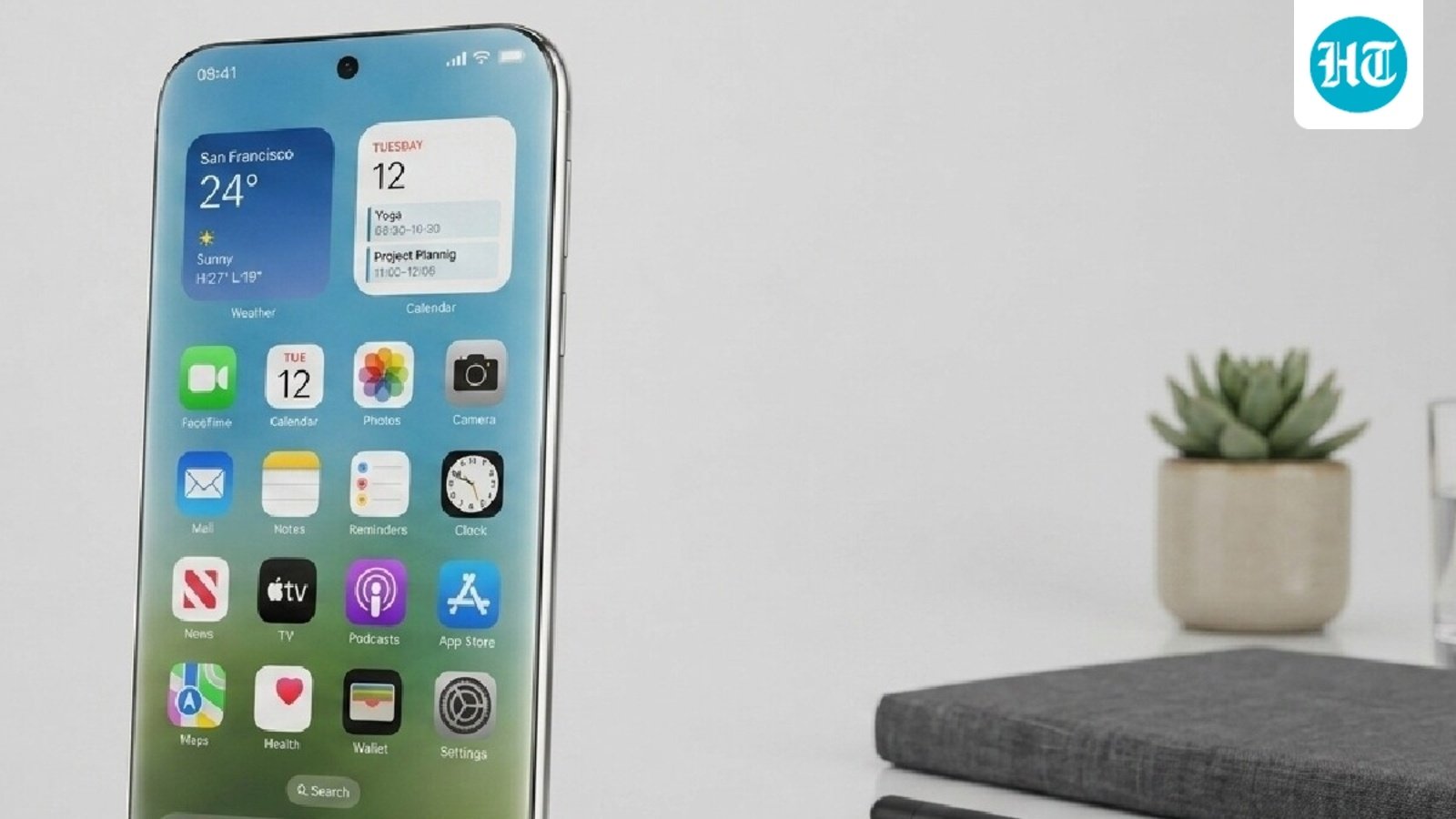
As we approach 2027, the tech world is buzzing with anticipation for the iPhone 20 (or potentially iPhone XX). Historically, Apple uses decade milestones to redefine the smartphone—much like the iPhone X did in 2017 by introducing Face ID and removing the home button. The 20th-anniversary model is shaping up to be a “slab of glass” vision realized, pushing the boundaries of display, battery, and tactile interaction.
The “Liquid Glass” Vision: A Borderless Display
The most striking rumor surrounding the iPhone 20 is the move toward a truly bezel-less experience.
-
Liquid Glass Display: Reports from leakers like Ice Universe suggest a “quad-curved” screen that bends subtly on all four edges. This design uses optical refraction to make the bezels virtually disappear from the user’s perspective.
-
Thinner & Brighter OLED: Apple is expected to use Samsung-supplied OLED panels with Color Filter on Encapsulation (COE) technology. By removing the traditional polarizing layer, the screen could be 20% thinner and 25% more power-efficient while boosting brightness by up to 33%.
-
The Notch Problem: While Apple aims for a completely uninterrupted screen, technical hurdles with under-display cameras remain. We may see a refined, smaller “punch-hole” or a fully hidden sensor stack if the technology matures by 2027.
A Button-less Body: The End of Mechanical Parts
Apple has long sought a seamless, symmetrical device. The iPhone 20 might finally kill the physical button.
-
Solid-State Haptics: Instead of clicking parts, the frame may feature capacitive touch zones for power, volume, and the Action button.
-
Haptic Feedback: Advanced vibration motors (potentially using piezoelectric ceramics) would mimic the feel of a physical click, similar to the Force Touch trackpad on MacBooks.
-
Durability: Removing physical buttons significantly improves water and dust resistance and eliminates mechanical wear and tear.
Performance: The 2nm A21 Chip and HBM RAM
To power the next generation of “Apple Intelligence,” the hardware is getting a massive architectural shift.
-
A21 Chip: Built on a second-generation 2nm process, this chip will be smaller and faster than the A20 expected in the iPhone 18.
-
Mobile High Bandwidth Memory (HBM): To handle advanced on-device AI, Apple is rumored to be stacking its RAM vertically (HBM). This would allow for massive data throughput—essential for real-time AI processing—while actually lowering power consumption.
Battery: Two-Day Endurance with Silicon Anodes
Perhaps the most practical “game-changer” is the shift in battery chemistry.
-
Pure Silicon Anode: Traditional graphite anodes are being replaced with 100% silicon. Silicon can store significantly more lithium ions, potentially offering a dramatic increase in capacity without making the phone thicker.
-
Efficiency: Combined with the 2nm chip, this could finally deliver a true two-day battery life for power users.
iPhone 20: Rumored Spec Highlights
| Feature | Predicted Specification |
| Display | 6.3″ / 6.9″ Liquid Glass OLED (Quad-Curved) |
| Processor | A21 Bionic (Second-gen 2nm) |
| Memory | 12GB – 16GB Mobile HBM RAM |
| Battery | Silicon Anode Tech (Higher Energy Density) |
| Buttons | Solid-state with Haptic/Ultrasonic feedback |
| Release | Fall 2027 |
The Verdict
The iPhone 20 isn’t just an incremental update; it’s a strategic reset. By moving toward a buttonless, all-glass “slab,” Apple is attempting to create a device that feels more like a piece of software come to life than a piece of hardware. While some features like full under-display cameras are still “wait-and-see,” the combination of the A21 chip and silicon battery tech could make this the most desirable iPhone since the original.
Since you’ve been following the recent iPhone 16 and 17 leaks, are you more interested in the rumored folding iPhone expected later this year, or is this “glass slab” anniversary model the one you’re actually holding out for?
