

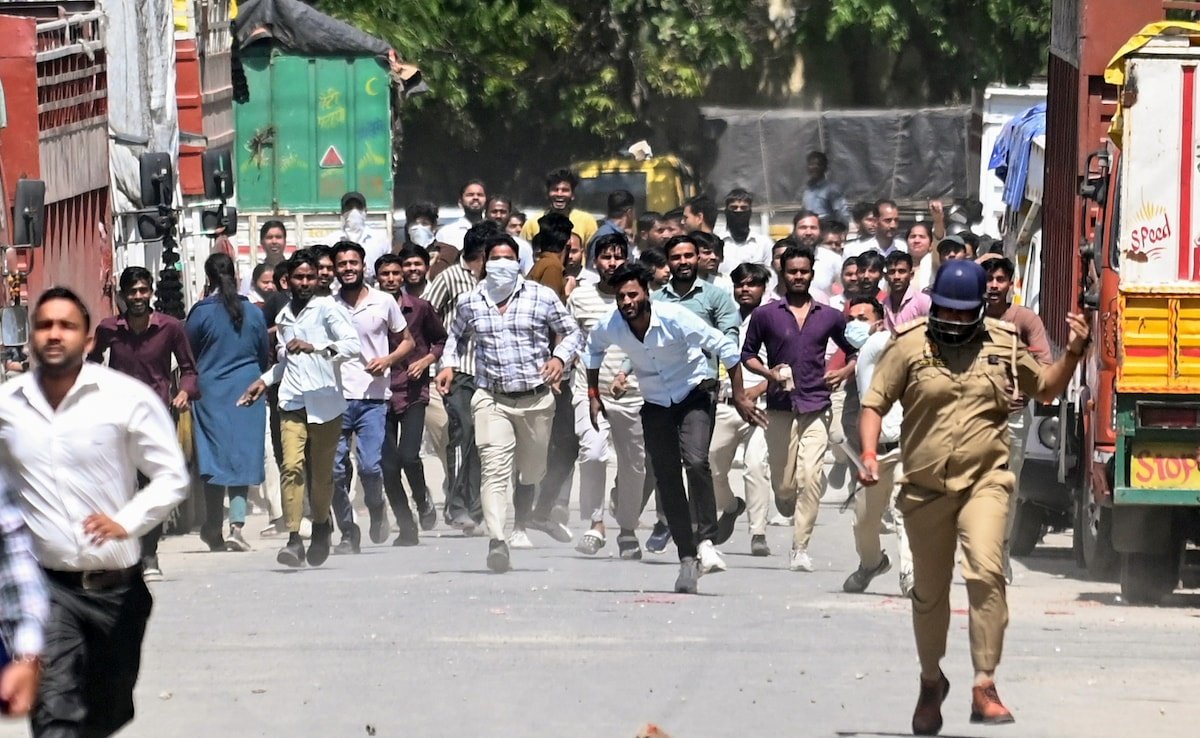
Investigative findings into last week’s massive labor unrest in Noida have revealed a coordinated digital campaign designed to trigger chaos. At the center of the probe is a social media group titled ‘X Storm,’ allegedly created by the suspected mastermind, Aditya Anand, to weaponize viral content and mobilize protesters.
Key Findings of the Investigation
The police describe the unrest as a “planned and deliberate” operation involving sophisticated digital tactics:
-
The ‘X Storm’ Group: Created by the now-arrested Aditya Anand, this group consisted of approximately 274 members. Its primary goal was to ensure provocative videos reached “viral” status on X (formerly Twitter) to maximize public impact.
-
Rapid Mobilization: On the night of April 9, organizers used QR codes to quickly add protesters to various WhatsApp groups, such as “Workers’ Movement,” bypassing traditional recruitment methods to circulate inflammatory content.
-
Foreign Influence: Investigators are currently tracking a potential Pakistani link. Two X accounts responsible for spreading misinformation during the height of the violence were traced back to Pakistan. These accounts reportedly used VPNs to mask their locations and had been active for three months leading up to the protest.
The Scale of the Unrest
What began as a reaction to a minimum wage hike in neighboring Haryana quickly escalated into a security crisis in Noida’s Phase-2 and Sector 63.
| Statistic | Details |
| Arrests | 62 individuals (including 9 for arson and attacking police) |
| Total Protesters | Over 40,000 factory workers |
| Legal Action | 13 separate cases filed |
| Key Tactics | Arson, stone-pelting, and traffic blockades |
“Outsiders” and Data Targeting
A significant revelation from the Noida police is that many identified rioters were not local laborers but “outsiders” embedded within the movement. Authorities believe a database may have been used to specifically target and provoke vulnerable workers online.
As the situation stabilizes, the focus has shifted toward uncovering the larger network behind these digital “storm” tactics, which officials fear are part of a broader strategy to destabilize India’s industrial hubs.
