

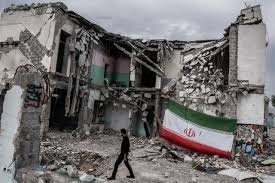
The question of whether the United States can recover from its recent diplomatic and military blunders in Iran has a simple, albeit grim, answer: Yes. Historically, the US has positioned itself as the North Star for global democracies—a source of strength and a model of foundational values like fairness, knowledge, and security. However, the recent escalation with Iran hasn’t just strained international relations; it has systematically dismantled these core American principles.
The Erosion of Foundational Values
The “Iran Humiliation” serves as a case study in the decay of the American democratic brand. When analyzed through the lens of its own stated ideals, the damage is profound:
-
Diplomatic Deception (Fairness): Launching attacks in the midst of mediated negotiations and engaging in the targeted assassination of state leadership—all based on preemptive “rumors”—flies in the face of international fairness.
-
The Death of Expertise (Knowledge): From targeting academic institutions to the administration’s scramble to turn erratic social media posts into formal policy, the pursuit of objective truth has been replaced by impulsive warmongering.
-
Political Paralysis (Hope): The inability of Congress to check executive overreach, combined with a lack of conscientious objection from political allies, suggests a world where reckless decisions face no institutional resistance.
-
A Debased Office (Dignity): The standard for presidential conduct has shifted so drastically that vulgarity and the casual mention of total war—even at family-oriented events—no longer shock the public psyche.
A House Divided
The domestic landscape reflects this international chaos. The ideological chasm between Republicans and Democrats has widened into a void. While the sitting President threatens the annihilation of an ancient civilization via social media, his predecessors remain largely silent or distracted by trivialities. This “tone-deafness” is perhaps the only remaining point of national unity.
Furthermore, the obsession with “forever wars” under the guise of security has achieved the opposite. These conflicts create a “slow simmer” of global resentment that eventually reaches American shores, as seen in the rise of domestic antisemitic violence and the failure to protect anyone beyond a select few political allies.
The “Vietnam” of Democracy
Iran has become a modern Vietnam for American democracy—a mirror reflecting a superpower in moral and structural crisis. Yet, the true tragedy lies in the fact that the US will almost certainly maintain its role as the self-appointed “defender of democracy.”
Because the global community lacks a unified alternative or the political will to challenge this hegemony, nations will continue to endure American interventionism. Much like Afghanistan, Iraq, and Libya before it, Iran is a testament to a system that persists not because it is functioning, but because it is too integrated into the global order to fail. The US will recover, but the ideals it once championed may not.
