

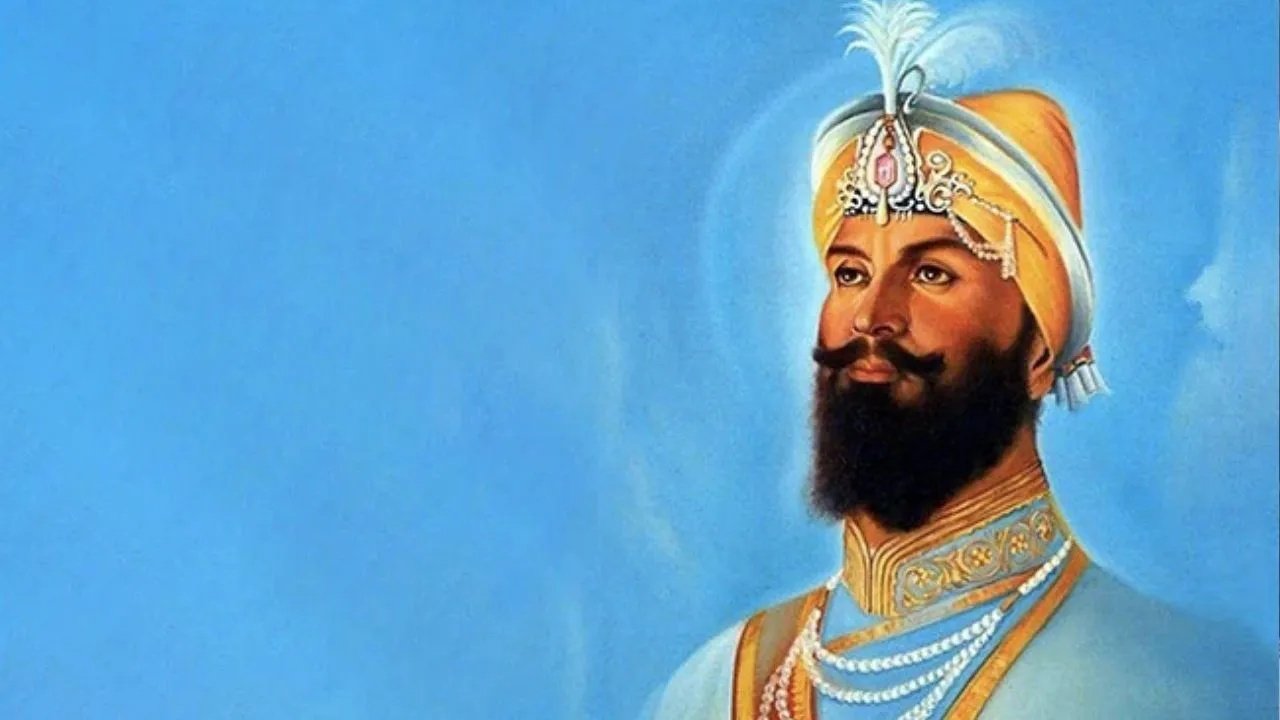
NEW DELHI — The Supreme Court has dismissed a petition seeking to declare Guru Gobind Singh Jayanti a mandatory nationwide holiday. In a judgment released on March 24, 2026, the court emphasized that as a “developing nation,” India must prioritize the dignity of labor and public productivity over the expansion of symbolic gestures.
A bench comprising Justices Vikram Nath and Sandeep Mehta held that the legacy of the tenth Sikh Guru is best honored through “dedicated service to society” rather than by adding to an already extensive list of public holidays.
“A Holy Country of Holidays”
During the proceedings, the bench made several pointed observations regarding India’s current administrative framework:
-
Executive Domain: The court ruled that declaring public holidays is a policy decision belonging to the executive branch, involving a careful balance of economic implications and essential services.
-
Existing Pluralism: Justice Mehta noted that India is already a “holy country of holidays” (referencing a phrase from his late uncle, a senior lawyer). The bench argued that the current calendar already reflects the nation’s rich religious and cultural diversity.
-
Article 32 Limits: The court clarified that its jurisdiction is limited to the enforcement of fundamental rights and cannot be used to “standardize cultural or commemorative practices.“
The Legal Argument
The Public Interest Litigation (PIL) was filed by the All India Shiromani Singh Sabha. Senior counsel Vikas Singh raised several key points that were ultimately rejected:
| Petitioner’s Argument | Supreme Court’s Ruling |
| Lack of a statutory framework leads to “arbitrary” holiday decisions. | Federal structure allows for regional variations; divergence is not “arbitrariness.” |
| Guru Gobind Singh is a national icon, not just a religious figure. | His legacy is better honored through “dedicated performance of duties.” |
| Absence of a uniform policy violates the Right to Equality (Art. 14). | Administrative exigencies justify different regional holiday schedules. |
| Freedom of religion (Art. 25) warrants state recognition of the day. | Art. 25 does not extend to seeking state recognition as a compulsory holiday. |
Context of the Ruling
The decision comes at a time when the Indian government is increasingly focused on economic output amid regional geopolitical tensions. The court warned that “indiscriminate additions” to the holiday list would adversely impact governance and lead to significant economic losses—previously estimated by some analysts at roughly ₹10,000 crore per day of total shutdown.
While the plea for a nationwide gazetted holiday was dismissed, the occasion remains a restricted holiday or a regional public holiday in several states, including Punjab, Haryana, and Rajasthan.
