

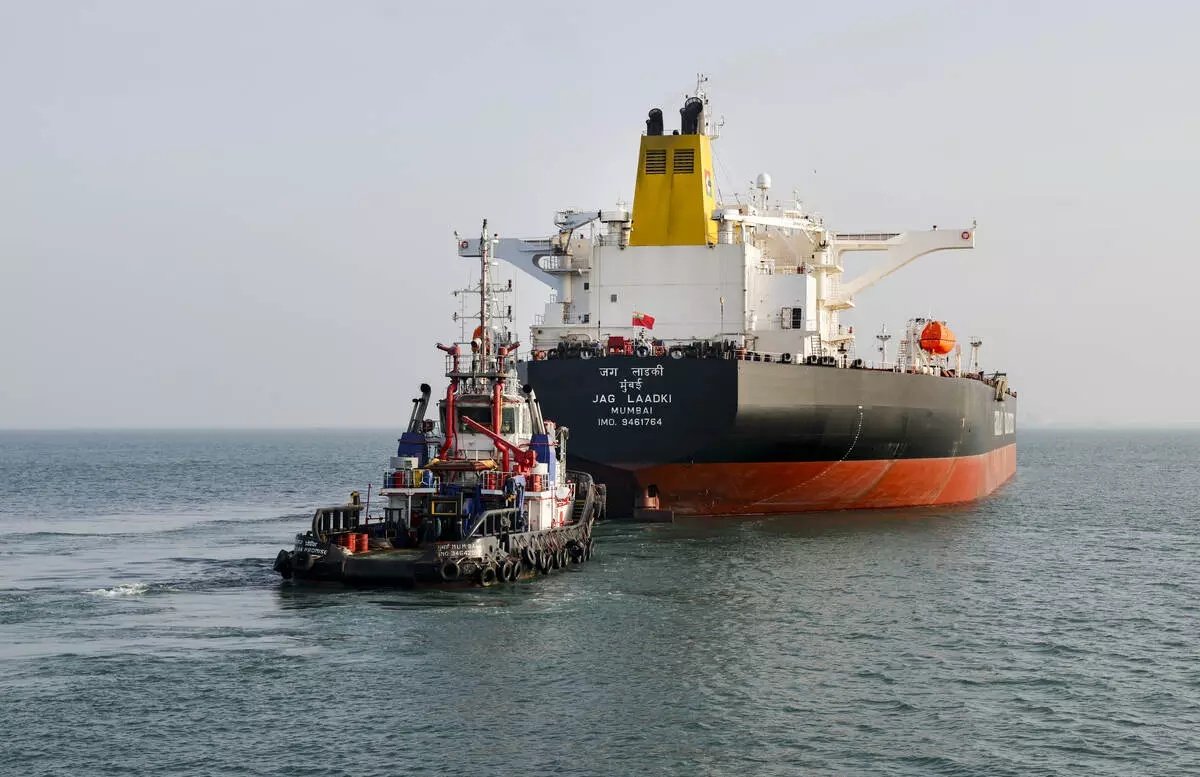
NEW DELHI, MARCH 24, 2026 — In a critical win for India’s energy security, two India-flagged Liquefied Petroleum Gas (LPG) tankers, the Pine Gas and Jag Vasant, set sail from the UAE early Monday. Navigating a high-stakes corridor amid the ongoing West Asian conflict, the vessels are currently tracking close to the Iranian coastline under a specific passage permitted by Tehran.
This development follows a direct telephonic conversation between Prime Minister Narendra Modi and Iranian President Masoud Pezeshkian on March 21—their second dialogue this month—aimed at securing a “humanitarian corridor” for essential cooking fuel.
The Voyage: A Narrow Corridor
The tankers are navigating a specialized route designated by the Islamic Republic, passing between the Iranian islands of Larak and Qeshm.
-
Navigational Support: Iranian naval forces are reportedly providing guidance through the strait, a courtesy previously extended to the Indian vessels Shivalik and Nanda Devi last week.
-
Navy Escort: Once the tankers reach international waters, the Indian Navy will take over the escort to ensure safe passage to the Indian coast.
-
Status: Transponders are actively flashing their India-flagged status, though specific destination ports remain classified for security reasons.
Cargo and Destination
The arrival of these ships is expected to provide massive relief to the 333 million Indian households currently facing a domestic LPG crunch.
Operational Challenges: While Kandla, Mundra, and Dahej are on high alert, officials note that Mundra’s storage facilities are currently at capacity. Authorities are considering ship-to-ship transfers as a contingency for onward distribution.
The Global Context: Trump’s “Cold Response”
India’s successful “back-channel” diplomacy with Iran stands in stark contrast to the escalating tension between Washington and Tehran.
-
Trump’s Ultimatum: While President Trump has threatened to “obliterate” Iranian infrastructure if the Strait isn’t fully opened, Iran maintains the waterway is “open to all except the US and Israel.”
-
European Hesitation: Reports indicate that European allies have given a “cold response” to US calls for a joint naval task force, leaving India to navigate its own bilateral neutral path.
Why This Matters
The Strait of Hormuz handles 20% of global oil and LNG flows. With the waterway effectively closed to most Western traffic, India’s ability to maintain a functional energy supply chain through Iran’s “permitted corridor” is being viewed as a masterclass in strategic autonomy.
