

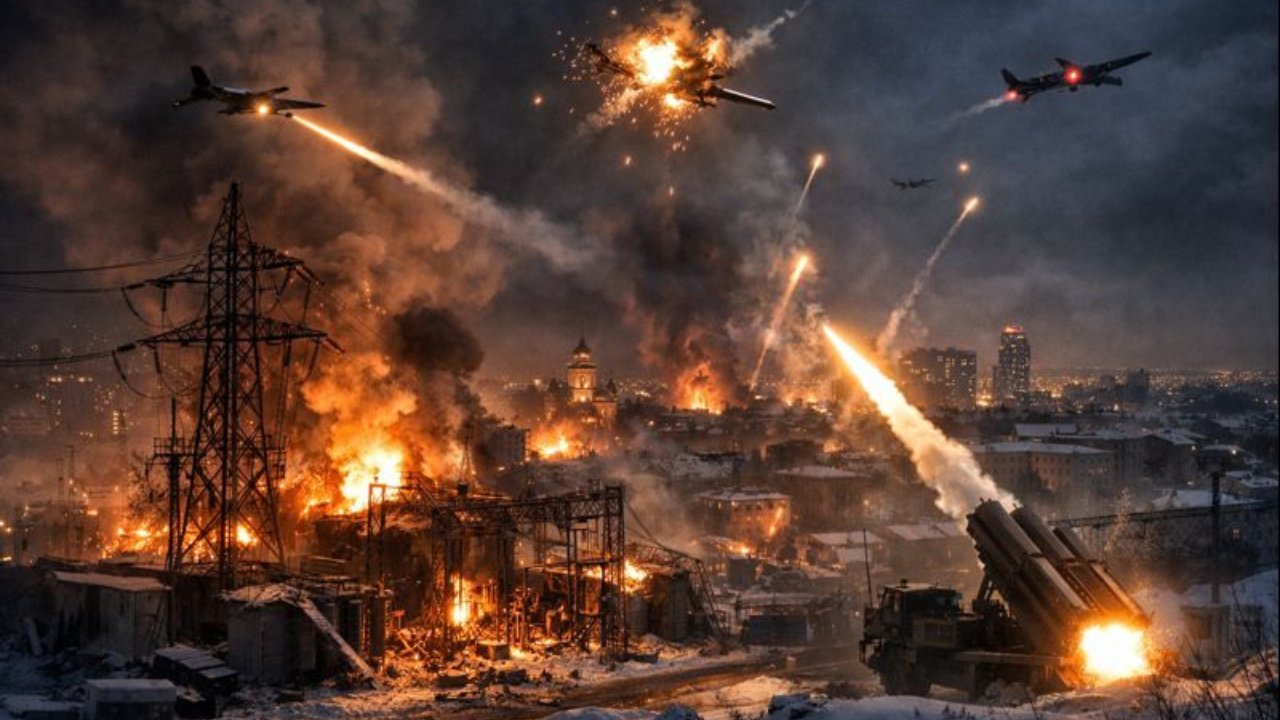
As anti-government demonstrations and social unrest sweep across European nations—including France, Spain, Portugal, Italy, and Albania—public anger has increasingly focused on rising living costs, acute housing shortages, and stretched social services. While political commentary has attributed the turmoil to varying domestic factors, European economies continue to grapple with the underlying strain of a historic humanitarian crisis: the unprecedented displacement caused by the Russia-Ukraine war.
According to data from the United Nations High Commissioner for Refugees (UNHCR), the scale of displacement triggered by the conflict represents Europe’s largest refugee movement since World War II.
Scale of the Displacement Crisis
-
Global Footprint: By the end of 2025, the total number of Ukrainian refugees worldwide reached 5.9 million, with more than 5 million hosted across European countries.
-
Global Ranking: Following years of sustained conflict, Ukraine has become the world’s second-largest source country for refugees, trailing only Venezuela.
-
Demographic Shift: Ukrainians now constitute the largest single refugee and asylum-seeker population within Europe, surpassing displacement numbers from Syria and Afghanistan.
Before Russia’s full-scale invasion in 2022, the European Union hosted a relatively small population of roughly 30,000 Ukrainian refugees. That number expanded to over 5.6 million within months, placing immediate demand on national infrastructure, social safety nets, public healthcare systems, and schools across the continent.
Geographic Distribution Across Europe
While displaced populations spread throughout the region, five nations emerged as the primary host destinations, absorbing roughly 61 percent (about 3 million people) of all Ukrainian refugees in Europe:
-
Germany
-
Poland
-
Czechia
-
The United Kingdom
-
Spain
Other significant host nations include Romania, Moldova, Slovakia, the Netherlands, and Ireland.
Infrastructure & Economic Impacts
The influx has presented unprecedented structural challenges, particularly for Central and Eastern European nations that had limited prior experience operating large-scale refugee reception infrastructure. Organizations like the Organization for Economic Co-operation and Development (OECD) and Habitat for Humanity have highlighted housing availability as the single most critical pressure point.
As European governments work to balance humanitarian commitments with domestic economic stabilization, the long-term integration and support of millions of displaced individuals remain central to Europe’s broader socio-economic landscape.
