

1. Core Thesis
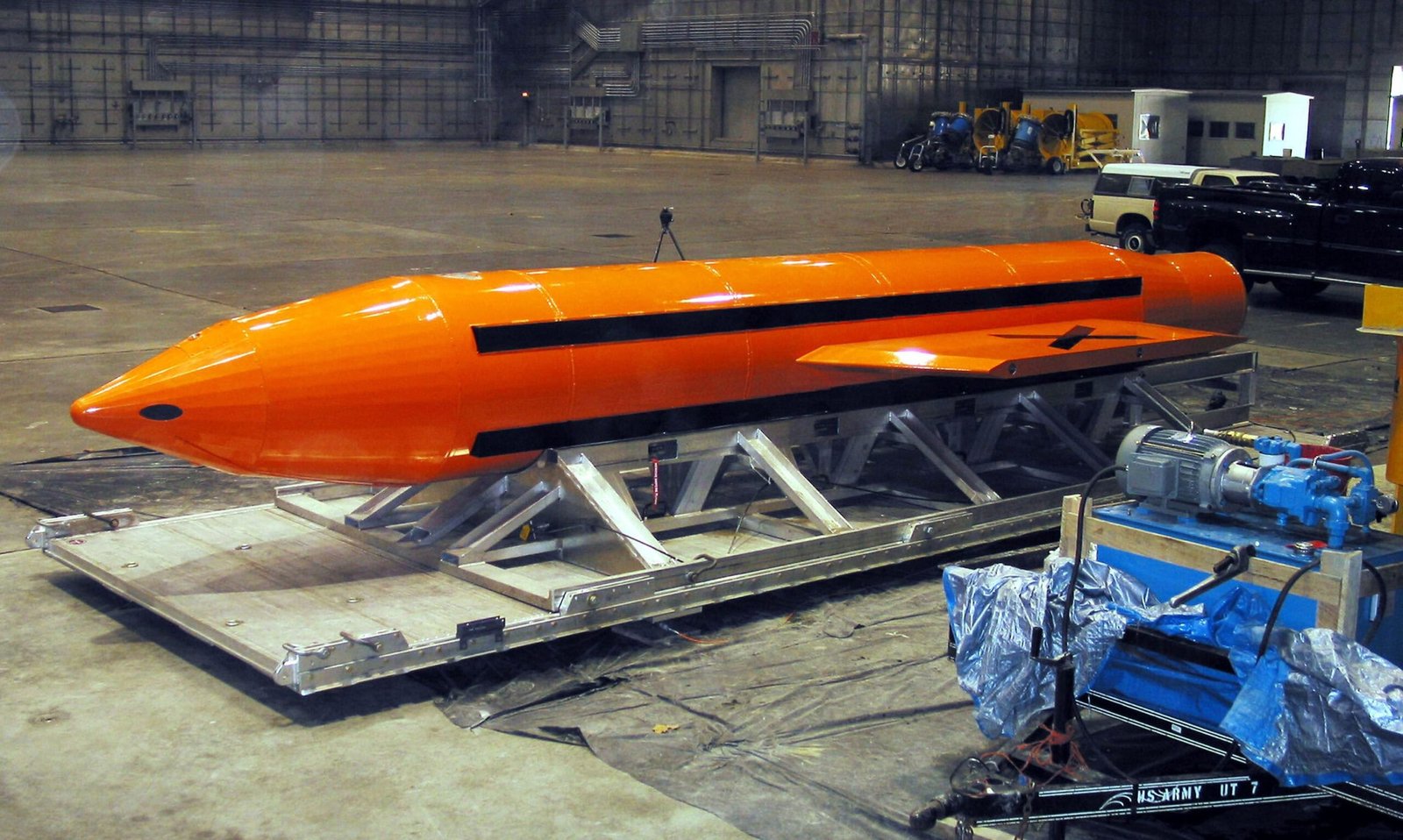
The possibility of the U.S. using the GBU-43/B Massive Ordnance Air Blast (MOAB) against Iran is primarily strategic rhetoric or an act of desperation rather than a viable military solution. Dropping a thermobaric bomb of this scale will fail to destroy Iran’s deeply fortified underground sites and will likely trigger an escalation cycle with catastrophic regional and global fallout.
2. Key Geopolitical & Operational Context
-
Escalation in the Strait of Hormuz: Despite U.S. promises of naval escorts, Iran has intensified strikes on commercial shipping (over 26 vessels hit in two weeks, including Very Large Crude Carriers), disrupting global oil bypass routes across the Gulf of Oman and Qatar.
-
Global Energy & Economic Pressures: Crude oil remains elevated around $109/barrel, with a global diesel shortage driving U.S. prices above $6.50/gallon. This forced U.S. President Donald Trump to sign a diesel supply deal with Russia and waive Graham Act sanctions.
-
U.S. & Israeli Political Drivers: Declining approval ratings ahead of U.S. mid-term elections and upcoming Knesset elections in Israel create immense pressure on leadership for a quick resolution.
-
U.S. Military Strain: Reports indicate significant U.S. attrition, including 81+ damaged aircraft, over $38 billion in direct war costs, and severely depleted stockpiles of critical interceptors (Patriot, THAAD, Tomahawk).
3. Technical Comparison: MOAB vs. GBU-57 Deep Penetrator
| Technical Feature | GBU-43/B MOAB | GBU-57 Massive Ordnance Penetrator (MOP) |
| Primary Mechanism | Thermobaric surface/above-ground blast wave | Kinetic deep-bunker destruction |
| Delivery Aircraft | Large, slow C-130 (vulnerable to air defenses) | Stealth B-2 Spirit Bomber |
| Target Type | Surface targets, soft positions, cave entrances | Deeply buried underground or hardened facilities |
| Penetration Depth | Minimal (relies on overpressure and oxygen depletion) | Penetrates over $60\text{ meters}$ ($200\text{ feet}$) of earth/concrete |
4. Key Limitations of the MOAB Against Iran
-
Inability to Hit Underground Targets: The MOAB cannot penetrate deep enough to destroy facilities like the deeply buried site under Pick-Axe Mountain (situated $300+\text{ feet}$ underground).
-
Population Impact & Irrelevance to Surrender: An MOAB blast in a dense urban center like Tehran could kill 20,000–25,000 civilians. Given Iran’s large geography ($1,700\text{ km} \times 1,800\text{ km}$) and history (over 1 million casualties in the Iran-Iraq War), high losses will not trigger state collapse or surrender.
5. Conclusion
The threat of employing an MOAB against Iran functions primarily as diplomatic leverage and political rhetoric rather than an effective military solution. Unless the U.S. is prepared to deploy tactical nuclear weapons—which carries extreme global risk—a single massive thermobaric strike cannot force Iran’s strategic capitulation.
