

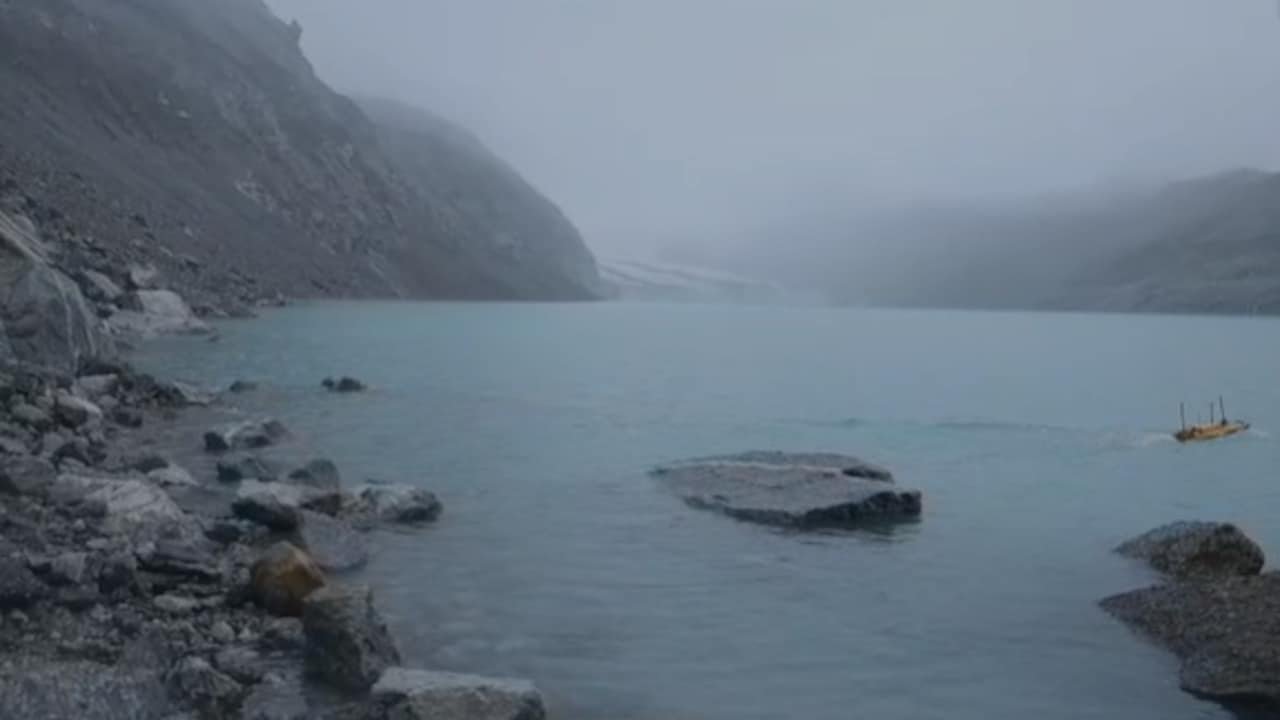
Shifting its focus from hazard assessment to concrete engineering interventions, the Sikkim government has proposed three major projects to mitigate Glacial Lake Outburst Flood (GLOF) risks across vulnerable high-altitude regions.
The proposals come in the wake of lessons learned from past disasters, notably the October 2023 South Lhonak GLOF. According to Sandeep Tambe, Principal Secretary of the Science and Technology Department, the state is prioritizing direct field mitigation to blunt the catastrophic impact of future glacial outbursts.
The Three Proposed Interventions:
-
Solar-Powered Pumping at Shako Chho:
-
The Location: Situated at roughly 17,000 feet (about 12 km from Thangu on the route to Gurudongmar), this lake holds an estimated 27 million cubic metres of water behind a high, permeable terminal moraine with no natural outlet.
-
The Plan: Acting on National Disaster Management Authority (NDMA) warnings against directly disturbing the fragile moraine, the state proposes installing eight solar-powered pumps to lower the lake level by 20 to 40 metres, safely extracting roughly 8 million cubic metres of water. Because grid power is unavailable and transporting fuel to such high altitudes is impractical, solar energy offers a viable off-grid solution.
-
-
Flood-Retention Structure at Dolma Sampa (Lhonak Valley):
-
The Location: Located downstream near Muguthang, where the valley naturally broadens out.
-
The Plan: Rather than intervening directly at the volatile Lhonak lakes (South, North, and Changsang), engineers plan to build a retention structure at Dolma Sampa. During the 2023 disaster, this natural widening helped slow the flood momentum by allowing water, debris, and boulders to spread out, making it an ideal strategic bottleneck for engineered retention.
-
-
Moraine-Plug Safety Wall at Gurudongmar Lake Complex:
-
The Location: The Gurudongmar complex consists of three lakes (two of which are quite large) that have expanded significantly over the past three decades.
-
The Plan: Authorities propose constructing a stone-masonry safety wall or moraine-plug structure at the lake outlet. This barrier would regulate water release and curb the initial velocity of any potential outburst before rushing down the valley to accumulate destructive debris.
-
Current Assessment & Next Steps
Out of 40 high-hazard glacial lakes identified in Sikkim by the NDMA, 16 are classified as priority Category-A systems. Detailed assessments have already been completed for 13 of them. Detailed Project Reports (DPRs) for these mitigation strategies have been submitted and are currently under review at the Government of India level.
