

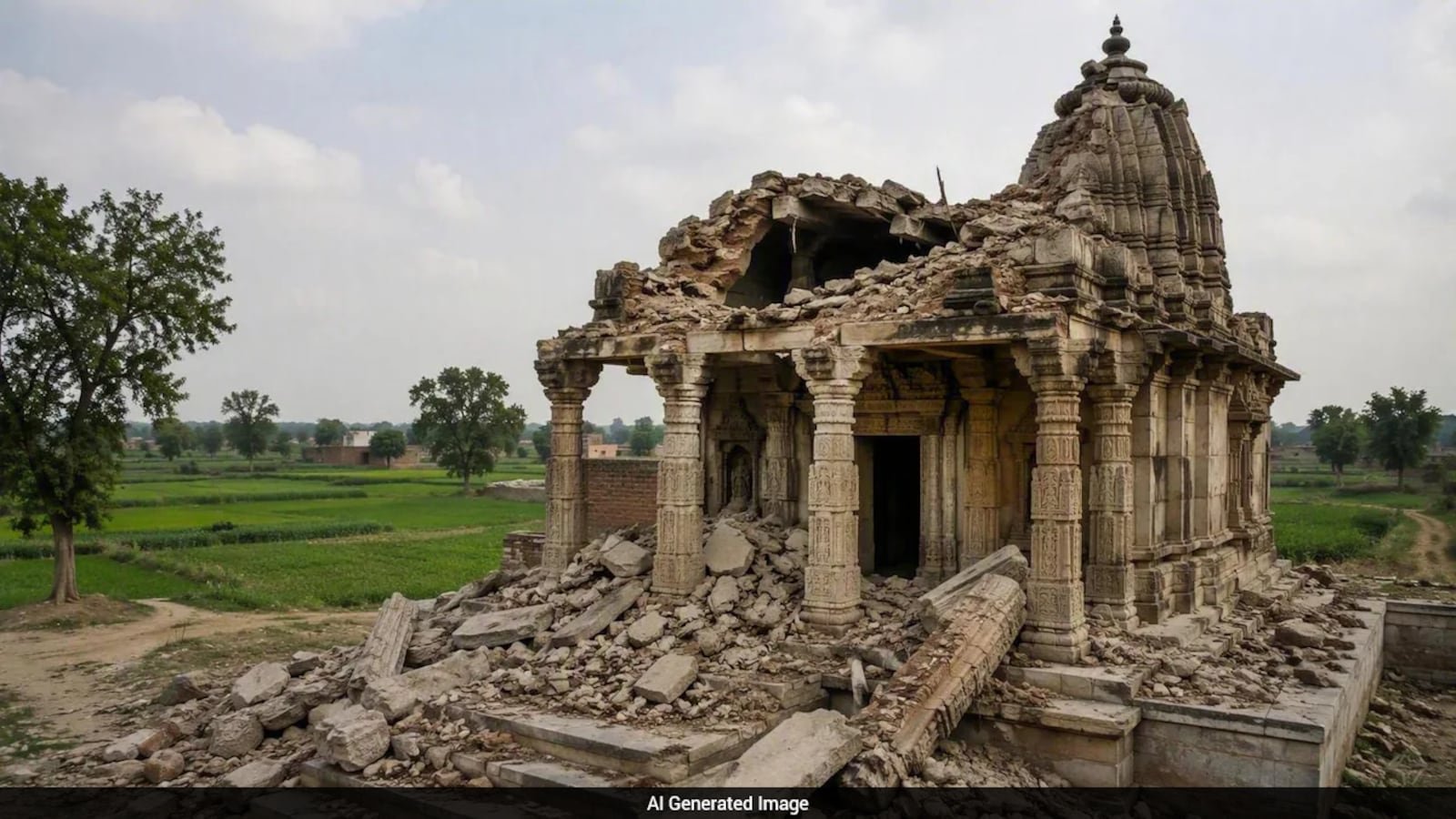
Rights advocates, minority groups, and political organizations in Pakistan have united to demand a thorough judicial probe and the reconstruction of an over-100-year-old Hindu temple in the country’s eastern Punjab province.
The Incident and Allegations
According to a report by the Press Trust of India (PTI), the nearly 125-year-old temple—situated in Siraj village in Narowal district, roughly 130 kilometers from Lahore—was allegedly demolished on August 21 by religious zealots. Activists claim the perpetrators belong to the banned far-right Islamic party Tehreek-i-Labbaik Pakistan (TLP), who allegedly tore down the structure to expand an adjacent madrassa (seminary) onto the temple’s 1,000-square-meter footprint.
Aslam Parvez Sahotra, chairman of the minority-focused Pakistan Masiha Millat Party (PMMP), stated that he met with Punjab’s Additional Home Secretary to press for action against the culprits and officials accused of dereliction of duty. Sahotra alleged that after the structure was razed, materials from the demolished temple—including bricks and metal fittings from the shikhar (canopy)—were systematically cleared from the site.
Furthermore, minority leaders pointed out that land adjacent to the temple had previously been leased out by the Evacuee Trust Property Board (ETPB) for a seminary. However, the lease was reportedly cancelled in January by the ETPB’s deputy administrator in Sialkot due to unpaid rent and unauthorized use, though the eviction orders were never enforced.
Hindu community leader Rattan Lal, who serves on the Narowal District Peace Committee, also condemned the incident, noting that local Hindus are now afraid to even visit the site due to the expanding seminary operations.
Government Response and Stand
The administration has sharply contradicted the claims made by minority representatives and activists. Rana Iftikhar, a senior official with the ETPB, acknowledged that the structure was between 100 and 125 years old and carried no official designation in record books, but insisted that it collapsed due to torrential rains rather than deliberate demolition.
While Iftikhar maintained that the temple’s land itself was never leased out to any third party, he conceded that senior officials would evaluate the situation to decide on a potential course of action regarding the site’s restoration.
