

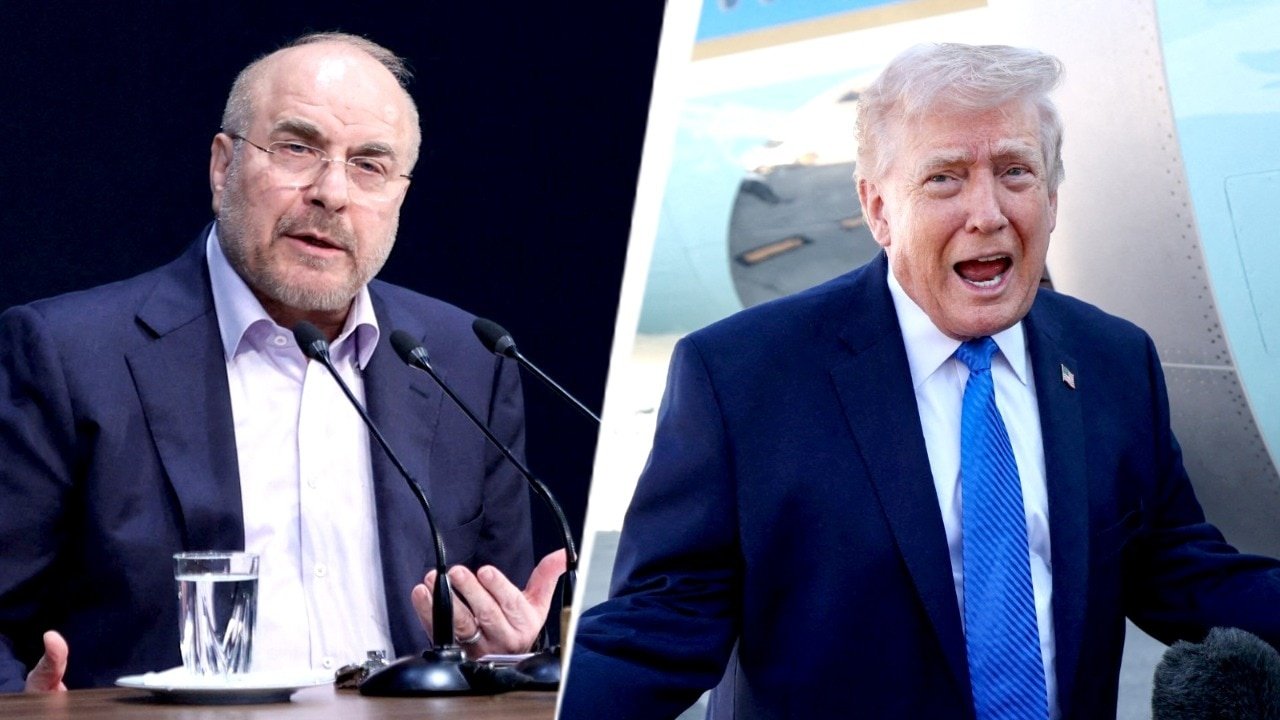
A high-stakes standoff between Washington and Tehran has reached a perilous inflection point, marked by direct threats targeting critical energy infrastructure and escalating military engagements around the Strait of Hormuz.
As global energy markets brace for impact, leaders from both nations have exchanged fiery warnings that signal a potential shift toward an “infrastructure for infrastructure” conflict.
Escalating Threats: Tit-for-Tat Directives
The current crisis escalated rapidly following statements by U.S. President Donald Trump, who announced via social media that Washington would impose a immediate cost for any disruption to maritime transit. Trump warned that for every commercial vessel attacked in the Strait of Hormuz—whether by missile, rocket, or drone—U.S. forces would respond by destroying a major bridge or power plant in Iran.
Tehran moved swiftly to counter the threat. Mohammad Bagher Ghalibaf, Speaker of Iran’s Parliament and a key official in diplomatic negotiations, framed the dispute as an “all or nothing” equation for the region:
“In a region where we cannot sell oil, no one will be able to sell oil. If our security is not ensured, then no infrastructure facility will remain safe.”
— Mohammad Bagher Ghalibaf, Speaker of the Iranian Parliament
Ghalibaf reaffirmed that security along the narrow choke point cannot be restored under the presence of U.S. military forces, signaling that conditions in the strategic waterway will not return to pre-war norms. Brigadier General Abolfazl Shekarchi and other Iranian military representatives expanded on this position, warning that any strikes on Iranian targets would provoke immediate counter-strikes against regional energy and utility installations.
Kinetic Exchanging & Regional Impact
Beyond diplomatic posture, kinetic strikes continue across multiple fronts. U.S. Central Command has carried out nightly strike campaigns targeting Iranian coastal defense systems, anti-ship missile sites, and launch platforms in an attempt to secure commercial navigation routes.
Concurrently, regional allies have felt the secondary impacts of the conflict:
-
Kuwait: Air defense systems have engaged incoming drone threats, with domestic energy officials addressing minor fires at electrical and water desalination facilities caused by regional strikes.
-
Southern Iran: Missile strikes and explosions have been reported near key logistical nodes, including Ahvaz, Ramshir, and Shalamcheh.
-
Maritime Shipping: Multiple commercial vessels and oil tankers attempting to navigate the passage have been immobilized or forced to reroute, driving up maritime insurance premiums and compelling vessel operators to adjust transit schedules.
Global Stakes in the Balance
The Strait of Hormuz serves as the premier corridor for roughly 20% of the world’s seaborne petroleum. Prolonged uncertainty in the passage has fueled volatile spikes in benchmark crude prices and heightened inflationary concerns across global supply chains.
With both sides threatening to target civil infrastructure, energy processing centers, and transport hubs, international observers warn that any miscalculation could expand the conflict from a maritime blockade into a broad economic disruption spanning the entire Middle East.
