

Beneath the colorful election banners lining the streets of Muzaffarabad, a profound political crisis is unfolding across Pakistan-administered Kashmir (Azad Jammu and Kashmir, or AJK). What was envisioned as a routine legislative election has transformed into a high-stakes struggle over representation, regional autonomy, and economic survival.
At the center of the storm is an intensifying movement led by the Jammu Kashmir Joint Awami Action Committee (JKJAAC), a grass-roots civil alliance that has brought key districts to a standstill. Coupled with surprising political overtures from Islamabad’s political heavyweights, the region finds itself navigating one of its most turbulent political chapters in recent history.
The Boiling Point: Refugee Seats and Economic Strain
While the region experienced widespread demonstrations in 2024 over wheat subsidies and high electricity tariffs, the current wave of unrest centers on a core structural debate: the 12 seats in the AJK Legislative Assembly reserved for Kashmiris residing across Pakistan.
Protesters contend that non-resident representatives skew local self-governance and allow federal influence to dilute local authority. Tensions escalated dramatically following a ruling by the AJK Supreme Court declaring that these seats are constitutionally protected and can only be altered through a formal legislative amendment.
The government’s decision to ban the JKJAAC under anti-terrorism laws served to inflame, rather than suppress, public discontent. Mass sit-ins, long marches toward the capital, and clashes with law enforcement have led to casualties, road blockades, and severe disruptions to local businesses and financial services.
Fractured Polls and High Stakes
In an effort to manage the security situation, authorities were forced to alter the electoral schedule. Rather than holding uniform elections across the territory, voting has been staggered by division:
-
Mirpur Division: Voting proceeds as scheduled.
-
Poonch Division: The epicenter of recent agitation and sit-ins, where elections have been delayed to allow security forces to stabilize key transport routes.
“The election was always going to be shaped by this crisis, but delaying votes highlights just how deep the institutional rift has become.”
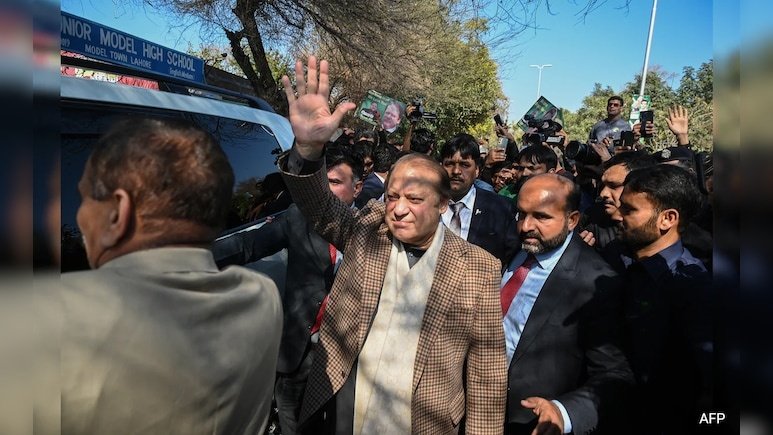
Adding to the drama, former Pakistani Prime Minister Nawaz Sharif made headlines during campaign outreach by expressing a desire to serve as the region’s chief executive. Pledging enhanced federal development budgets, major road infrastructure along the Jhelum River, and frequent monitoring visits, his remarks underscore how critical stability in AJK has become for the federal leadership in Islamabad.
The Road Ahead
As voters in select districts head to the polls amidst internet blackouts and heightened security deployments, the election alone is unlikely to resolve the underlying grievances. Whether the newly elected assembly can address the demands of the JKJAAC or bridging the trust gap between local communities and the state remains an open question.
For the people of Muzaffarabad and beyond, the coming weeks will determine whether democratic processes can offer a path toward stability, or if the region faces continued deadlock.
